NASA Flew to the Moon on a Computer Woven by Hand With Far Less Memory Than an iPhone
Margaret Hamilton, who oversaw much of the programming for Apollo, died at 90.
 The Headlines · A Forced Retreat for Trump and Hegseth, and What to Know About the Russia Plague Scare
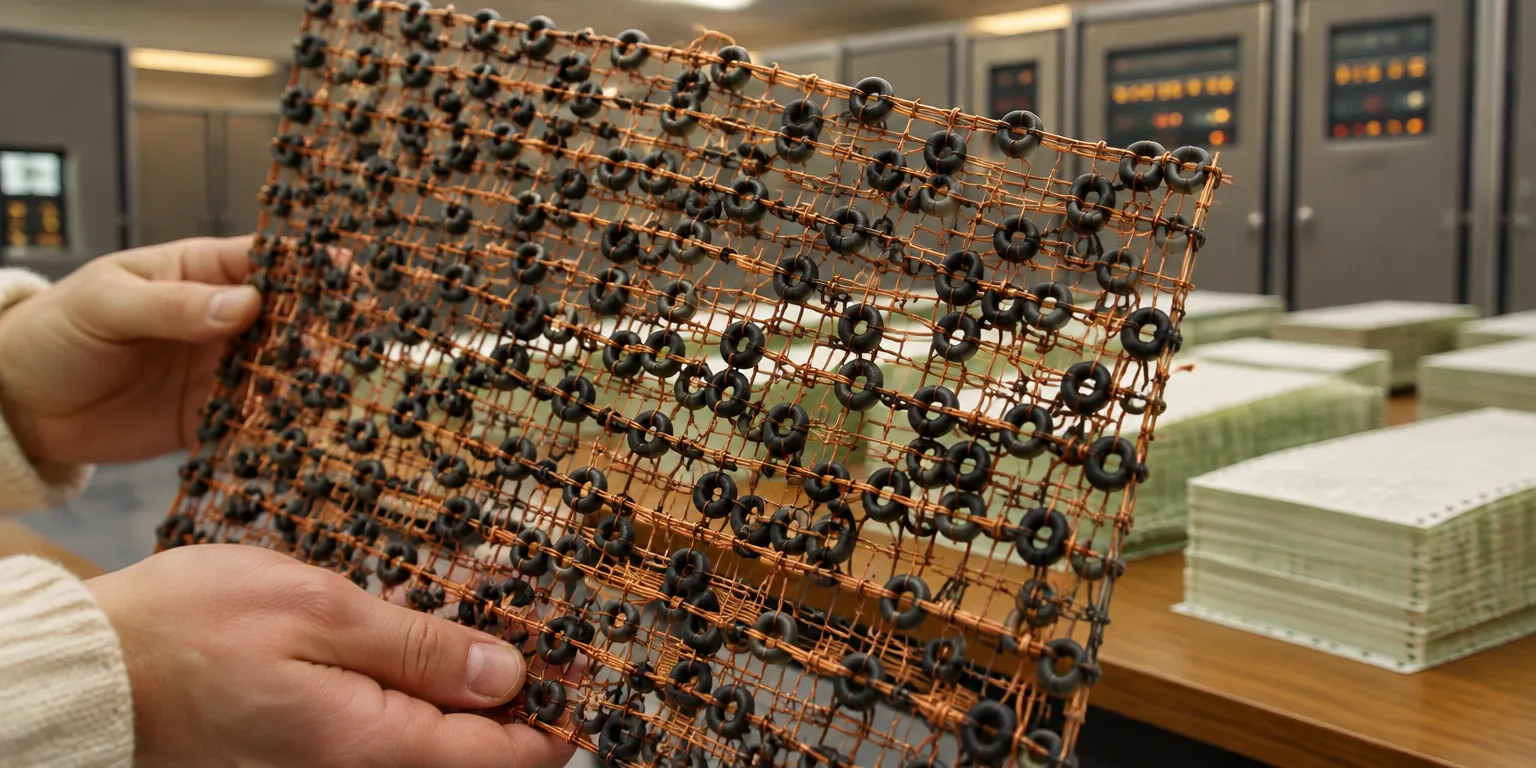
The software that landed astronauts on the Moon lived inside copper wires woven by hand, on a computer with seven million times less storage than an iPhone.
Margaret Hamilton, a young mathematician, joined the Apollo project in the 1960s and headed the group behind much of its programming. She is credited with popularizing the phrase software engineering.
A famous photo shows her beside a stack of printed code almost as tall as she is. She later contributed to additional Moon landings, the first American space station, and early work on the space shuttle, and honoring her scientific work she received the Presidential Medal of Freedom from President Obama.
Questions people ask
How can woven wire store software?
Apollo used what engineers called core rope memory. Copper wires were threaded through or around tiny magnetic rings, with one path meaning one and the other meaning zero. Once woven, the pattern was fixed and hard to damage or erase, which made it dependable in flight.
How small was the Moon computer's memory, exactly?
The Apollo guidance computer had about 72 kilobytes of fixed memory and about 4 kilobytes of working memory. A modern iPhone with 128 gigabytes holds more than a million times more. The exact multiple depends on which iPhone and which part of Apollo memory is counted.
Why did Hamilton insist on the phrase software engineering?
In the 1960s, writing code was often treated as less serious work than building hardware. Hamilton pushed the term software engineering to demand the same rigor, testing, and discipline. The phrase caught on and is now standard.