Natural Gas Is Cheap Through a Pipe and Costly on a Ship
Oil prices tend to move together because it ships around the world, while natural gas needs costly chilling to cross an ocean.
 The Tucker Carlson Show · Trump’s Energy Crisis Causes Food Shortages, Skyrocketing Prices, and Global Suffering. What’s Next?
Oil ships easily and natural gas is hard to ship, oilman Morgan Downey says. Oil is a dense liquid at ordinary temperatures, so it can be poured into tankers and sent around the world.
That mobility makes oil a global market. A barrel released in one place lands in a shared international pool, which is why prices tend to move together.
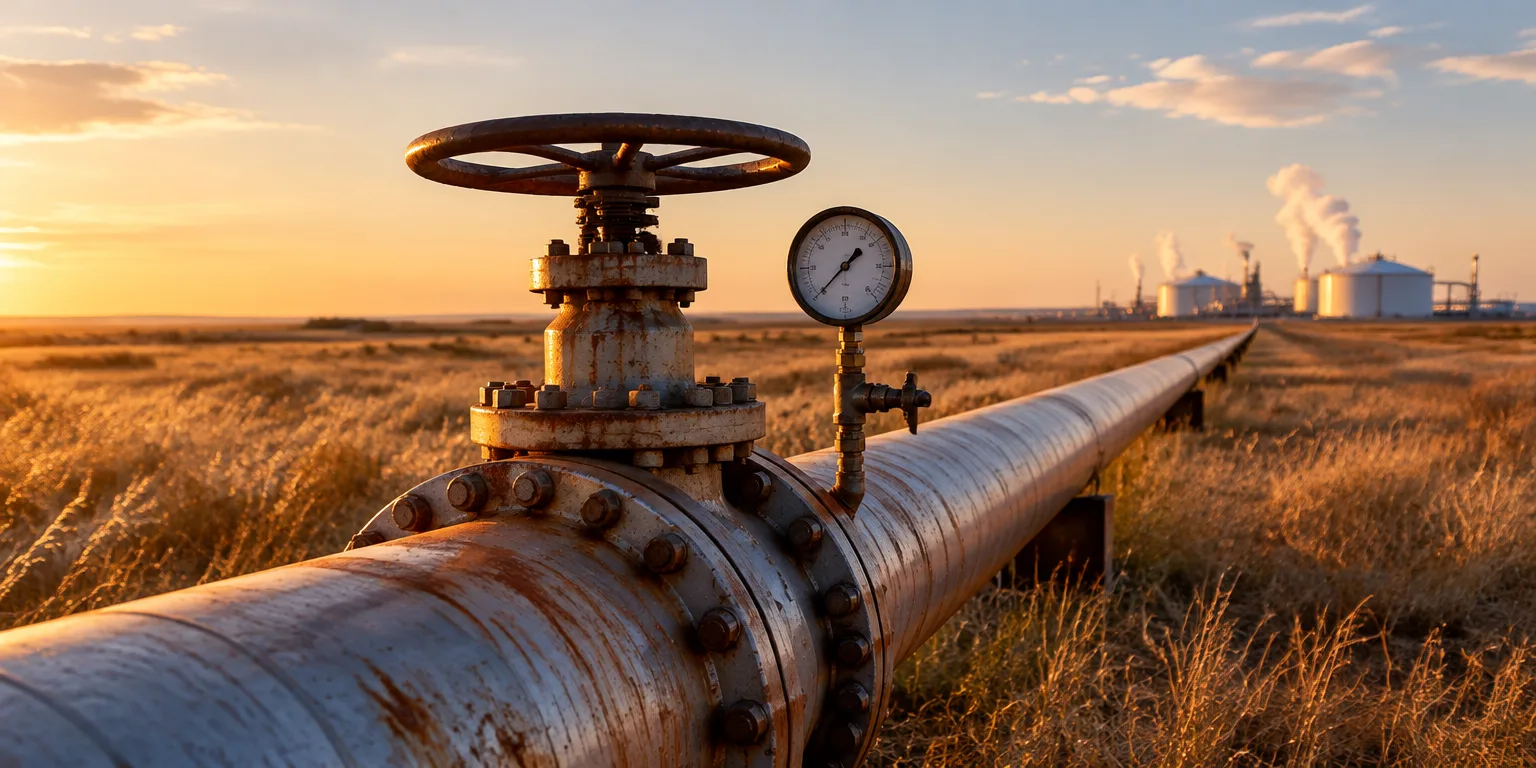
Natural gas stays out of sight because it travels inside pipes to power stations, where it supplies about one third of American energy.
Moving that gas across an ocean is costly and awkward. To ship it, companies must cool and compress it into a liquid, and liquefying gas is very expensive.
The result is a sharp local price gap. Downey puts American gas at about $3 per unit of heat, called an MMBtu, while gas in Europe costs about $31.
That trapped quality also explains his argument about independence. Because gas is hard to ship, more domestic production and pipelines would leave the United States not only supplied at home but partly insulated from foreign prices, in a way oil cannot match.
Questions people ask
Why does natural gas have to be turned into a liquid to ship?
Gas takes up far less space as a liquid, so cooling it to about minus 260 degrees Fahrenheit shrinks its volume for tanker travel. The chilling plants, special ships, and rewarming terminals add large costs at each step. Pipelines avoid that equipment, which is why piped gas is usually much cheaper.
What is an MMBtu?
MMBtu means one million British thermal units, a standard way to measure heat energy. It lets buyers compare fuels by the energy they contain rather than by gallons or cubic feet. Analysts often quote gas in dollars per MMBtu for that reason.
Why is oil priced globally while gas prices differ by region?
Because crude and its products are liquids that load easily onto ships, cargoes can move quickly from places with extra supply to places with shortages. That flexibility links regional prices into one broad market. Gas without pipeline connections lacks the same easy link.