No Beds, No Bathrooms, No Seasickness: Why Crewless Warships Go Farther
A 24-foot autonomous boat can travel 1,000 nautical miles because no one aboard needs comfort or safety.
 All-In with Chamath, Jason, Sacks & Friedberg · China Outbuilds America 230-to-1. Saronic Has a Plan
A large share of what makes a warship expensive has nothing to do with weapons. Much of it goes to the people.
Put sailors on board and you need beds, bathrooms, stairs, doors, and a separate electrical system just to keep them alive and working. Those extras add expense and building work beyond the fighting equipment.
Take the crew off, and much of that goes away. That is the argument made by Vib, a co-founder of the autonomous boat company Saronic, for why crewless ships can be radically simpler.
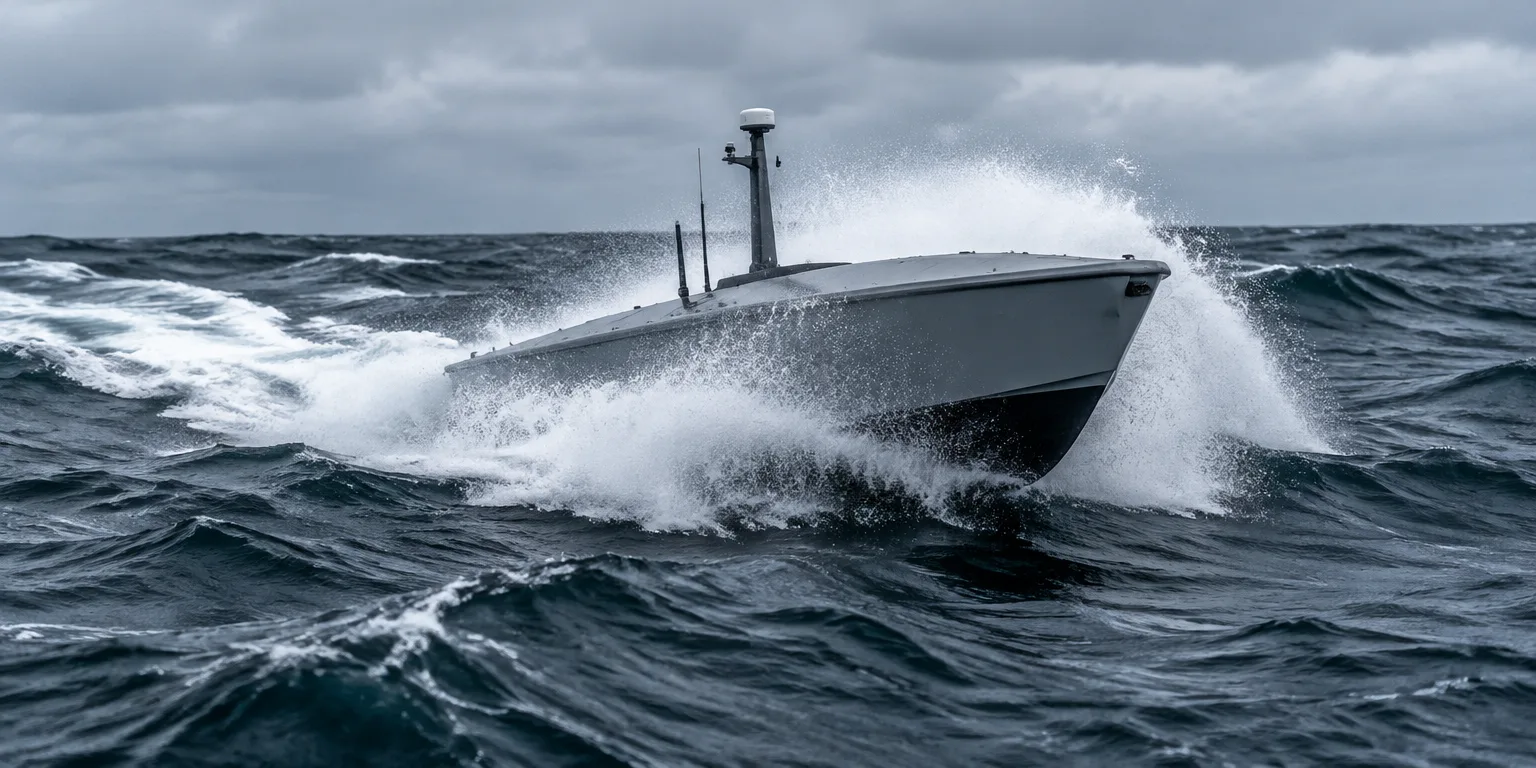
The payoff shows up in what the boat can do. Saronic's 24-foot Corsair can travel 1,000 nautical miles, a distance a typical commercial boat that size would be unlikely to reach. With no one aboard to get sick or get hurt, designers can trade a smooth ride for range, speed, and payload.
In practice, that means the boat can be built to take harder hits from waves and make sharper moves in the open ocean, because designers do not have to worry about a crew absorbing hard slams in the middle of the sea. The engineers get what Vib calls control authority, meaning how strongly and precisely the motors, rudders, and software can steer the boat, without worrying about throwing people around.
The broader point is about complexity. A crewed ship has to do two jobs, fighting and housing people, and its housing adds subsystems and the labor to build them, which is why an autonomous craft can be built cheaper, go farther, and maneuver in ways a crewed boat is unlikely to.
Questions people ask
How far is 1,000 nautical miles in regular miles?
Nautical miles are the standard unit for distance at sea and in the air. One nautical mile equals about 1.15 regular miles, so 1,000 nautical miles is roughly 1,150 land miles, about the distance from Miami to New York.
Why does having no crew help with seasickness?
Seasickness comes from the mismatch between what your eyes see and what your inner ear feels as a boat pitches and rolls. Designers of crewed boats limit speed and sharp turns to keep that motion tolerable. With no crew, an autonomous boat can accept rougher motion in exchange for speed and range.
What does control authority mean for a boat?
It means how strongly and precisely the motors, rudders, and software can steer the boat. More control authority lets a boat hold course in big waves and make tight maneuvers without losing stability.