No One Has Ever Boated the Whole Congo River
About 90 miles from the Atlantic, violent rapids cut off an interior two thirds the size of the mainland United States.
 Maxinomics · America Will Be the Last Superpower, Here’s Why
No one has ever traveled the full length of the Congo, from its headwaters to the ocean.
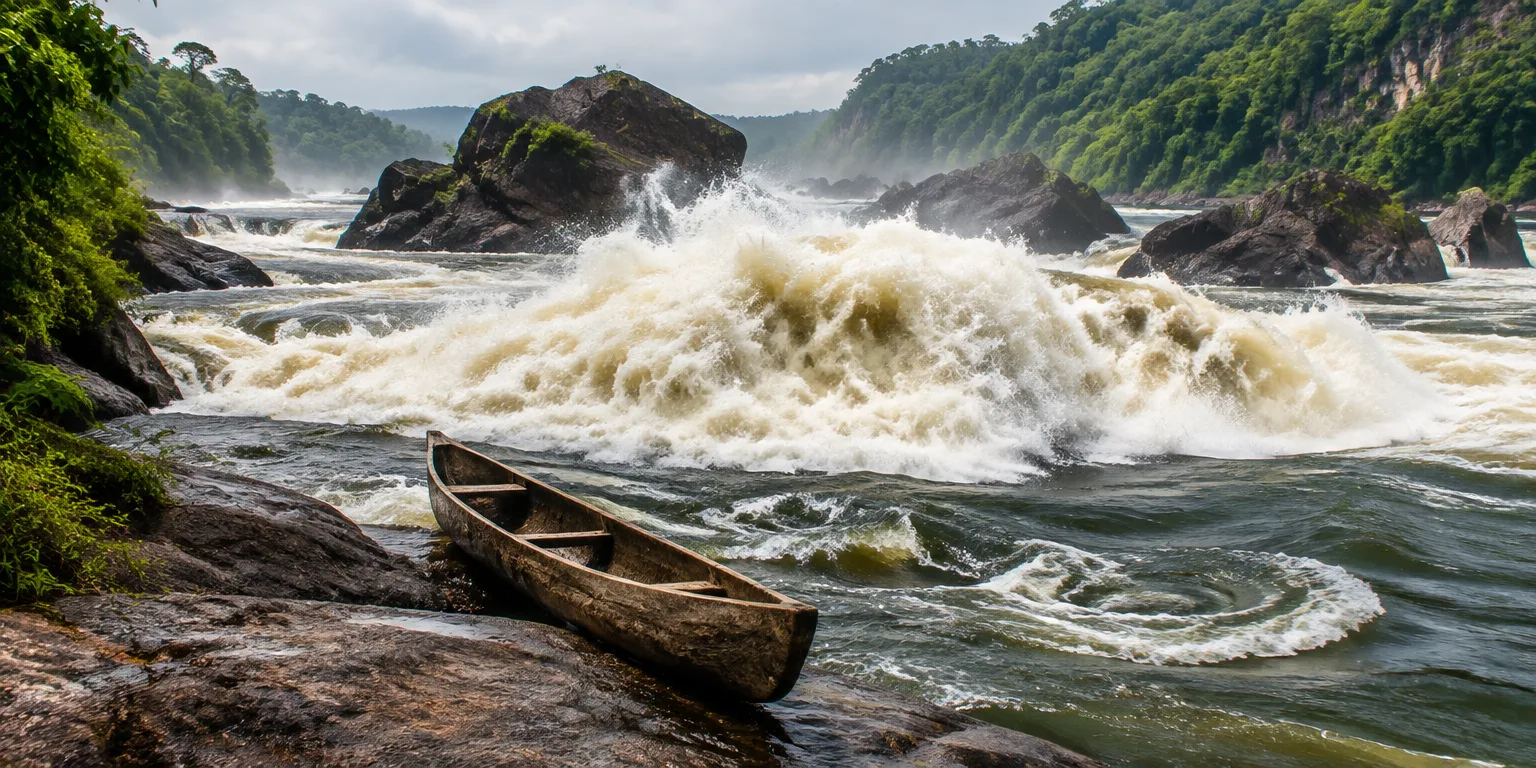
The river runs about 1,600 miles toward the Atlantic, then breaks down about 90 miles short of the sea. There, in a stretch about 10 miles long, it turns into 20-foot standing waves, walls of water that hold their place while the current rushes through them, plus rocks the size of buildings and whirlpools that look like cartoons.
The explorer H.M. Stanley, of "Dr. Livingstone, I presume" fame, tried to run the whole river and quit at the rapids. He called it an immense tragedy, because it deprived all of inland Central Africa, an area two thirds the size of the mainland United States, of what great powers need: a steady water route that allows vessels to travel from the interior to the ocean.
Seen from the side, the Congo drops in a massive step. The Mississippi, by comparison, is a boat friendly paradise.
Questions people ask
What is a standing wave?
A standing wave forms when fast water hits a rock or a sharp rise in the riverbed and piles up into a tall, churning wall that stays in one spot. On the Congo, they reach 20 feet high, tall enough to flip or destroy almost any boat that tries to pass.
Why is the Mississippi so much easier for boats?
The Mississippi falls very gradually from Minnesota to the Gulf of Mexico, with no steep drops near the sea. That gentle slope lets barges and ships move thousands of miles between the interior and the ocean, which is why it became a great trade highway.