No one person knows how to make an ordinary pencil
Its wood, graphite, and rubber likely came from three continents, and Friedman said he could not trace the rest.
 Free To Choose Network · Milton Friedman - I, Pencil
No single person in the world could make an ordinary pencil from scratch, economist Milton Friedman once argued, holding one up.
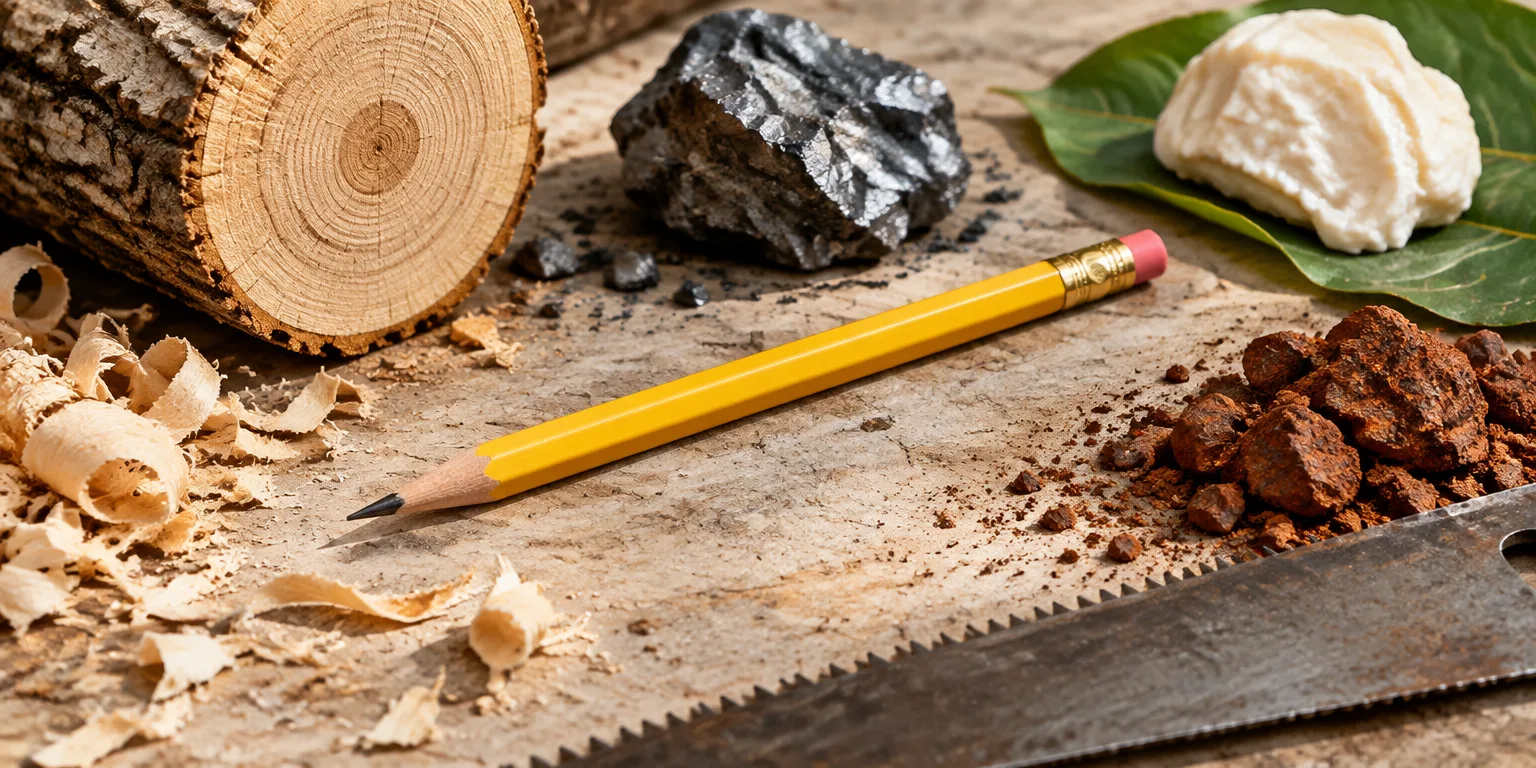
The wood, he said, may have come from a tree cut in Washington State. Cutting that tree took a saw, making that saw took steel, and making that steel took iron ore. For the black center, often called lead but actually compressed graphite, Friedman said he was not sure of its source but thought it came from mines in South America.
The eraser is rubber, probably from Malaya, now Malaysia, where the rubber tree did not originally grow. It had been carried there from South America by businessmen with help from the British government. Friedman said he did not know where the small brass band, the yellow paint, the thin black lines, and the glue came from.
That one pencil reflected the work of thousands of people around the world who spoke different languages and held different faiths.
Questions people ask
If there is no lead in a pencil, why is the center still called lead?
People called it lead because early European artists and writers used actual lead, and later graphite, for marking, and the name stuck. Graphite leaves a darker, smoother mark than lead, so it replaced lead in pencils by the 1500s. Pencil makers still say lead as shorthand, even though modern cores contain graphite mixed with clay.
How did a South American tree end up supplying rubber from Malaya?
The rubber tree is native to the Amazon basin in South America, not Southeast Asia. In the 1870s, British collectors carried seeds to botanical gardens in England and then to Malaya and other colonies, where plantations thrived. By the mid-1900s, Malaysia and Indonesia produced most of the world's natural rubber.
Could a very skilled person eventually make a pencil alone, given enough time?
No. The point is not just that the materials are far apart, but that making each one requires its own tools, trades, and knowledge. A lumber worker would need to mine iron ore, smelt steel, shape saws, tap rubber, fire brass, and mix paint and glue. Learning and doing all of that in one lifetime is practically impossible.