Nobody Brought Home the Bacon Because the Bacon Happened at Home
Husbands and wives were once co-providers called yoke mates, until factories moved work elsewhere.
 Civics 101 · These United Hosts
For most of history, nobody brought home the bacon because the bacon happened at home. Marriage was not one paycheck supporting a household. The household was the business, and husband and wife ran it together.
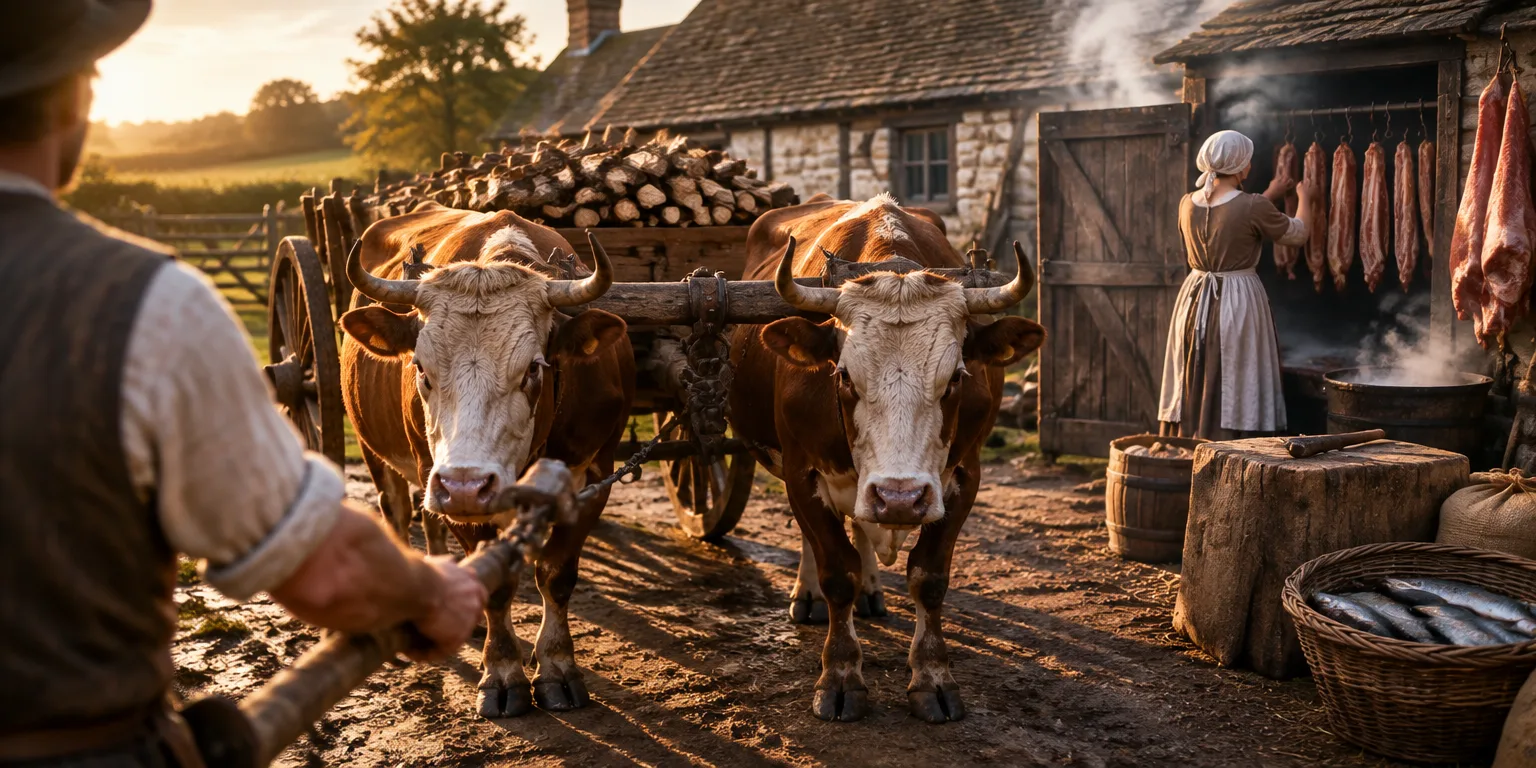
He might catch the fish while she sold them at the pub alongside other fish wives. He might raise the pigs while she butchered them and made the bacon. Both jobs kept the family fed and brought in money, and both carried clear and appreciated value.
Historian Stephanie Coontz, who studies marriage, cautions against romanticizing it. Men were in charge, and wives were expected to comply. Still, wives were often called yoke mates, like two oxen pulling together, and husbands and wives knew each other's tasks well.
Then industrialization pulled paid work out of the home. The labor split sharpened, women lost their productive role and were redefined by childbearing and housekeeping, while men romanticized home life as an escape from commerce.
Questions people ask
What does yoke mate actually mean?
A yoke is the wooden beam that joins two oxen so they pull a cart together. To call a wife a yoke mate was to say marriage was a working partnership, with both spouses harnessed to the same load, even if the husband held more authority.
When did work leave the home?
In Britain and America, the big shift came with industrialization in the late 1700s through the 1800s. As spinning, weaving, food processing, and other paid work moved to mills and factories, one spouse, usually the husband, left for wages while the other stayed to turn those wages into meals, clothes, and care.