Nobody Wants to Sleep in a Bus Station for Their Band Anymore
Poverty was once so common that suffering for art made sense, but prosperity made comfort the default and made opting out feel like failure.
 Experimental History · The Decline of Deviance 2
The argument he was answering is a familiar one, that nobody can make cool art anymore because housing and college and supplies all cost too much. The writer, responding to readers of his essay on why wild behavior has faded, says he thinks that gets it backward. It was always hard to be an artist, he argues, but earlier generations were, in his words, "more willing to starve for it."
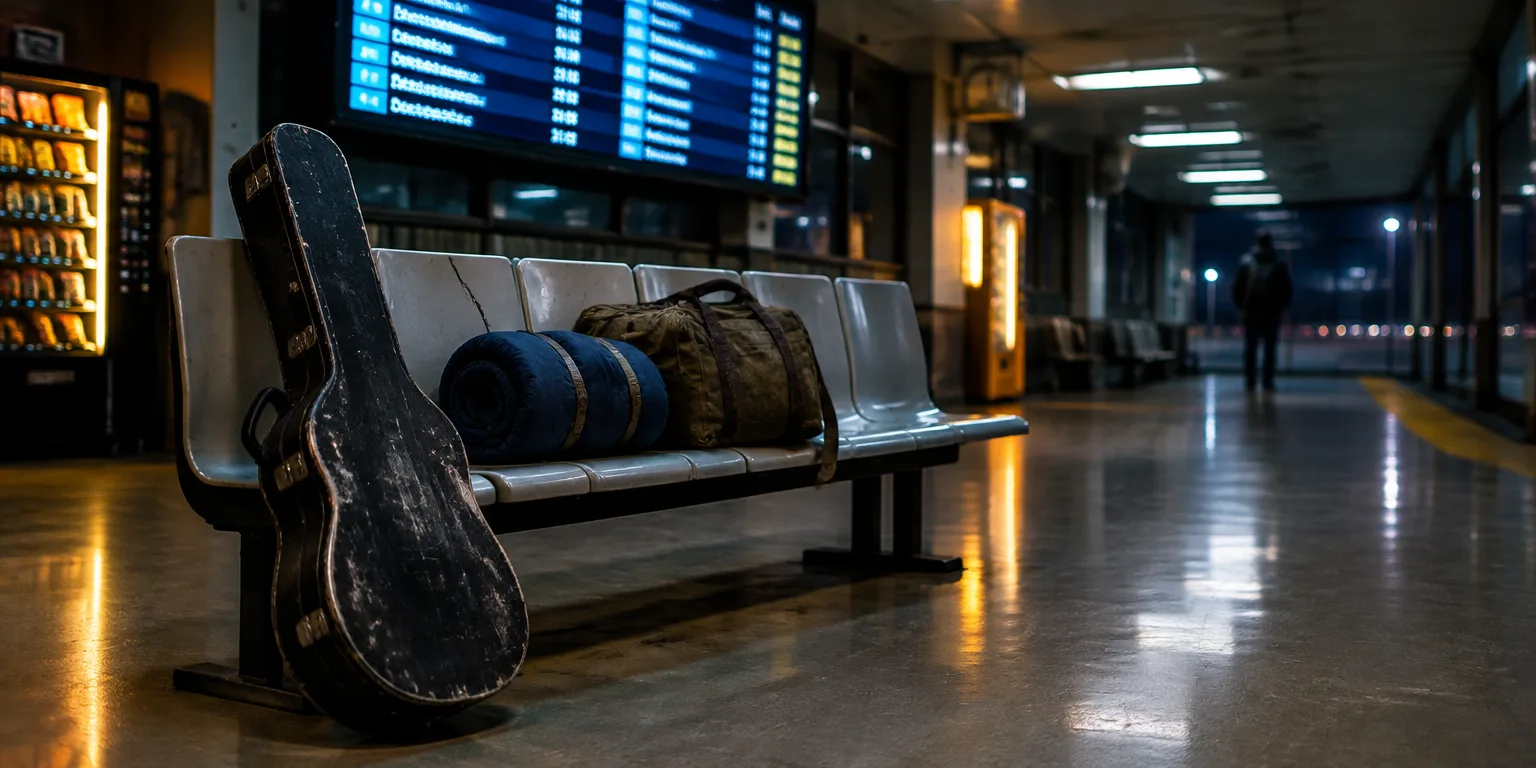
His line for the change is this: "When five musicians spend the night in a bus station, that's called being punk. When one musician spends the night in a bus station, that's called being homeless."
What he means is that going hungry versus getting by was once a much narrower gap, because ordinary poverty was normal. He points to the opening of Moby-Dick, where the narrator Ishmael must either sleep on benches in a crowded inn or split a mattress with a fellow guest he has never met, the Polynesian sailor Queequeg. He notes the characters find the arrangement annoying, but nobody treats it as strange. That was simply what full-time working life could look like in the 1850s.
By the 1970s, he writes, New York punk musicians were still living that way, sleeping in roach-infested flophouses, playing in abandoned buildings, getting evicted and mugged, sometimes unable to afford a bus ticket home. He concedes that plenty of aspiring musicians are slumming it now, but says that level of deprivation feels unacceptable, even dangerous, in a rich country.
That is because the alternative has gotten so comfortable, he argues. When the choice was tilling turnips or hunting whales for six months, going hungry for art made sense. It makes less sense next to paid time off, dental care, and vacations in a bed with no strangers in it, plus the $95,000 product manager job a talented novelist might also land.
The cost is not only physical, but social. He tells of cornering a funny former college improv player who was doing comedy only on Tuesday nights while working a corporate job. The man said he had tried for years, "but then I got tired of not being able to afford to fly to my friends' weddings," so he went to law school instead. In his words, "When nobody can afford a plane ticket, being broke isn't embarrassing." When everybody else is flying, you are not just poor, you are a loser.
He closes with William James, writing a century ago, that Americans had "grown literally afraid to be poor" and had lost the sense of poverty as liberation from material attachments and, in James's words, "paying our way by what we are or do and not by what we have." The difference now, the writer adds, is that we do not despise people who choose poverty, because we do not know any of them.
Questions people ask
Why could punk musicians afford to live in New York in the 1970s at all?
New York lost hundreds of thousands of manufacturing jobs in the 1960s and 1970s, landlords abandoned buildings, and rents in places like the Bowery and Lower East Side fell to levels that musicians and artists could afford. The city nearly went bankrupt in 1975, services shrank, and crime rose, which kept prices low and vacancies open for squats, clubs, and rehearsal spaces.
Are fewer young people actually trying to become artists?
There is no national count of aspiring artists, but surveys of creative workers repeatedly show most cannot support themselves on art alone and keep day jobs in teaching, service, or office work. The bigger shift is where they cluster: instead of cheap shared crash pads, many now fund music, comedy, or video through college degrees, salaried jobs, and online platforms.
Who was William James, and what did he mean by being afraid to be poor?
James was an American philosopher and psychologist at Harvard around 1900, famous for writing about religion, habit, and the strenuous life. The passage comes from his 1907 talks on pragmatism, where he worried that a comfortable middle-class America was losing respect for voluntary simplicity and physical risk.