Northern Australia's Soil Has Been Wearing Out for 250 Million Years
Most soils across North America and Europe are under 10,000 years old, while northern Australia's soils kept weathering for 250 million years.
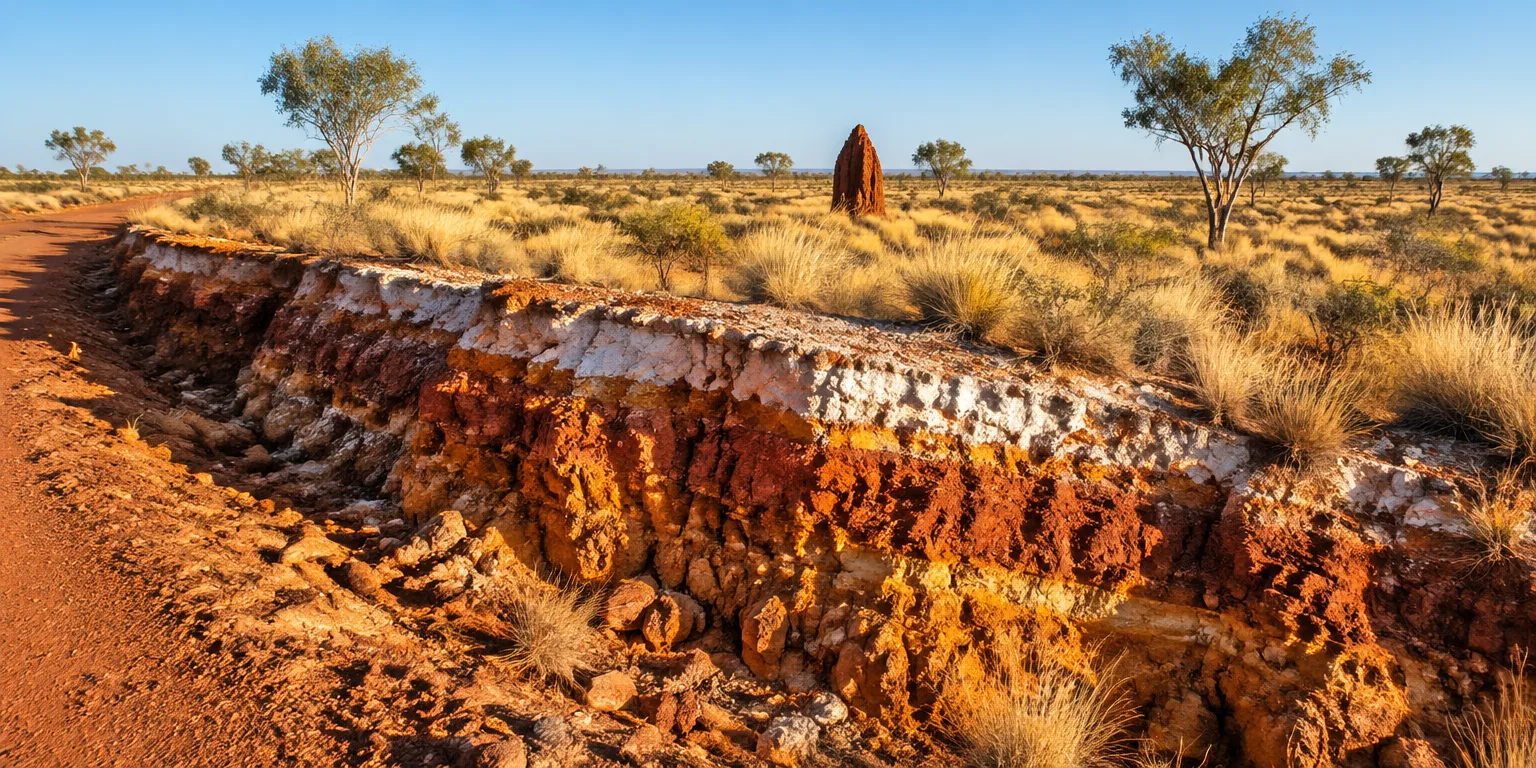
 RealLifeLore · Why 95% of Australia is Empty
Across nearly half of Australia, the dirt itself is exhausted. In northern Australia, soils have sat exposed to wind, heat, and rain for more than 250 million years, losing nutrients the whole time. In most of North America, Europe, and Asia, soils have been weathering for less than 10,000 years.
In general geology, fresh farm ground comes largely from two kinds of renewal. One is mountain building, which pushes fresh rock up from below where it can break apart into mineral rich soil. The other is glaciation, in which thick sheets of ice grind across the land, crush rock into powder, and then melt away to leave the ground covered in fresh, fertile debris.
Northern Australia has missed both renewals for almost geologic eternity. There has been no new mountain building there since the Precambrian, an ancient era in Earth history that ended more than a billion years ago. There has also been no glacial activity since the Carboniferous, another ancient era that finished about 300 million years back.
With no new crushed rock arriving, rain and wind leached out the phosphorus, nitrogen, and other nutrients that crops need. The result is that soil across much of the north is poor for farming and agriculture. That does not mean all of Australia is barren, since productive farmland remains elsewhere, including the Murray-Darling Basin that serves as an agricultural heartland in the southeast.
Worn soil is one factor among several that makes the north hard to farm, not the whole explanation for why Australia is empty. Isolation, and how hard the continent was to reach, is the big reason, and Australia still has abundant farmland per person. Even water and good land, taken together, do not give the full picture.
Questions people ask
How does building a mountain make better soil?
Mountains lift rock that has never been exposed to air and rain. Once at the surface, that rock cracks, crumbles, and chemically breaks down, releasing phosphorus, potassium, calcium, and other nutrients plants need. Without uplift, old surface soil just keeps losing nutrients without replacement.
What does ice have to do with farming?
Glaciers act like giant sandpaper. As ice sheets advance, they grind bedrock into a fine powder, and when they retreat they spread it across the landscape. Much of the American Midwest and northern Europe farms on that fresh layer, left behind less than 10,000 years ago when the last ice age ended.
Can fertilizer fix ancient soil?
Yes, for a price and within limits. Fertilizer, lime, and irrigation can compensate for missing nutrients and acidity, and Australian farmers do this successfully in parts of the south and east. But over very large, remote, and dry areas, the cost is too high and the water too scarce to rebuild 250 million years of loss.