Objects Have Been Filmed Flying Into the Ocean Without Making a Splash
Navy sensors have repeatedly tracked objects that ignore the splash, wake, and slowdown that water should force.
 Popular Mechanics · Navy Officer Says Underwater UFOs Are Legitimate Threats. The Evidence Is Hard to Ignore.
The strange part is not that something was flying. It is what happened when it hit the water.
In case after case, Navy pilots and ships have recorded solid-looking objects moving straight from air into sea without slowing down, splashing, leaving a wake, or giving off heat. Pilots training in the Pacific with carriers including the USS Nimitz and the USS Princeton reported versions of the same thing for years. Observers describe this apparent ability as transmedium travel, meaning passing between sky and water with no slowing, no splash, and no heat output.
That matters because water is supposed to push back. Under the normal physics of how objects move through fluids, the study of how water flows around objects, anything crossing from air into water should create drag, turbulence, or at least a splash. These objects behaved as if those rules did not apply, questioning long-held expectations among engineers and radar crews.
The clearest views come from infrared and night vision cameras. One three-minute clip released by a civilian research group, the Scientific Coalition for UAP Studies, shows a solid shape slipping into the sea at full speed, with no splash, no wake, and no visible disturbance. Seconds later it comes back up, divides into two parts, and goes under again.
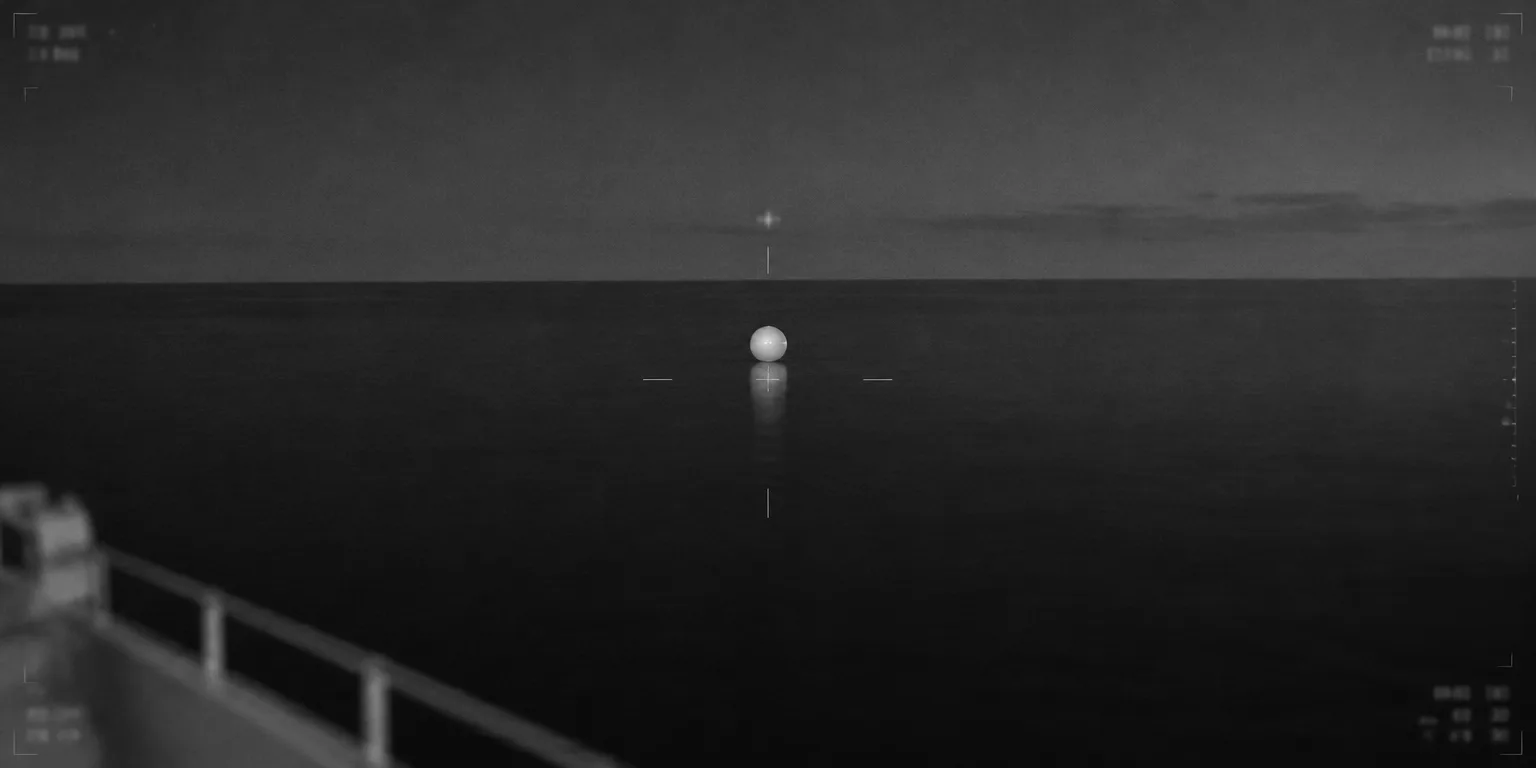
A similar event was captured in July 2019 by an infrared camera aboard the USS Omaha as it sailed off San Diego. The footage, which Pentagon officials later acknowledged as authentic, shows a spherical object moving over the Pacific and hovering just above the surface before dropping into the ocean, with no splash, no wake, and no debris. It did not match the look of familiar drones, missiles, or airplanes.
The camera that caught it was the AN/KAX-2, a stabilized turret built for ships that combines a digital video camera, a night vision camera, and a laser rangefinder. In the video, the operator tracks the object as it moves and hovers just above the surface, then it disappears.
Retired Navy rear admiral Tim Gallaudet, who has studied the incidents, said, "It's not that they break the laws. It's that they demonstrate engineering capabilities we haven't yet developed."
Questions people ask
What does transmedium mean?
It just means moving through more than one medium, in this case air and water. Most craft are built for one or the other, because wings work in air and hulls and propellers work in water. A transmedium craft would be able to operate in both without stopping to change configuration.
Why must a normal object make a splash?
Water is much denser than air, so an object entering it has to push water aside very quickly. That sudden push creates a splash, bubbles, a wake on the surface, and rapid slowing from drag. Even sleek divers, seabirds, and missiles leave turbulence, noise, and a visible disturbance.
How do heat signatures normally give objects away?
Engines, motors, and friction make heat, and military infrared cameras are built to see it. Jets leave hot exhaust, and fast objects heat the air around them. The reported objects were notable because infrared systems tracked solid shapes with no visible exhaust plume or heat bloom.