Octopus Arms Are Inspiring a New Kind of Soft Robot
Most of the animal's 500 million nerve cells live in its arms, letting each arm partly control itself.
 TED-Ed · Why the octopus brain is so extraordinary - Cláudio L. Guerra
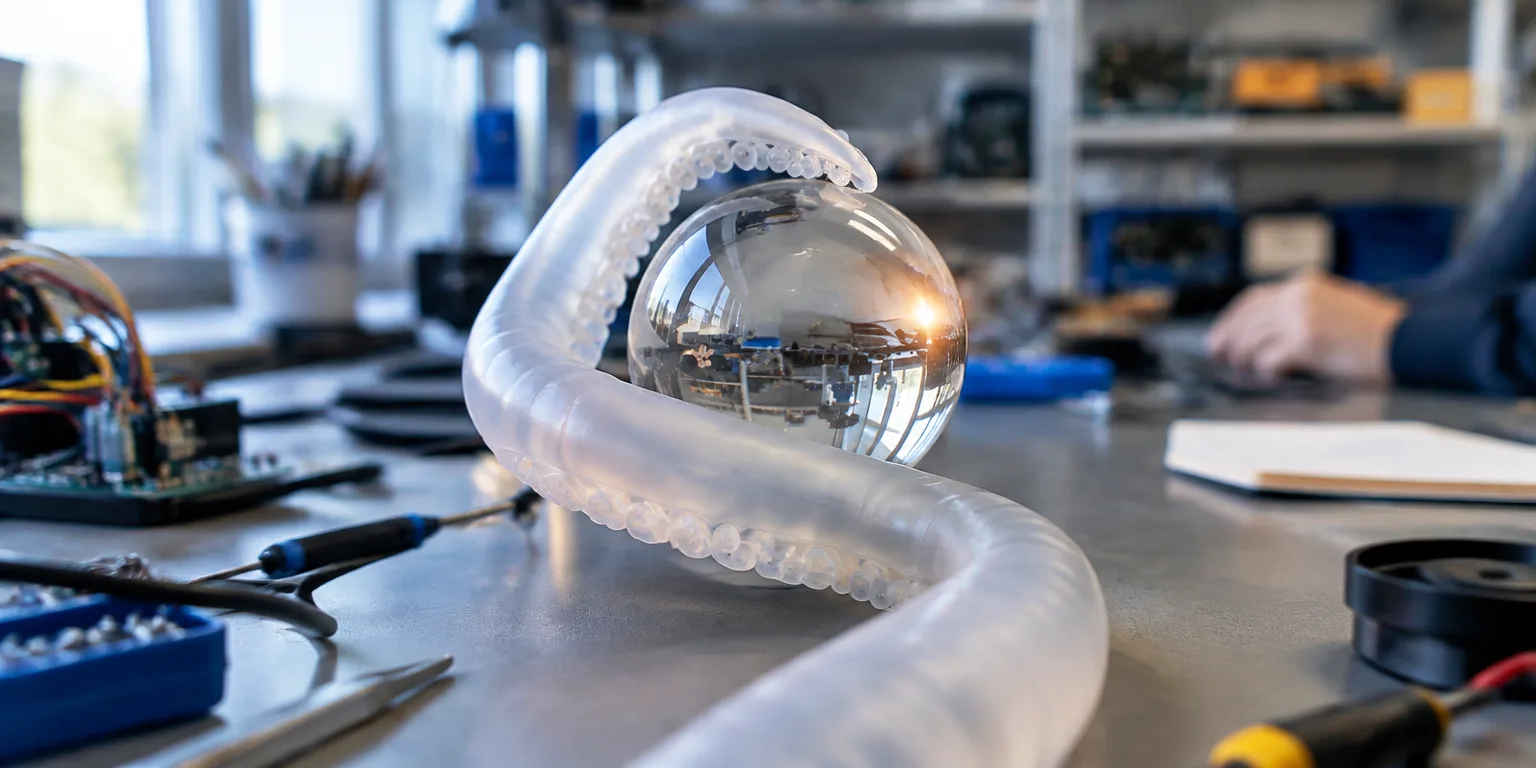
Researchers working on flexible robots built from soft materials have found a model in the octopus. The animal offers a different way to control a limb, one that lets the limb handle much of the work itself.
An octopus carries about 500 million nerve cells, roughly as many as a dog. Only about 10% are in the central brain, while about 30% are in two large centers for vision. The other 60% are spread through the eight arms, so much of the animal's nervous system lives outside the brain.
The arms also lack bones, so they are not limited the way a knee or elbow is limited. An octopus can curl an arm at nearly any place along its length and curve it in almost any direction, creating a nearly endless number of possible shapes.
People manage movement with an internal map of the body. When a person sees an apple, the brain directs specific muscles in the arm, hand, and elbow to reach, grasp, and bend. An octopus relies instead on a kind of behavior library. Seeing food calls up a general grab response, and the nerve cells in the arm carry out the motion.
When the arm touches food, one wave of muscle activity travels from the contact point toward the base, while another wave travels from the base toward the tip. Where the two waves meet, the arm bends, at the spot needed to bring the food toward the mouth. Each of the eight arms can therefore act without step by step orders from the brain.
That local control supports the flexibility octopuses show when they open a bottle to reach food, work through a maze, or change the color and texture of their skin to match the surroundings. For researchers, the work is still early research, but the idea is striking: a soft machine might gain skill by leaving some decisions to its limbs.
Questions people ask
Why would engineers want a robot to be soft?
Rigid robots are strong and precise, but they struggle to squeeze through tight spaces, grip fragile objects, or work safely around people. A soft, bend anywhere limb could wrap around delicate items, crawl into rubble after a disaster, or move inside the human body for medical exams and surgery.
Do octopus arms really think on their own?
Not in the human sense. The arms contain large bundles of nerve cells that handle sensing and movement locally, so they can carry out a grab and bend without step by step orders from the brain. The central brain still decides what to do, such as pursue food, and the arms work out how to do it.
Are there any octopus-like robots yet?
Yes, university labs have built silicone tentacles, gripping devices with suckers, and crawling or swimming robots that bend like an octopus arm. Most are still research prototypes, used to test better gripping, walking on uneven ground, and operating underwater, rather than products for sale.