Octopus Intelligence Evolved Separately From Ours
With a doglike tally of nerve cells in a very different layout, it can shed light on ideas about consciousness.
 TED-Ed · Why the octopus brain is so extraordinary - Cláudio L. Guerra
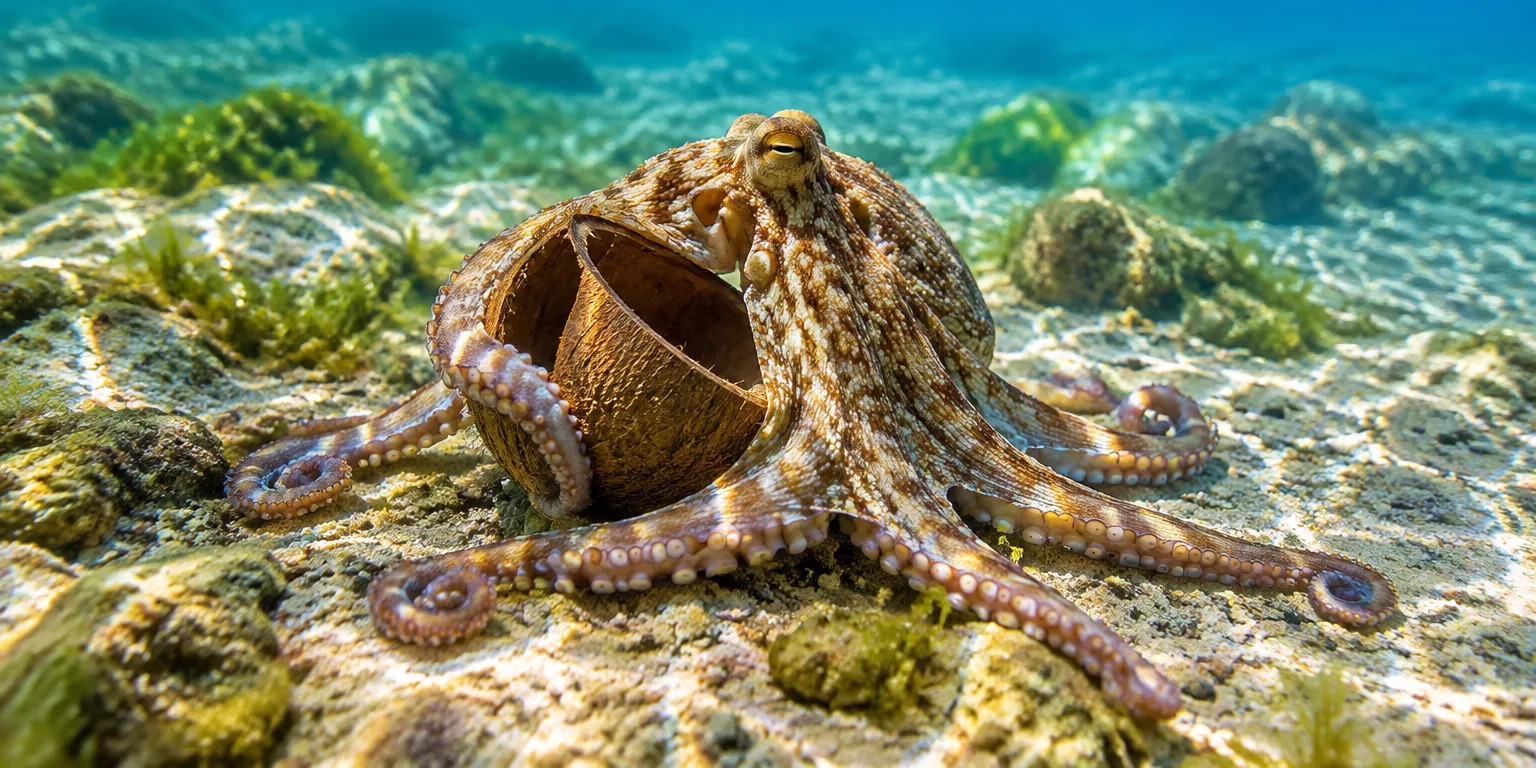
The octopus gets by with no lungs and no spine, yet it solves puzzles, learns by watching others, and uses tools.
That intelligence may have developed along a separate path from ours, which may mean intelligence on Earth arose more than once.
Octopuses are mollusks whose group name means head-feet, and there are about 200 known species. They have impressively large brains that are large for their bodies, as in other intelligent animals, and a nervous system with a neuron count rivaling a dog's.
Yet that cleverness runs on anatomy unlike our own, with nerve cells organized in a very different layout. Cephalopods, the group that includes octopuses, squid and relatives, may have built complex brains well before animals with backbones did. That would make octopus smarts a separate solution to the same basic problems, like grabbing food and escaping a maze, not a version of ours.
Studying a mind that evolved this way can help us understand intelligence and consciousness more broadly. The same design has inspired new research into flexible robots made from soft materials.
Questions people ask
Did octopus brains really evolve separately from human brains?
Yes, in the sense that cephalopods and vertebrates split hundreds of millions of years ago and then each evolved large, complex brains independently. That is called convergent evolution, when distant relatives arrive at similar abilities by different routes. Scientists still debate the exact timing and family tree, but the basic split is well established.
How smart is an octopus, actually?
In the lab, octopuses have solved mazes, opened jars to get food, learned by watching other octopuses, and used coconut shells and other objects for shelter. They also learn quickly and remember solutions. They are not as trainable as dogs, but their problem solving is striking for an invertebrate.
What makes scientists talk about consciousness in octopuses?
Researchers point to their play, curiosity, individual personalities, and apparent sensitivity to pain and stress, along with their large, active brains. That does not prove self awareness as humans experience it. It suggests there may be a form of subjective experience built on very different hardware.