Old private-jet engines are now powering AI data centers
Turbine blades made in just two factories are the choke point for new data centers.
 All-In with Chamath, Jason, Sacks & Friedberg · Anthropic's $2T IPO, Zuck's AI Manifesto, Nvidia's $500B AI Bet, Grok's Comeback
People building data centers commonly point to turbine blades as the ultimate constraint, investor Gavin Baker said.
Baker said the blades for big turbines are made in only two factories in the United States and Europe, each a giant building with a 40-ton press, now on 24-hour shifts.
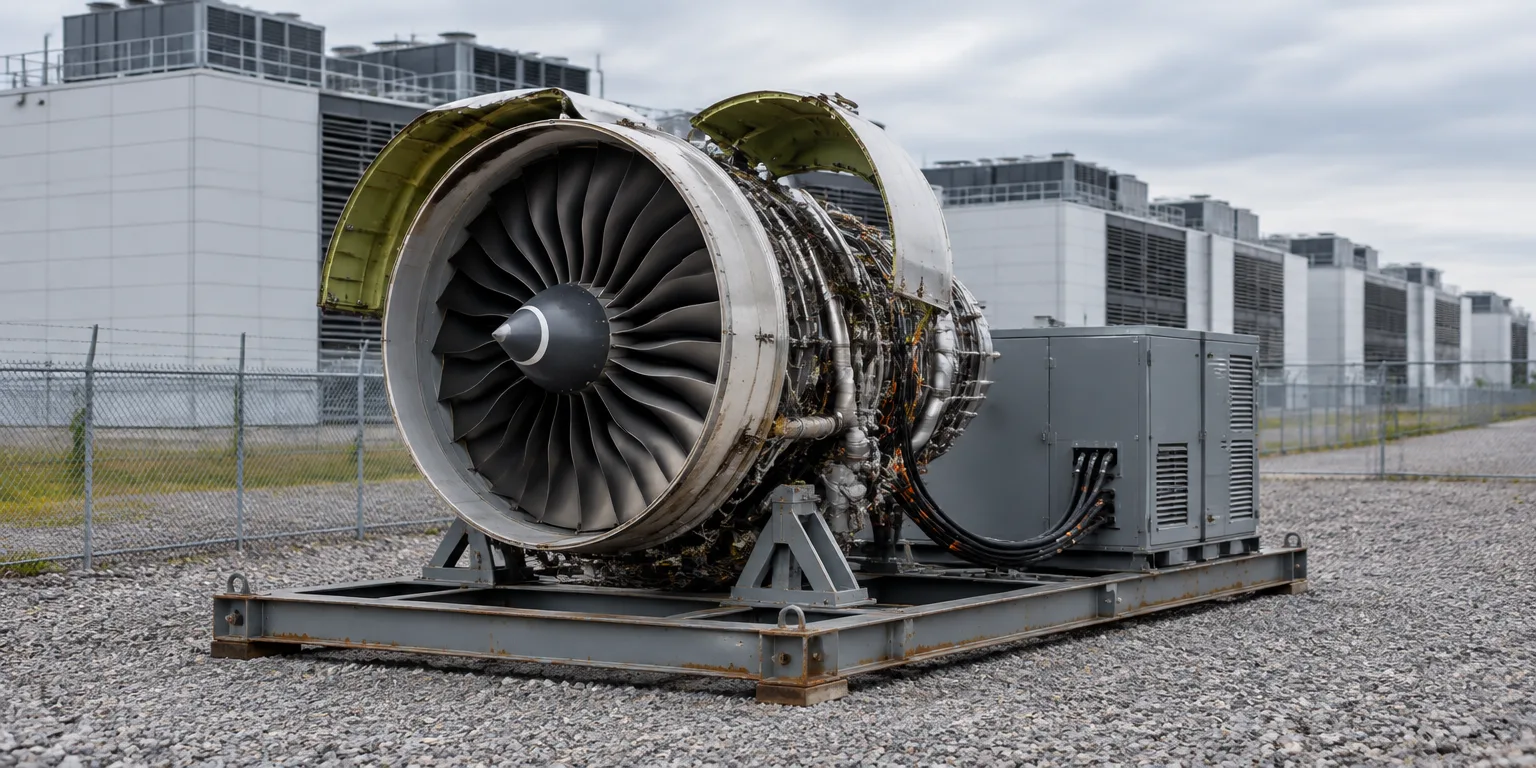
That shortage has kicked off a workaround. People are taking engines off old private jets and reusing them as generators to power data centers, demand Baker described as a big and fast-growing business that is helping keep prices for old jets strong.
The crunch is also pulling in new suppliers. Baker said he had seen a report that Elon Musk, the billionaire behind xAI and SpaceX, personally bought a turbine company, which Baker read as a sign Musk wanted to move fast, and that Boom Supersonic, a company developing a supersonic jet, plans to start with turbines ahead of jets given the demand. Caterpillar, GE Vernova, and Siemens Energy are expanding capacity, too.
Questions people ask
Why do AI data centers need so much electricity?
A data center is a giant warehouse full of computers that run AI models around the clock. Those computers draw huge amounts of power and generate heat, so the building also needs power for cooling, backup, and networking. A large AI data center can use as much electricity as a small city.
Can a jet engine really work as a power plant?
Yes. A jet engine is essentially a turbine that burns fuel to spin blades and produce thrust, and the same spinning motion can drive a generator to make electricity. Surplus or retired aircraft engines can be mounted on the ground as ready-made gas turbines, which is faster than waiting for a new power plant turbine.
Why are turbine blades so hard to make?
Large turbine blades must survive extreme heat and spin for years without failing, so they require special alloys, precision casting, and enormous presses and furnaces. Only a few companies have built that expensive tooling, so capacity cannot be added quickly even when demand surges.