Old tree rings still hold salmon nitrogen carried inland by bears and wolves
Scientists can tell it is from salmon by its distinct marine chemical signature.
 TEDx Talks · Nature's internet: how trees talk to each other in a healthy forest | Suzanne Simard | TEDxSeattle
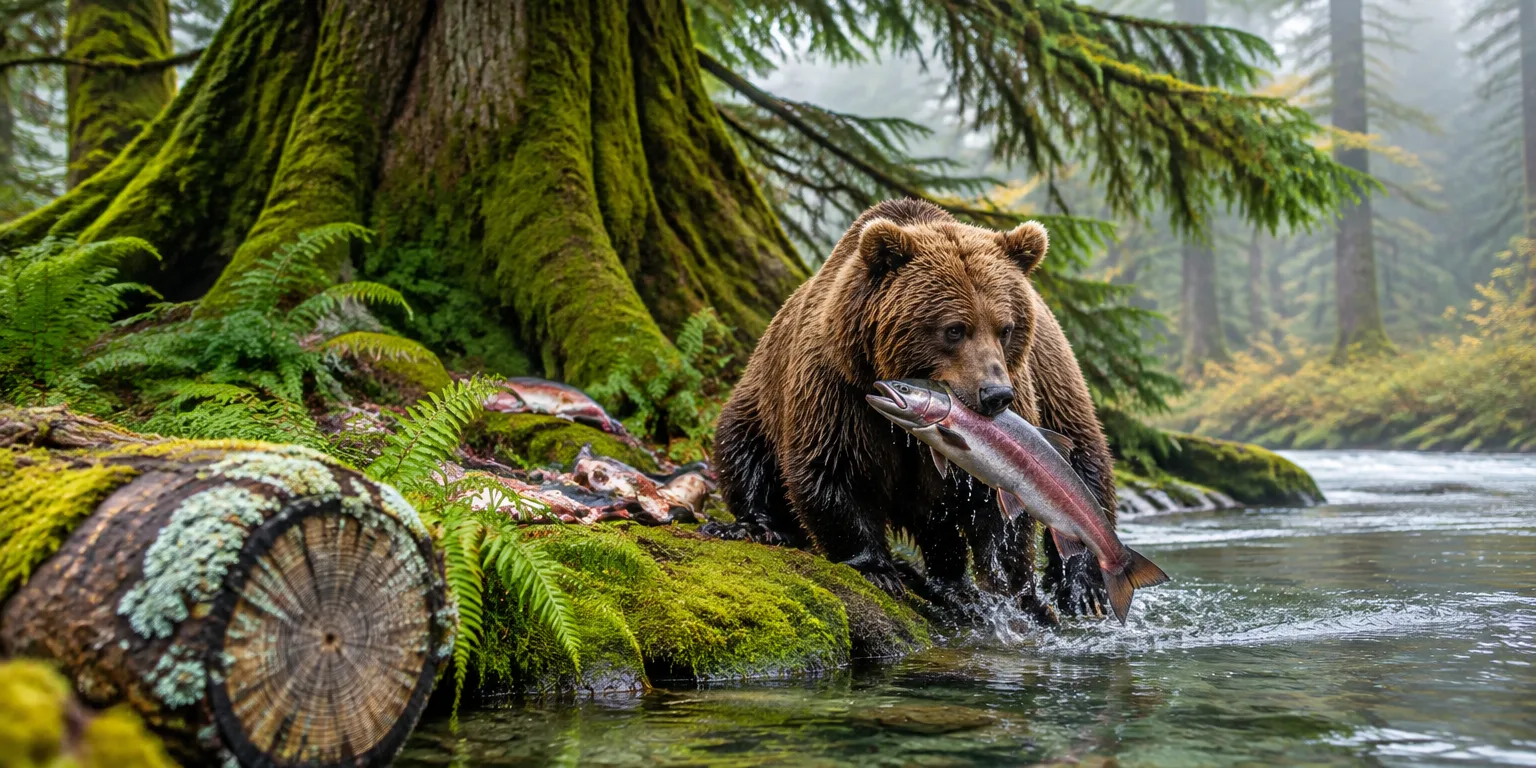
Traces of salmon nitrogen carried inland by bears and wolves are stored in the rings of very old trees for centuries.
Each fall, when salmon spawn in rivers, bears and wolves feed on the fish and carry them into the forest. They eat under the shelter of the biggest old trees, which forestry scientist Suzanne Simard calls "mother trees."
She says the scraps rot into the soil, and researchers think the fungal threads linking tree roots soak up the nitrogen. Scientists have found traces of that salmon nitrogen in tree rings, kept there for centuries.
Questions people ask
How can scientists tell the nitrogen came from salmon?
They use natural differences in nitrogen atoms, called isotopes. Ocean-going salmon carry a heavier nitrogen signature from marine food webs than land plants and animals do. That distinctive ratio shows up in soil, fungi, and wood near salmon streams.
How far into the forest does this salmon fertilizer reach?
It depends on how far the animals carry the fish, usually tens to hundreds of yards from the stream. Researchers have found marine nitrogen in trees and plants well beyond the riverbank, along with fur, bones, and droppings. The strongest signal is under the big trees where predators like to eat in cover.
Do the trees actually need the salmon?
Not exactly, but in the rainy coastal forests where soils can be poor, it is a useful bonus. Salmon deliver nitrogen and phosphorus that can boost growth of trees, fungi, and young seedlings. In return, healthy forests shade streams and feed insects that help young salmon, so the benefit runs both ways.