On a $100 Restaurant Bill, Toast Keeps About 49 Cents
Those small cuts add up to about two thirds of its gross profit, and grow as restaurant spending grows with inflation.
 Business Breakdowns · Toast: Sticky SaaS - [Business Breakdowns, EP.247]
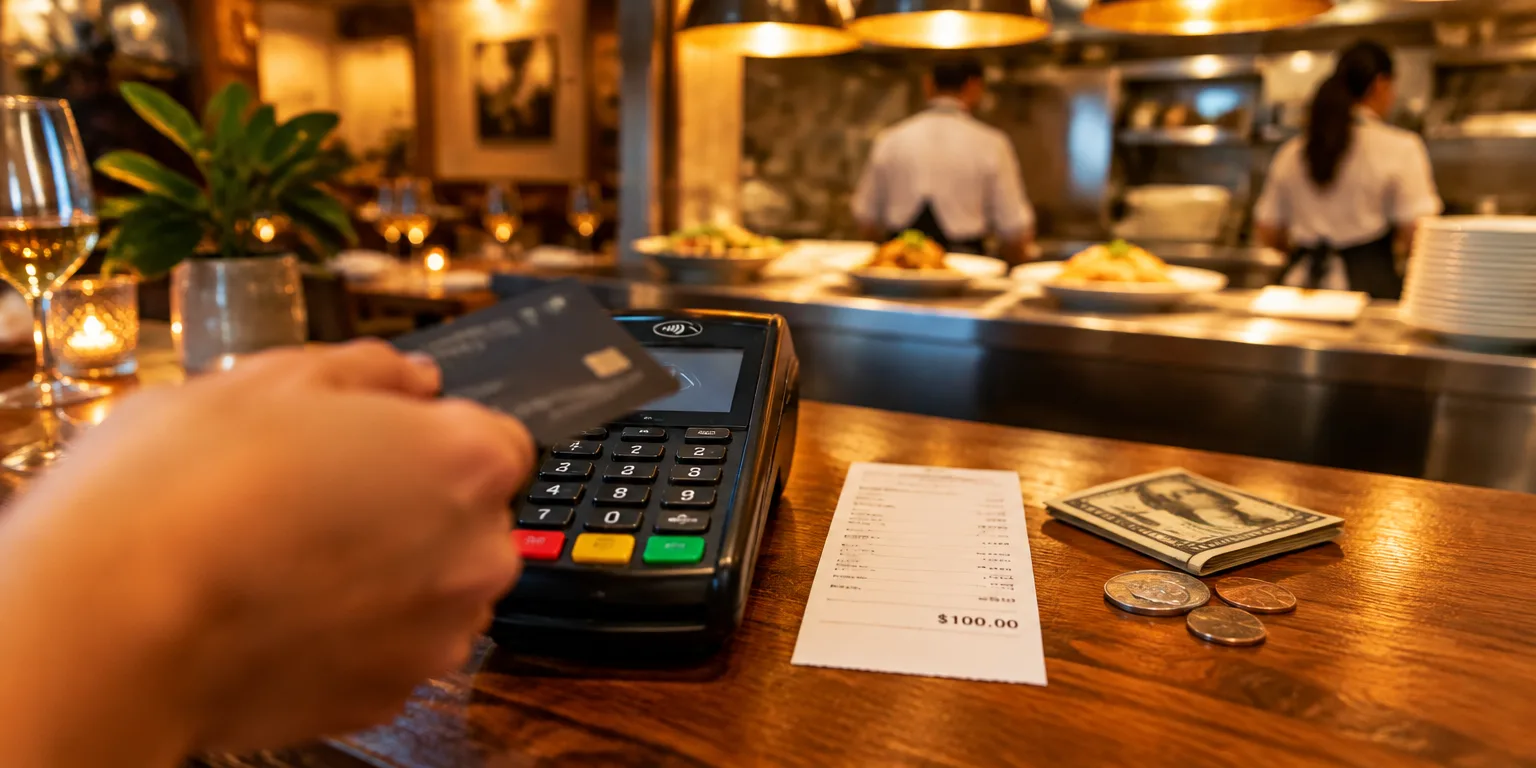
When a diner pays $100 by card at a Toast restaurant, about $3 never reaches the restaurant. It goes to the card system, and Toast keeps only a small piece of it.
Of that $100, about $2.50 goes to the banks that issued the card and to the card networks and other processing costs. About 49 cents is what is left for Toast after those others are paid, according to Shawn Barrett, founder and chief investment officer at Counter Global.
A basis point is one hundredth of a percent, so 49 basis points means 49 cents on every $100 of card payments. Toast has about $200 billion of payment volume on its platform, putting it in the ranks of America's largest merchants.
That small cut is Toast's main profit engine. About two thirds of its gross profit comes from payments, and about one third comes from software subscriptions. Customers use about seven Toast tools on average, but Toast earns most of its profit from payments.
Barrett calls that profit recurring in nature, rather than recurring by contract. If a restaurant turns off Toast, it cannot run its registers, take orders, or get paid. Retention is very high, so the payments keep flowing as long as the restaurant stays open.
Payments move up and down more than a fixed subscription does, because they depend on how much diners spend. The upside is that the card spending Toast processes grows with inflation and with the broader economy, and it ties Toast's revenue directly to the restaurant's revenue.
Toast also charges less than rivals. Most competitors keep 75 cents to $1.25 on a $100 check, Barrett says, and restaurants generally see Toast's price as reasonable. With its scale, Toast may be able to lower its own processing costs and increase that 49 cents over time.
Questions people ask
What exactly is interchange?
Interchange is the fee set by card networks and banks for handling a card payment. It pays the bank that issued your card, the network that moves the money, and other processing costs. Restaurants cannot avoid it if they want to accept credit cards.
Does Toast make money any other way?
Yes. Toast also sells software subscriptions, which are about a third of its gross profit, plus hardware and small loans to restaurants. Hardware is sold roughly as a loss leader to get its system into the kitchen. Lending is small but profitable.
Why does Toast charge less than competitors?
In part because it is still taking share from older cash register systems and wants to keep restaurants loyal. Rivals that charge 75 to 125 basis points often offer payments alone, without Toast's broader operating system for ordering, payroll, and inventory. Keeping its rate lower helps Toast win new openings.