On Curacao, 400 Sterile Flies Per Square Mile Wiped Out Screwworm in 14 Weeks
In Florida, scattered pupae were eaten by ants, and the first Curacao drops left 85 percent of offspring still viable, until scientists quadrupled the dose.
 Construction Physics · The Fall and Rise of Screwworm
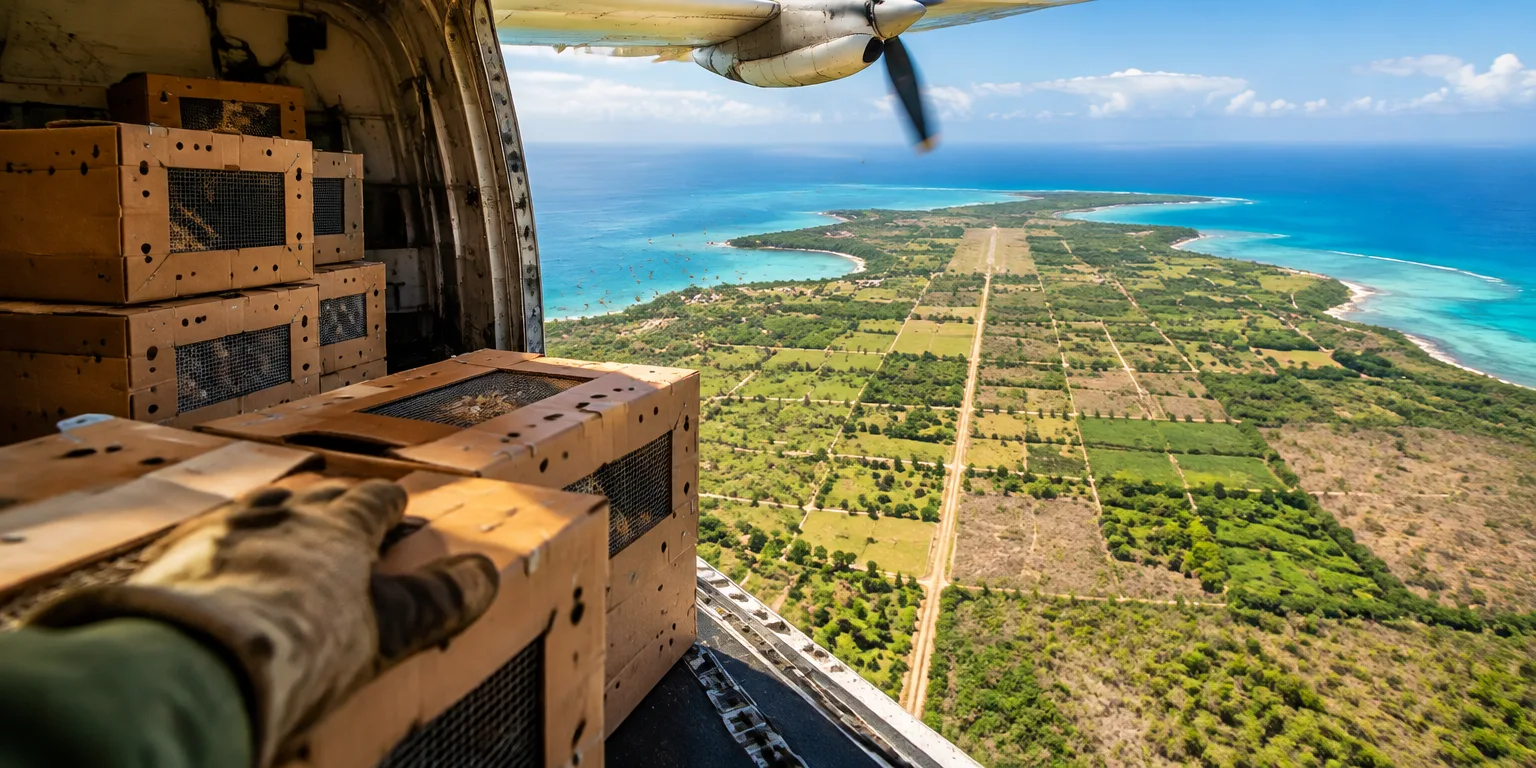
In summer 1954, a small plane flew a careful grid over Curacao, an island off Venezuela, and dropped boxes of live flies. The flies had been sterilized with radiation in Orlando, Florida, flown to the Caribbean, and released to mate. It was an eradication attempt built on arithmetic, not poison.
The target was the New World screwworm, a fly whose larvae feed on living tissue. A female lays eggs on an open wound, the eggs hatch into white worms that burrow deeper into the flesh, and without treatment an infested animal usually dies. Ranchers had spent decades inspecting herds at least every two days, treating wounds with chemicals, and still losing animals by the hundreds of thousands.
The USDA researchers behind the plan, including Knipling, a longtime screwworm investigator, had reasoned that if laboratory-raised sterile males greatly exceeded wild males in number, most females would pair with sterile partners and lay eggs that never hatched. Radiation provided the sterilization. With a high enough dose, males survived and still mated, but the eggs did not hatch.
Getting the flies into the field had already proved tricky. In Florida, the team first scattered sterilized pupae on the ground, and ants plus other bugs swiftly ate them. The researchers then tried dropping live flies on Sanibel Island, a tiny island close to Fort Myers on Florida's Gulf side. After several months of drops, the number of wild screwworms fell to virtually nothing, though complete elimination appeared impossible because wild flies kept migrating from the mainland.
Curacao offered isolation, and an opening. A Dutch agricultural officer newly stationed on the screwworm-overrun island had written to Knipling asking for help, and Knipling saw a larger, cleaner test site. To supply the trial, workers built a rearing plant in Orlando around a highly radioactive cobalt source that emitted gamma rays.
At first, Curacao looked like another disappointment. Released at 100 flies for each square mile, the sterile males left 85 percent of screwworm offspring still viable in the first weeks. The team then quadrupled the density to 400 sterile flies for each square mile, and the numbers turned fast. Within 14 weeks, researchers could find zero surviving young, and in November 1954 Curacao was declared free of screwworm.
The lesson was that the number of sterile flies, not the method, decided the outcome. Wild screwworm populations were sparse, later estimated at about 100 flies for each square mile, but beating them still required overwhelming numbers. The success gave the USDA confidence to build a larger factory outside Orlando, a plant that could turn out two million sterilized flies each week, and to aim next at the American mainland.
Questions people ask
How can a sterile fly still mate?
The male is sterile but still alive, able to fly and to mate. Sterilization damages the chromosomes in the sperm so the fertilized eggs cannot develop. A female that mates with a sterile male thus wastes her single mating opportunity.
Why did the technique work especially well on screwworm?
Screwworm females mate only once in their lives. That made the math work: one mating with a sterile male meant no viable offspring from that female, ever.
Why test on islands instead of going straight to Texas or Florida?
Islands limit reinvasion. On Sanibel Island, wild flies continued to migrate from the mainland, so the population could be suppressed but not erased. As an island, Curacao let researchers test whether elimination was really possible without constant reinfestation from outside.