On Titan, Fuel Sits in Lakes and Seas, but Settlers Would Likely Need Oxygen to Burn It
Titan is far colder than Antarctica, and its atmosphere holds abundant nitrogen rather than the oxygen needed to burn fuel.
 Science & Futurism with Isaac Arthur · Making Gasoline from: Air The Science of Synthetic Fuel (Narration Only)
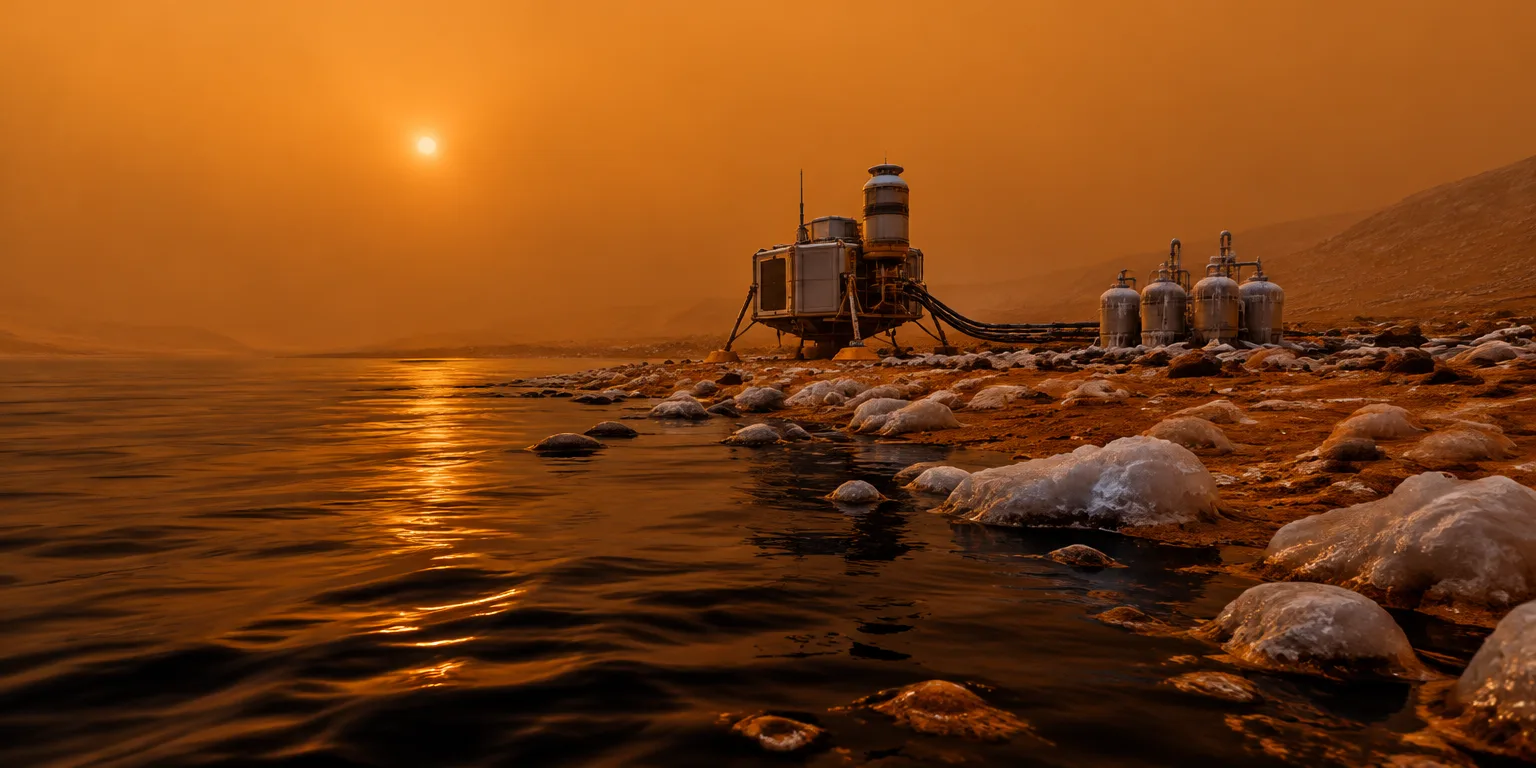
On Titan, a moon of Saturn, fuel sits on the surface in lakes and seas of methane and ethane, a simple hydrocarbon fuel.
On Mars, future settlers would have to capture carbon dioxide from the air to make methane. On Titan, they may scoop up hydrocarbons directly from the surface.
Nitrogen, also abundant in Titan's atmosphere, offers another local material for a settlement with enough energy and chemical equipment. The bigger shortage would likely be oxygen to burn that fuel. Titan's cold is far colder than Antarctica's, which makes outdoor processing harder.
Questions people ask
How cold is Titan, exactly?
Titan's surface averages around minus 179 degrees Celsius, or minus 290 degrees Fahrenheit. That is far colder than the coldest temperature ever recorded in Antarctica, about minus 89 degrees Celsius. At those temperatures, methane and ethane can sit as liquids on the surface.
Are Titan's lakes really like lakes on Earth?
In form, yes, with shorelines, rivers, and large seas. The largest sea, called Kraken Mare, is more than 1,000 kilometers long. The difference is the liquid, which is mostly methane and ethane rather than water, under a nitrogen atmosphere.
Where would settlers get oxygen on Titan?
No settled plan exists yet. The likely method is splitting water ice in Titan's crust, using electricity from nuclear power or another strong source. That yields oxygen and hydrogen, and the oxygen would allow methane to burn and people to breathe.