Once the World's Largest Penguin Colony Has Lost Two-Thirds of Its Birds
Warming water around a remote volcanic island is pushing krill south, leaving chinstrap penguins with less to eat.
 Global News Podcast · Woman at the centre of Spain's housing crisis dies
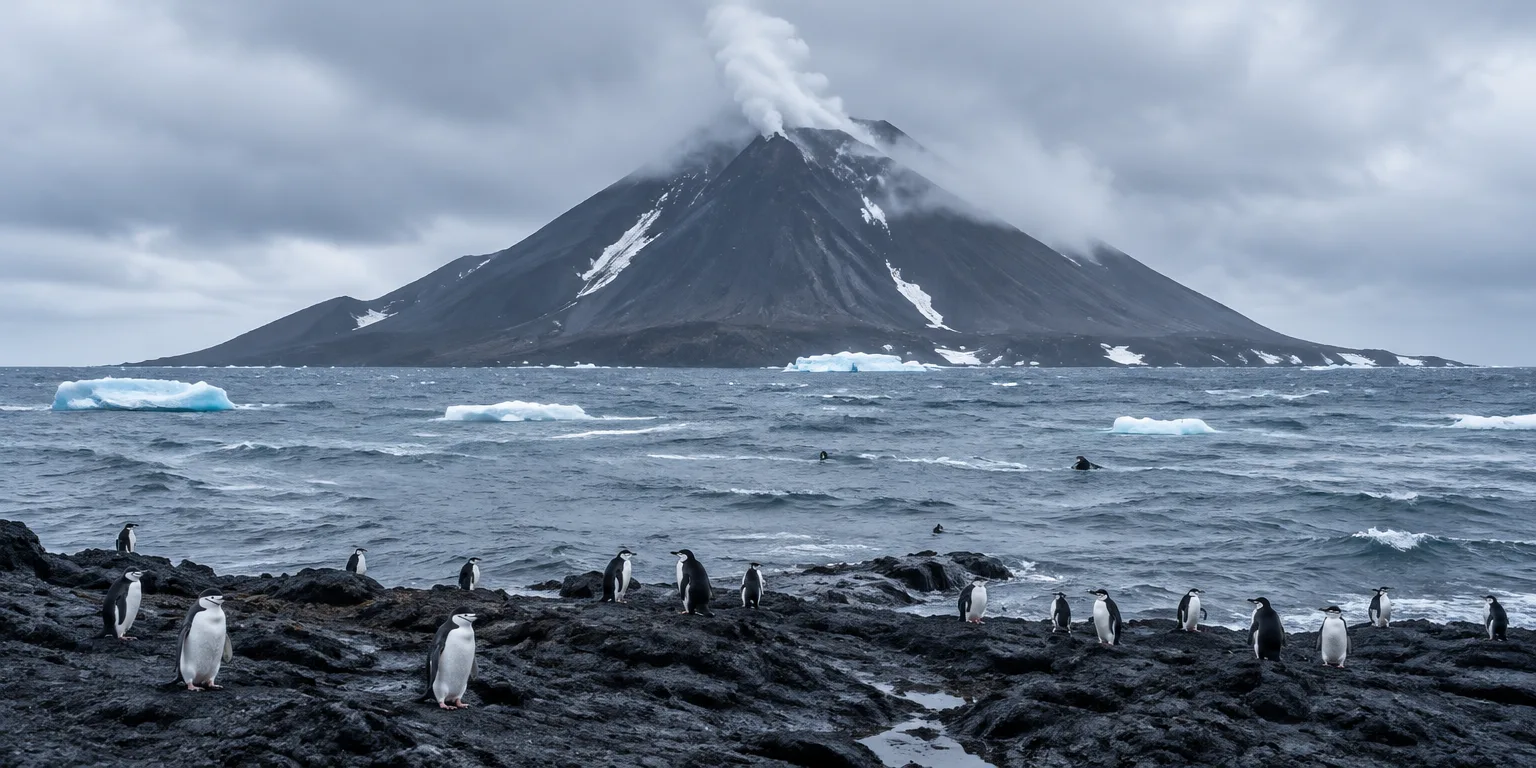
On Zavodovski Island, a volcanic cone rising out of the ocean about 4,000 kilometers southeast of the Falkland Islands, penguins once fringed almost the entire shoreline. Norman Ratcliffe, the lead researcher with the British Antarctic Survey, likens it to a penguin Mordor, a smoking peak emitting sulfurous gases and covered in birds.
When his team returned in December 2023 for a count using drones, the first since at least 2011, two-thirds of its chinstrap penguins were gone. That is "about half a million breeding birds," Ratcliffe said, disappearing at a rate of about 7 percent per year.
Chinstraps are plain black and white birds, named for the narrow black strap under their white chins. They are what scientists call a maritime Antarctic species, meaning they prefer cool water around their colonies and feed mostly on krill, the small, shrimplike animals that swarm in those waters.
The problem is heat. The Scotia Sea and Antarctic Peninsula, the waters around Zavodovski, are among the most rapidly warming ocean areas on the planet. As temperatures have risen, Ratcliffe said, krill stocks have contracted southward, away from the island, leaving the penguins with less to eat. The team counted the birds with drones and tracked their feeding with satellite tags, and Ratcliffe described the population as "declining in a sort of straight line."
The decline is not limited to one island. Numbers are falling elsewhere in the Scotia Sea, and at the current pace, Ratcliffe said chinstraps meet the criteria for the endangered category on the international list that tracks extinction risk. They are currently listed as of least concern, largely because everyone assumed the huge South Sandwich Islands populations were stable.
Zavodovski has already lost one distinction. It is no longer "the largest penguin colony in the world," Ratcliffe said. That title now belongs to the Adelie penguin colony at Cape Adare, "on the other side of the continent" by the Ross Sea, which holds about half a million pairs of penguins, Ratcliffe said.
Questions people ask
What exactly is krill?
Krill are tiny, shrimplike crustaceans that form enormous swarms in cold southern waters. They feed on microscopic algae under sea ice and, in turn, feed penguins, seals, whales, and fish, making them the central link in the Antarctic food web.
How do chinstrap penguins live and feed their chicks?
Chinstrap penguins nest in large colonies on rocky islands around Antarctica and feed at sea. During breeding season, parents take turns making foraging trips to bring krill back to their chicks on shore.
Where are Zavodovski Island and Cape Adare?
The South Sandwich Islands are a remote British territory in the South Atlantic, and Zavodovski is an active volcanic island with little vegetation. Cape Adare sits on the far side of Antarctica by the Ross Sea and now holds the largest penguin colony.