One AI data center takes 10,000 workers to build and as much power as a small city
Each one ranks among the most expensive infrastructure projects ever built, and companies have now built a lot of them.
 Invest Like the Best with Patrick O'Shaughnessy · Sam Altman on AGI, Compute, and Human Agency
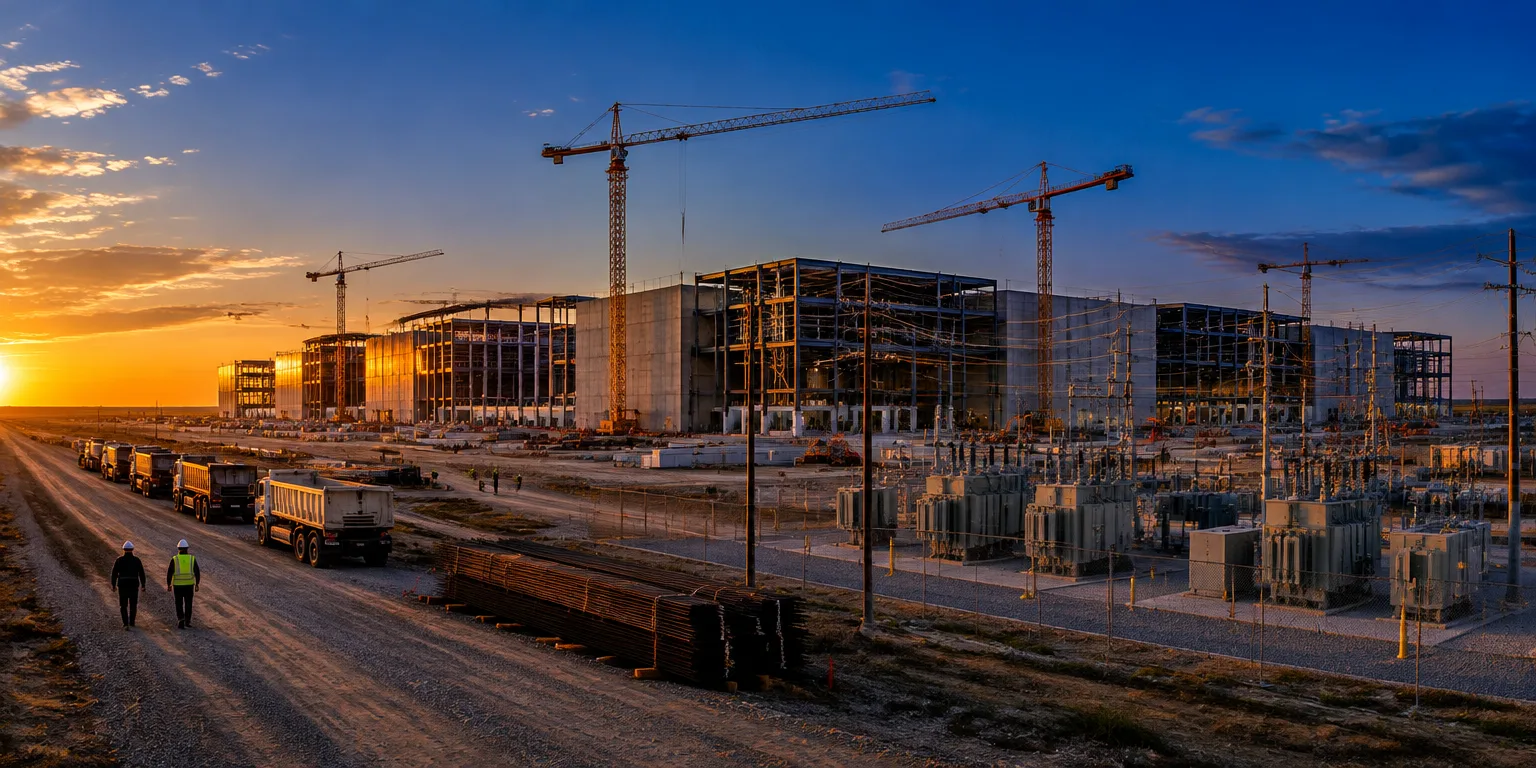
A single gigawatt AI data center, a site that draws one billion watts of power, takes about 10,000 construction workers laboring for eighteen months to build, and the energy that flows through it could power a small city.
That is the scale described by Sam Altman, who runs OpenAI. He said he has been thinking about organizing field trips to these sites, because saying the word gigawatt is one thing, seeing a photo is another, and standing inside is something else entirely. Up close, he said, the reaction is simple: "Oh man, this is like an unbelievable scale."
Each data center would rank among the most expensive infrastructure projects humanity has ever built, and companies have now built a lot of them. Altman said he emotionally understands why people do not want one in their backyard, comparing it to his own reluctance to live next to a nuclear power plant, even though he considers it very safe.
Questions people ask
What does gigawatt-scale actually mean?
A gigawatt is one billion watts of electrical capacity. A typical large U.S. data center campus is now designed to draw that much power at full load, roughly the peak demand of several hundred thousand homes.
Why does AI need that much electricity?
Training and running large AI models requires tens of thousands of specialized chips operating around the clock, plus cooling and supporting equipment. That concentrated computing load turns a single campus into an electricity customer on the scale of a factory town or small city.
Do these data centers also use a lot of water?
Many early ones did, because older systems evaporated large amounts of water for cooling. Altman has said a modern data center with closed-loop cooling uses only as much water as an office building would, for kitchens, bathrooms, and the like, though actual use varies by climate, design, and local water supply.