One Calm Chimpanzee Led a Doctor to Invent the Lobotomy
He did no animal tests, changed the operation almost every time, and published a monograph in under four months.
 Astral Codex Ten · Your Book Review: Great And Desperate Cures
In August 1935, in a crowded hall at a big international meeting of brain specialists, two Yale researchers described what happened after they destroyed much of the frontal lobes, the part of the brain behind the forehead, in two chimpanzees.
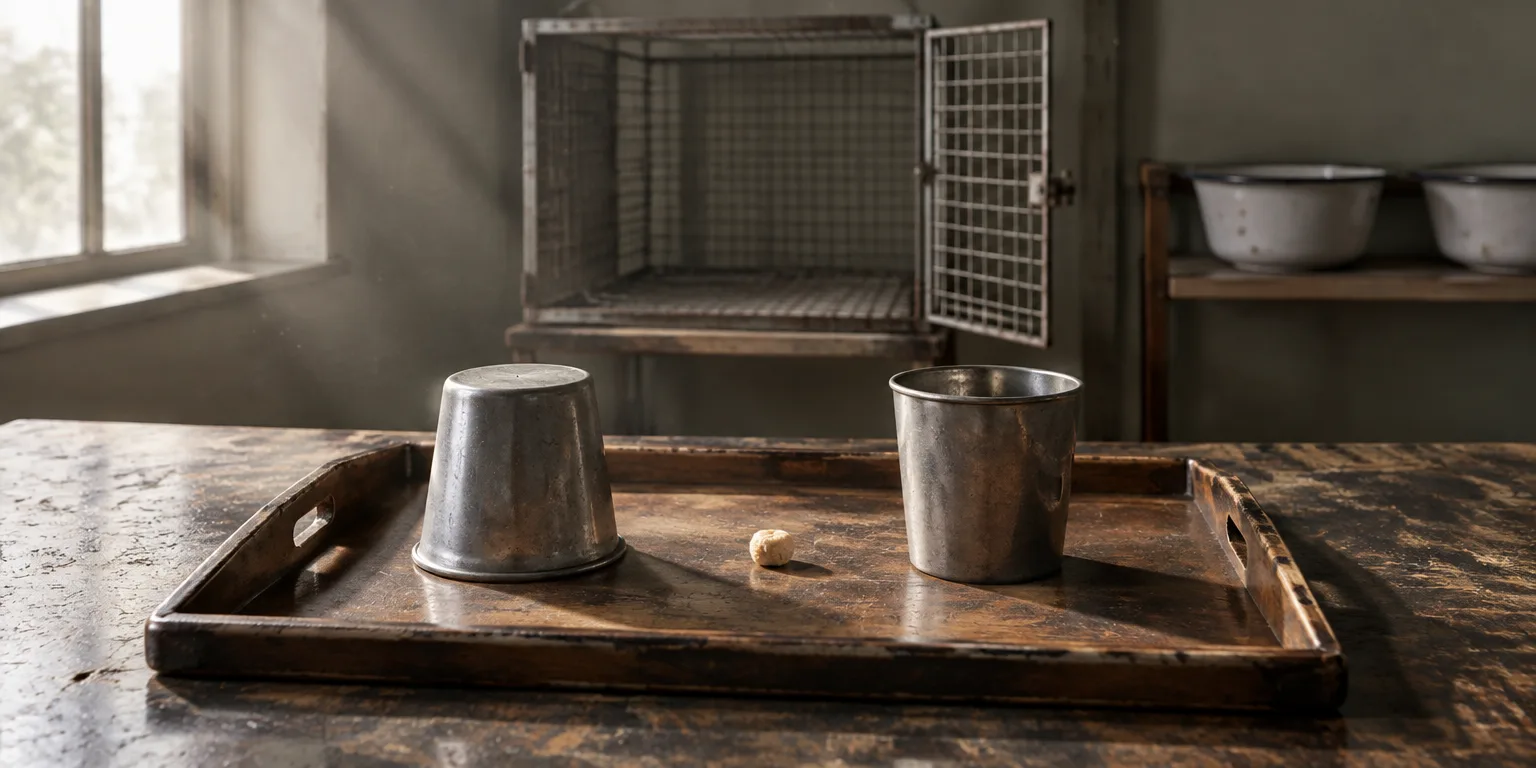
The animals had been trained to remember a food treat hidden under one of two cups. One chimpanzee, prone to fits of rage when she got the test wrong, became serene after surgery.
That single calm animal changed medicine. Egas Moniz, a 61-year-old neurologist who had failed to win a Nobel Prize for his earlier work making blood vessels visible on X-rays, a method called cerebral angiography, rose after the talk and asked an astonishing question. According to John Fulton, the Yale physiologist who gave the talk, Moniz asked: "if frontal lobe removal prevents the development of experimental neuroses in animals and eliminates frustrational behavior, why would it not be feasible to relieve anxiety states in man by surgical means?" Fulton later wrote that he was a little startled, since Moniz seemed to envisage removing large parts of both frontal lobes, which was "a very formidable undertaking in a human being."
This is how that startled moment became an operation performed on tens of thousands of people, built on 20 patients, no quantitative tests, and days of follow-up.
Moniz went home and did no tests on animals. He teamed with operating surgeon Almeida Lima to try the idea directly on people. In short order, Moniz and Lima operated on 20 patients, some with anxiety and depression and some with schizophrenia.
The method changed almost every time. At first they drilled holes in the skull and squirted alcohol into the brain to destroy tissue. Later they cut tissue directly with a cutting tool they named the leucotome, varying the spot and number of cuts and even the design of the tool.
Only a few months after the first operation, Moniz published a monograph on the 20 cases. Before the end of 1936, he had republished essentially the same results in five more articles in six countries, coining the term psychosurgery. He reported seven recoveries, seven improvements, and six patients unchanged. As historian Elliot Valenstein notes, Moniz never seriously considered that any patient was worse. Those who did not improve were simply called unchanged.
The foundation was weaker than it looked. The Yale chimpanzee study involved only two animals, and only one became placid. Yale psychologist Carlyle Jacobsen said it was "as if she joined a happiness cult." The other animal, which had performed well before surgery, began making many errors and developed temper tantrums. Yet Moniz, Fulton, and eventually even the Nobel Committee repeated the claim that both animals became agreeable.
Moniz also claimed he had thought deeply for years and held secret discussions with collaborators before operating. Valenstein found no written record of those talks, and the supposed collaborators could not remember them years later. The theory Moniz finally offered, that mental illness came from fixed thoughts held in place by rigid nerve links in the front of the brain that surgery must destroy, was, in Valenstein's judgment, "not much of a theory at all."
The follow-up was thinnest of all. In four of the seven patients called cured, the last observation recorded in the monograph came less than 11 days after brain surgery. There were no quantitative tests, only brief notes by a psychiatrist made soon after the operation. Still, influential doctors like Fulton repeated the claim that the evidence was solid, apparently without reading the book.
Moniz's speed was deliberate, leaving no room for a rival to claim the discovery, and the gamble worked. In 1949 he shared the Nobel Prize with Walter Hess, whose work was unrelated, with the committee citing the leucotomy idea.
Questions people ask
What did the operation actually do to the brain?
A leucotomy, later called a lobotomy in America, severed connections to and from the frontal lobes. Early versions drilled holes in the skull and either injected alcohol or inserted a cutting tool, while the later transorbital version drove a pick-like instrument through the thin bone behind the eye.
Could a doctor do that today, go straight from a conference idea to brain surgery?
No. Modern review boards require animal studies, written consent, and independent ethics review before experimental brain surgery. In 1935, those safeguards did not exist in Moniz's Portugal, so he and Lima could move directly from hearing a conference talk to operating on hospital patients.
What was the earlier brain X-ray work Moniz wanted a Nobel for?
It was created to make blood vessels visible on X-rays by injecting a dye that blocks the rays. It was genuinely useful for finding tumors and blockages, and it was the work for which Moniz had repeatedly sought, and failed to win, the Nobel Prize before turning to the brain.