One Closet Router Is Unlikely to Cover a Large House
Masonry, metal, mirrors, and long floor plans weaken Wi-Fi, so wired access points belong near the rooms people use.
 maxbuiltllc.com · How Should You Plan a Home Network? | Max Built
Put one strong router in a remote service closet and it is unlikely to cover a large custom house evenly, leaving weak spots and dead rooms.
The Federal Communications Commission advises keeping the router near the center of the home and says add-on mesh units, extra units that spread Wi-Fi to other areas, can carry the signal farther. But a far corner closet must push through too much house to reach every floor and outdoor room evenly.
The shape and substance of the house get in the way. Thick stonework, metal surfaces, mirrors, bulky heating and cooling gear, heat-reflecting barriers, sprawling wings, and layered floors can weaken or block signals, along with high ceilings and equipment placement.
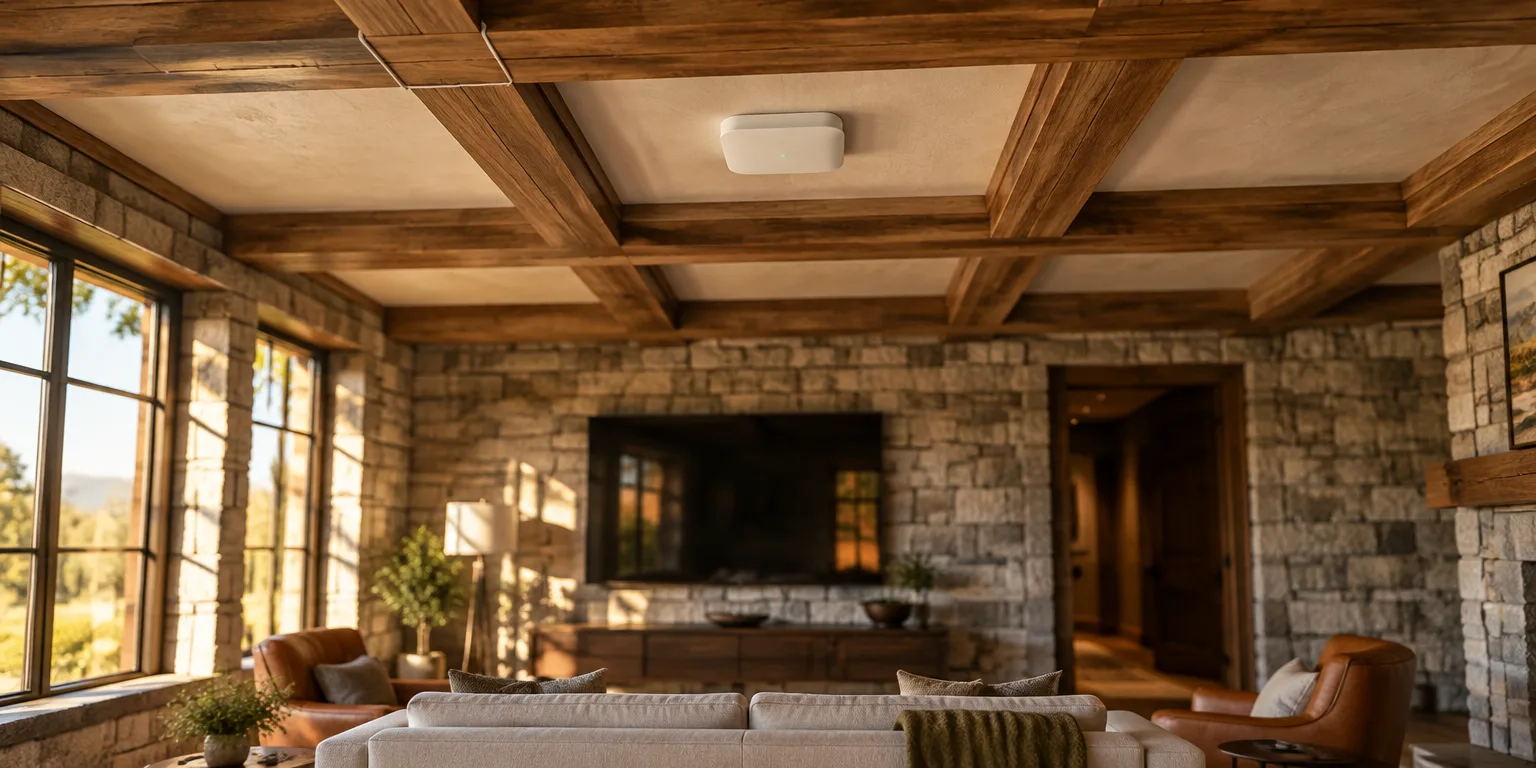
The stronger planning move in new construction is a cable-fed access point, a small Wi-Fi broadcaster that receives its connection through a wire. Placed where it can serve the rooms people actually occupy, it does not have to shout through the whole building, or dominate the architecture.
Those locations must be chosen early, based on the real room layout and what the house is built from. Drawings alone will not promise flawless coverage, but they can head off clear errors, like hiding every broadcaster inside a cabinet or bunching the hub, the main network box where the cables meet, in a remote corner.
Each access point needs approved mounting, a cable route, and a way to reach it for service. Builders coordinate those spots with lighting, speakers, beams, millwork, ceiling patterns, and sprinklers when present.
It also helps to wire fixed, heavy users such as a television, workstation, camera, or controller. A wired connection gives that device a predictable physical path and reduces competition for wireless airtime, the share of the wireless signal each device gets to use, for everything else.
Questions people ask
What exactly is a cable-fed access point?
It is a small Wi-Fi broadcaster that connects back to the network over a cable, rather than repeating a wireless signal through the air. Because the cable carries the data reliably to that spot, the access point can serve nearby phones and laptops with a strong local signal.
Can I just add mesh Wi-Fi later if I have dead spots?
Mesh, extra units that spread Wi-Fi, can extend coverage, and federal regulators point to it as one option. In a new house, though, running wires before walls and finishes close the options is more predictable than trying to fix dead zones later, especially where masonry, metal, or long wings are involved.
Should every TV and computer get its own cable?
No. The priority is fixed devices that carry steady traffic or run important home functions, such as workstations, televisions, cameras, and controllers. Giving those a wire leaves phones, tablets, and guests with less competition for wireless airtime.