One Day, Computing May Move Into Space
Karan Kunjur says larger satellites and cheaper launches could make orbit competitive for data centers in five to ten years.
 Marketplace · Why raise money in euros?
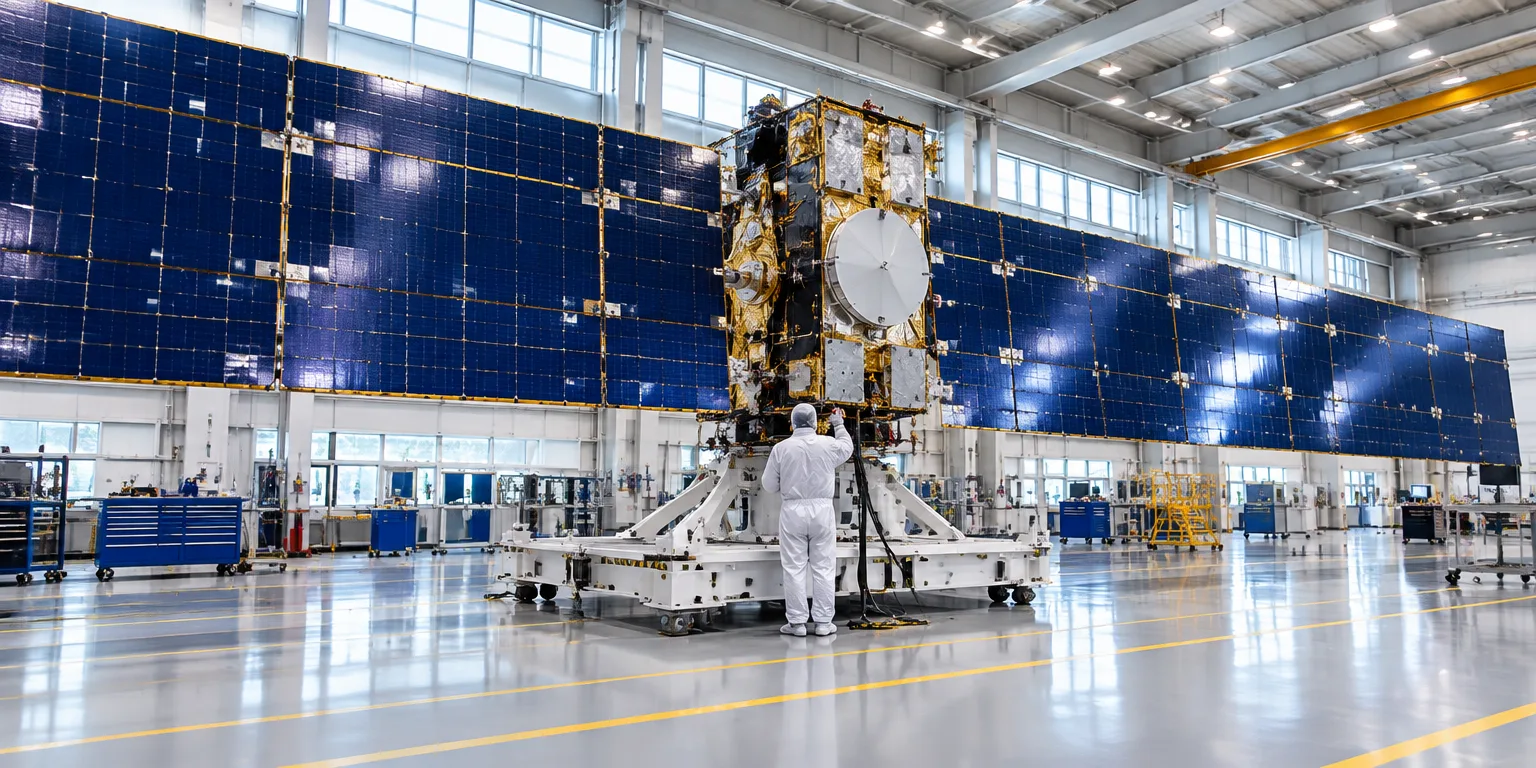
Inside the K2 Space factory in Torrance, California, chief executive and co-founder Karan Kunjur was asked when the data centers packed into places like Ohio and Virginia might move off the ground.
His answer was blunt. "Long term, all compute will be in space."
Karan and his brother Neil Kunjur, an engineer and the company's technology chief, build large and powerful satellites. Karan puts it this way: "the smallest satellite we will ever build is as large as the largest satellites that have ever existed," with wing-like solar panels stretching about 50 meters from tip to tip.
For the brothers, that power is the point. They argue that meaningful computing in orbit was once out of reach, but with their design numbers of 20 kilowatts today and 200 kilowatts planned, spread over arrays more than 100 meters wide, it is now in the realm of possibility.
They do not claim it will happen soon. Launch is still expensive, and they say space will probably not compete with ground data centers in a year or two. Their approach is to design satellites that stack, so many can fly on one rocket, and Karan says if they can divide that cost by 10 or 20, the economics could work.
They also make about 90 percent of the satellite themselves, including almost the entire solar array, because, as Neil puts it, everything comes back to power. Their goal for five to ten years from now is to build software so hundreds of satellites could largely operate on their own, with an entire constellation run from a laptop in a coffee shop.
"Will it be competitive five and ten years from now? I think so," Karan said.
Questions people ask
Why would space be a good place for computing?
In orbit, solar panels can collect strong, steady sunlight without clouds, dust, or nighttime interruptions on the ground. That matters because computers, and especially AI systems, need large amounts of continuous electricity.
Does the cold of space keep computers cool?
Space is cold, but heat does not disappear on its own because there is no air to carry it away. Satellites must radiate heat from panels, and powerful computers make cooling harder, which is one reason large power and thermal designs matter.
How would data get to computers in space?
Information still has to travel by radio or laser links between Earth and orbit, which adds delay and limits capacity. That makes space better suited, at first, for work that does not need an instant response.