One Espresso Handle Works With or Without Spouts
Silicone spouts replace metal, so there is less to heat up.
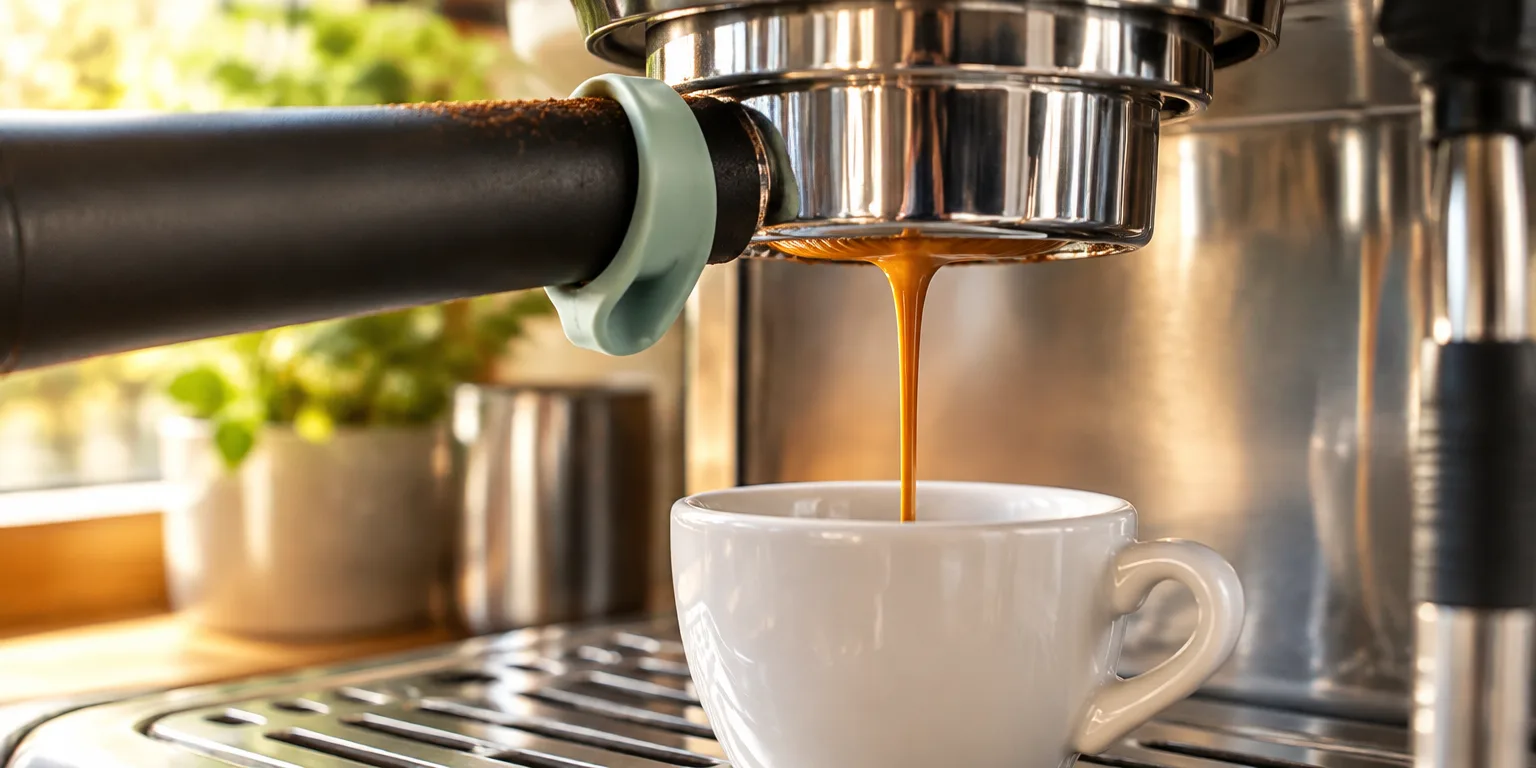
The Ride, a home espresso machine from German maker Profitec, comes with just one brewing handle.
That handle, called a portafilter, is the heavy metal holder that locks in the ground coffee while hot water pushes through. On the Ride, it is bottomless, meaning it is open underneath so espresso flows straight out.
It accepts silicone spouts for serving one cup or two, so the same handle pours like a traditional spouted one. Because silicone replaces much of the usual metal, there is less cold metal to heat before brewing.
That helps shorten the warm-up, alongside the machine's Fast Heat Up mode that heats both boilers at once, and it saves buyers from purchasing and storing a second handle.
Questions people ask
Why would I want a bottomless handle in the first place?
A bottomless leaves the bottom open, so you can see uneven flow or spurting as the shot pulls. A spouted version divides the stream into one or two cups. At this price, most buyers will likely use the bottomless form most of the time anyway.
Why does the amount of metal matter?
On a traditional machine with heavy chrome-plated brass handles, the handle itself draws heat from the brewing water until it is fully warm. Less metal means less heat is lost, so temperature is more stable and the machine is ready sooner.
Does the silicone hold up to heat?
Food-grade silicone is made to handle kitchen heat and does not melt at espresso temperatures. Espresso brews at about 200 degrees Fahrenheit, well within the range kitchen silicone is built for.