One Friday night, six middle school dances rehearsed adulthood
Kids dread the slow songs, test the rules on grinding, and then get picked up by their parents.
 This American Life · 449: Middle School
Four sixth grade girls rode to their school dance in Illinois insisting that no one in the car would dance with a boy. They did not know if there would be slow dancing or regular dancing, and that uncertainty was the whole problem.
In New Jersey, sixth grader Ethan DeRose stood outside his school in a green and black striped button up shirt his mother had made him wear. He said he was not ready for a slow dance and did not know if he would do it correctly. He said he was hoping for no humiliation, "not something that'll be a story for the next month or two."
Reporters spent the same Friday night inside six middle school dances across the country, from Illinois and New Jersey to New York, Delaware, Maine, and Virginia. What they found was a rehearsal for adult life, complete with printed rules, dance floor politics, and a hard stop when childhood reasserted itself.
The rules came first. Outside Moody Middle School in Richmond, two eighth graders read the flyer aloud. It banned hands below the waist and banned petting, with petting in quotation marks. Neither boy knew what petting meant.
Inside a costume dance in Delaware, producer Lisa Pollak was on the gym floor and described how the room sorted itself. The oldest students held the center, the youngest kept to the outer edges, and a few drifted without settling anywhere. They moved in dense, shoulder to shoulder groups with little room between them, bouncing to fast songs while chaperones stayed close, ready to step in over grinding, the close, hip to hip dancing that schools banned.
Hovering outside one group was John Gause, a teacher, who said the students had the guilty look of kids about to be caught. He plunged into the pack, pulled a boy aside, and later explained his method as a flat handed warning to calm down and stop pressing up against the girls like that.
Then came the test everyone had feared in the car and on the sidewalk. When the slow song started, most students left the floor. Couples gathered in the middle, which teacher Brian Comroe suspected was to stay away from adults, while friends stood a foot away talking to them. One girl grabbed the back of her friend's neck while the friend danced with a boy. Comroe said the hard part at that age is that when boys and girls pair off, "one friend is always left behind."
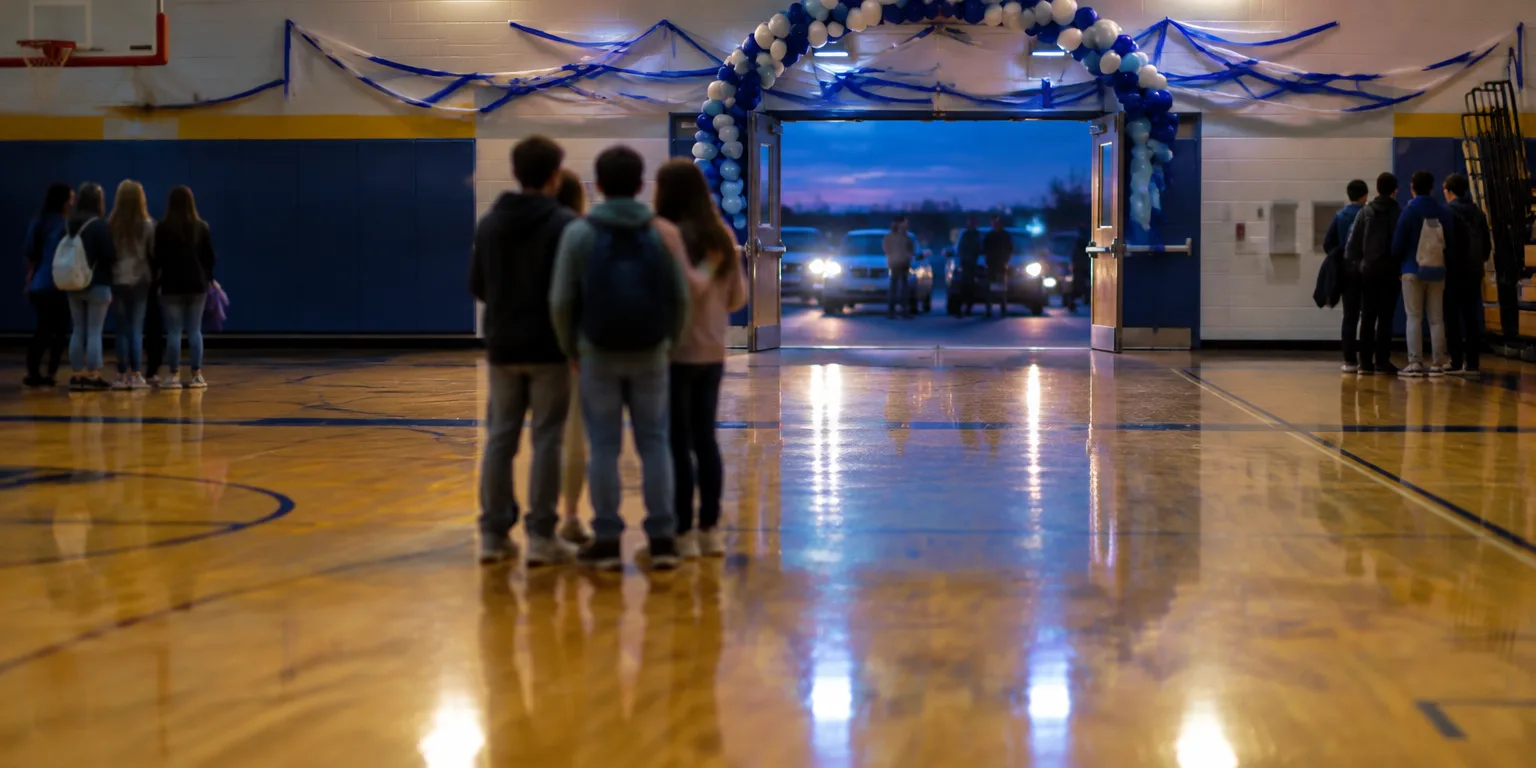
When Hit the Road Jack started playing and the lights snapped on at 9 p.m., there was no wind down, with parents already waiting outside. A voice beside Pollak said the room would be empty in another minute, and he was right. The same children who had been acting grown up slipped into waiting cars where their parents met them.
Questions people ask
What is grinding?
Grinding is a style of dancing in which partners stand very close and move their hips against each other. It became common at school dances and parties in the 2000s, and many schools banned it because teachers and parents considered it too sexual for middle school.
Why do middle school dances have such specific rules?
Schools use written dance rules to give chaperones a clear way to intervene without singling anyone out. Rules about hands, space, and appropriate songs let teachers stop behavior early and give students a face saving reason to back off.
Why does a slow song clear the dance floor?
Slow dancing requires asking, touching, and being watched, all at an age when children are highly sensitive to embarrassment. Many leave the floor to avoid rejection or gossip, while the few couples who stay accept the attention as the price of looking grown up.