One Immune Cell Can Swallow 100 Bacteria Whole
It dwarfs ordinary cells, and it digests bacteria alive.
 Kurzgesagt – In a Nutshell · How The Immune System ACTUALLY Works – IMMUNE
Cut your thumb on a grimy stick outside, and while you notice the blood, surviving cells in the wound release chemical alarm signals.
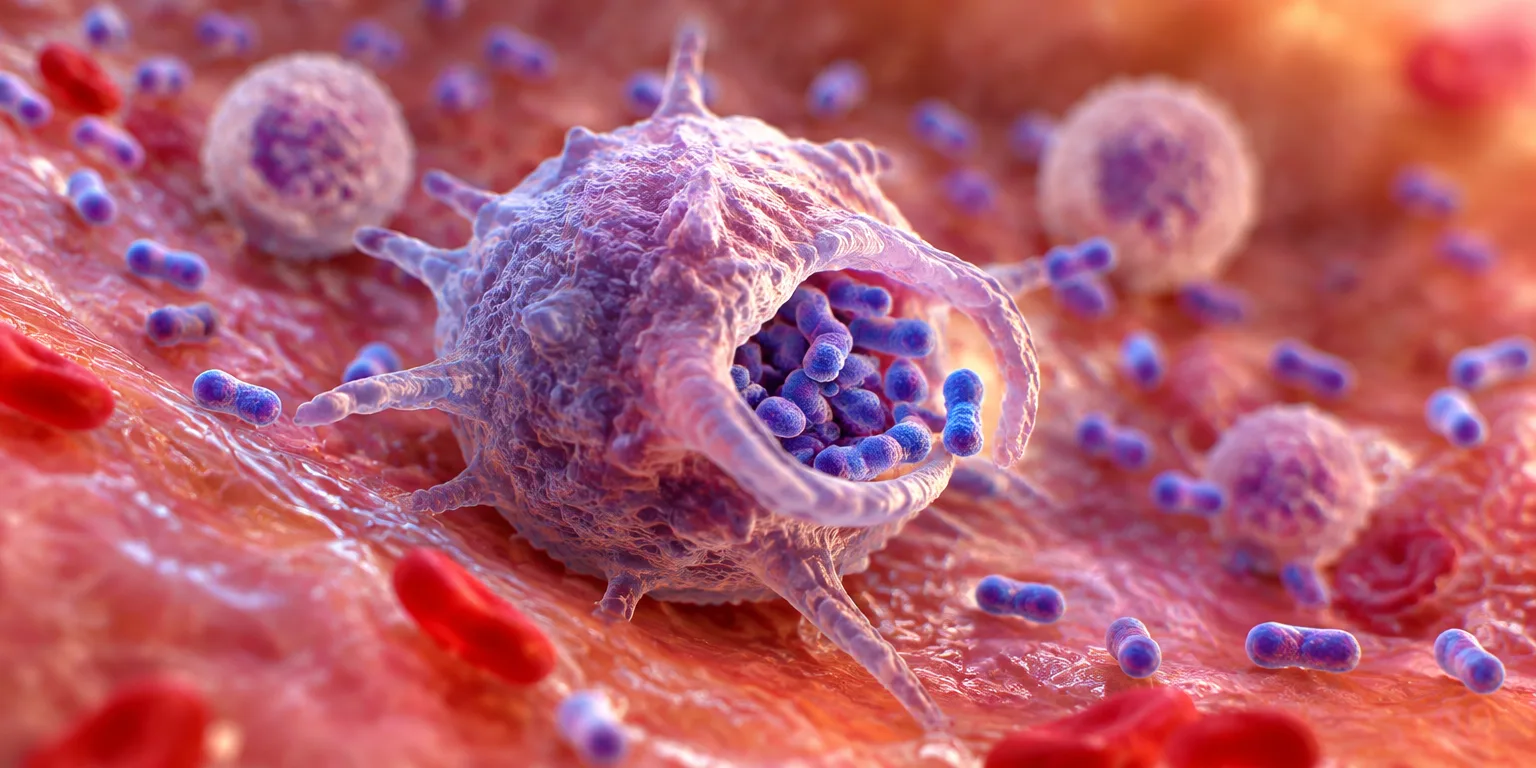
The first defenders on the scene are macrophages, white blood cells that patrol tissue and clean up germs and dead cells. They measure about 20 micrometers across, far bigger than bacteria and much larger than many ordinary body cells.
They act fast, stretching out parts of themselves to grab bacteria, swallowing them whole and breaking them down inside while still alive.
One macrophage can eat 100 bacteria before it tires. Then it calls for reinforcements, and hundreds of thousands of neutrophils, white blood cells that rush to the fight and kill germs, move in to continue the fight.
Questions people ask
What exactly is a macrophage?
It is a type of white blood cell that patrols tissues and cleans up germs, dead cells, and debris. The name means big eater, and it kills by engulfing its target and breaking it down with strong digestive chemicals.
What happens to a macrophage after it eats 100 bacteria?
It becomes exhausted and less effective, and it calls for reinforcements. Other immune cells, especially neutrophils, then arrive in large numbers, and later signals from helper cells can reenergize tired macrophages.
How big is a macrophage in real life?
Most are about 20 micrometers across, or about one fiftieth of a millimeter. That makes them much larger than many bacteria, which are often only one or two micrometers long, and larger than many ordinary body cells.