One of the world's largest geothermal systems is buried under a Wisconsin campus that looks like Hogwarts
The 6,100-hole system circulates 6 million gallons of water, and more than half of Epic's energy savings comes from it.
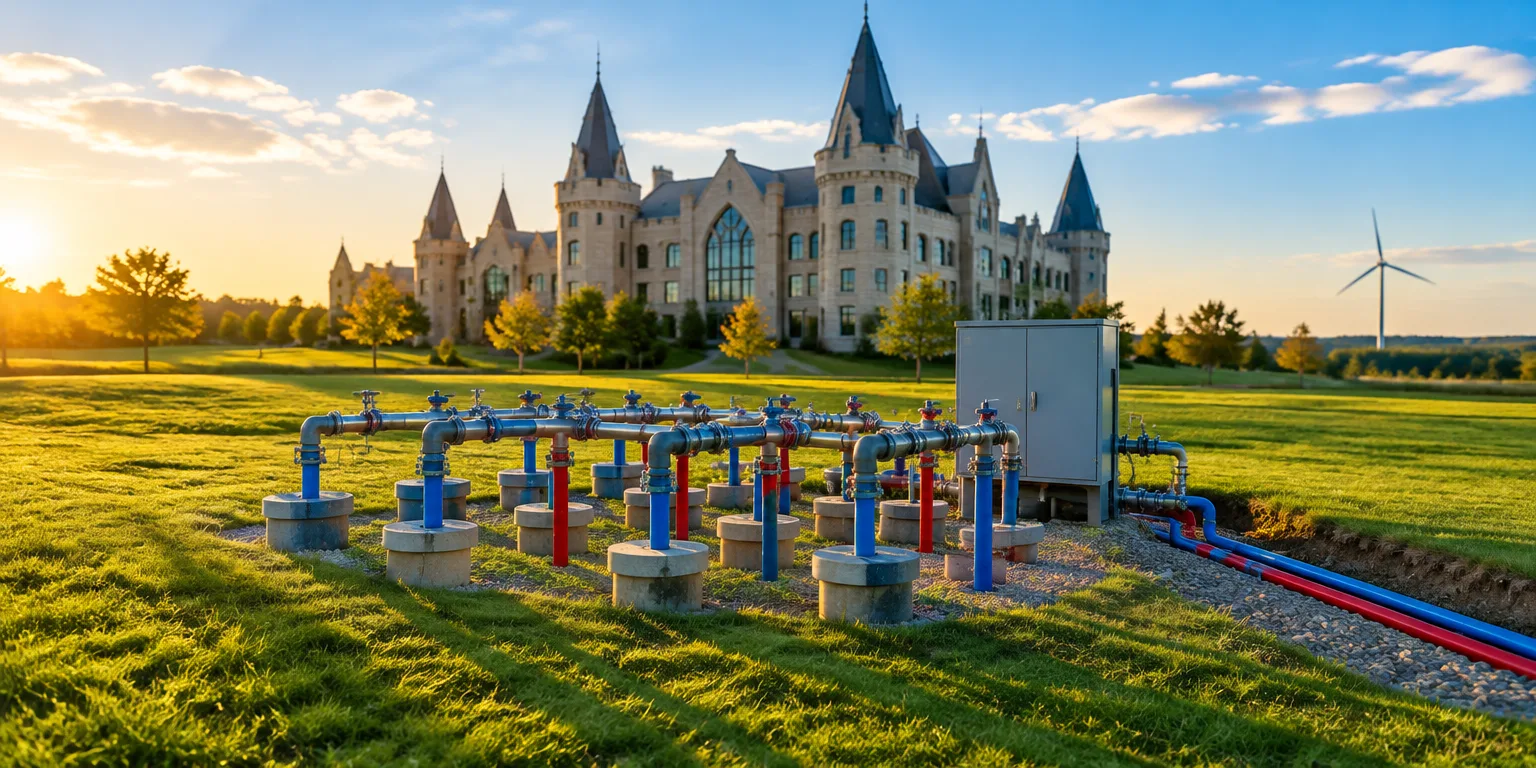
 Inside Climate News · One of the World’s Largest Geothermal Networks Is Buried Beneath a Corporate Campus in Rural Wisconsin
Beneath a corporate campus in Verona, Wisconsin, that looks like Hogwarts Castle and the Emerald City sits one of the biggest underground climate systems on the planet.
The campus belongs to Epic Systems, a privately held company whose software holds the medical records for 325 million patients. Its buildings mimic Willy Wonka's chocolate factory and include a meeting space built as a treehouse, an auditorium styled like outer space, and a staircase named for Heaven. Underground is the stranger part: about 6,100 holes drilled hundreds of feet deep, circulating roughly six million gallons of water in pipes that, laid end to end, would reach from Wisconsin to the Florida panhandle.
Power from a close-by wind project and solar panels moves that water across the 410-acre campus. The company, which drilled its first holes in 2006, is now adding 2,400 more, a project overseen by Scott Brabender, an engineering executive at Salas O'Brien, which designed a large share of the setup.
The payoff is energy use of about one quarter that of ordinary office buildings, said Derek Schnabel, Epic's facilities director and a senior engineer. He said more than half of the savings comes from the geothermal system, with the rest from insulation, weatherproofing, and efficient lighting.
Questions people ask
How does a heating and cooling system like this actually work?
The ground a few hundred feet down stays near 50 degrees all year. In winter, water piped through deep holes picks up that mild warmth and heat pumps boost it to heat buildings. In summer, the process reverses, dumping building heat underground.
Does geothermal make sense in a cold place like Wisconsin?
Yes, and cold winters help make the case. Because the underground temperature is steady, the system avoids burning fuel for heat and avoids running conventional air conditioners at full power in summer. The U.S. Department of Energy highlighted Epic's project this summer as an example for other large properties.
Could a neighborhood or another company copy this?
Smaller versions already exist. Utilities in several states are testing neighborhood systems where one shared loop serves homes and small businesses, spreading drilling costs across many customers. Epic is unusual mainly for doing it at corporate scale on its own land.