One owner uses a jet 300 hours a year, but the jet wants to fly 1,200
After the 1991 Gulf War left unsold jets parked in lots, one founder sliced them into quarters and let the planes keep moving.
 David Senra · From a $27,500 Charter Company to a $4 Billion Private Jet Giant | Kenn Ricci, Flexjet
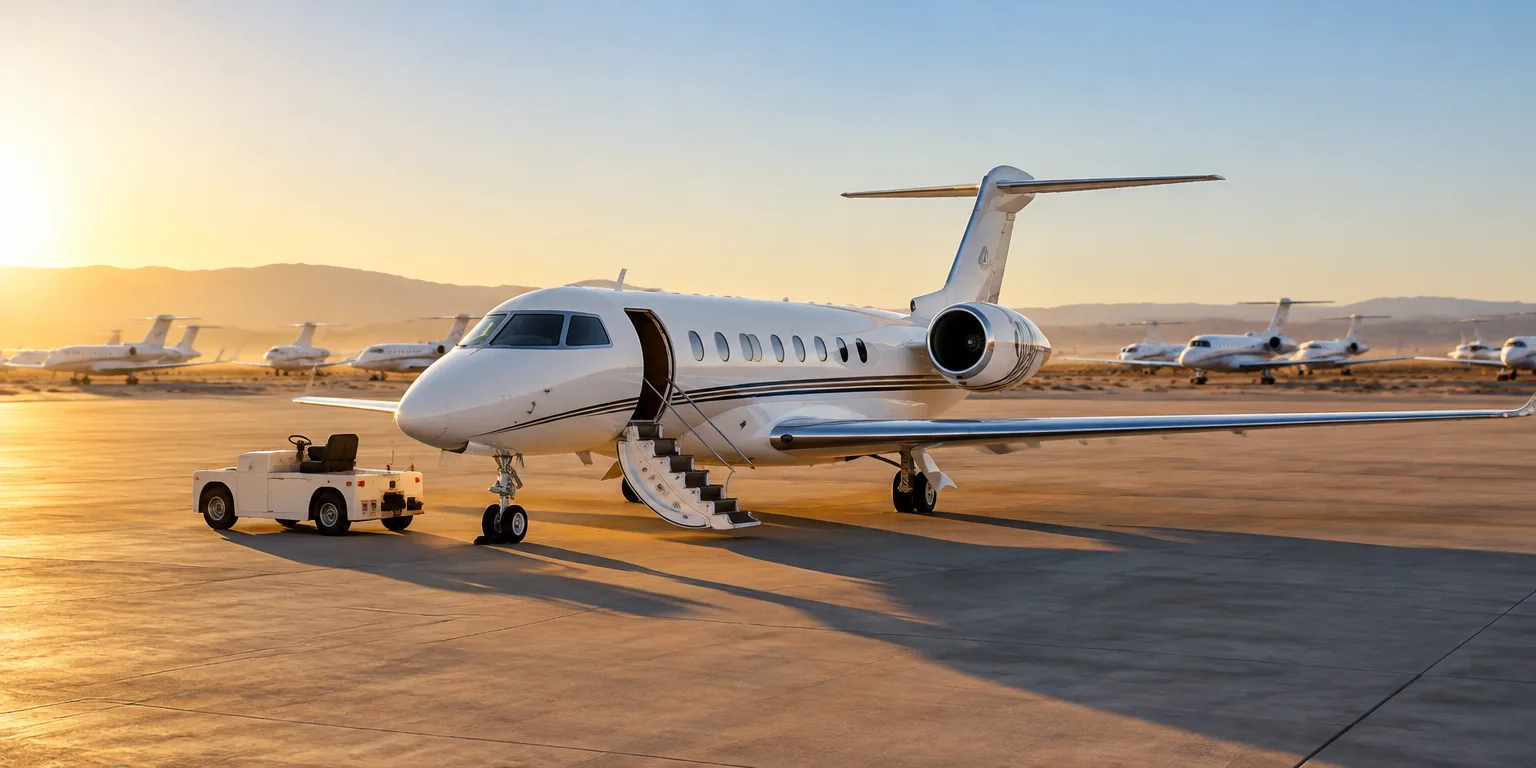
A private jet is a bad thing to own by yourself. The average company flies one about 300 hours a year, leaving it parked in a hangar five days a week. Yet the machine itself is built to stay in the air roughly four times that much, and it does not like to sit. Fluids leak out, parts stiffen, and things break.
That mismatch became an industry in the early 1990s. At the time, according to Kenn Ricci, the private aviation entrepreneur who built Flexjet, big manufacturers built jets the way carmakers built cars. They kept the production line running and paid dealers on volume, whether or not buyers showed up. Unsold planes piled up in lots without registration numbers, since no owner existed to put on the title. The trade called them whitetails.
After the first Gulf War in 1991, sales stalled and Hawker had a lot full of them. Richard Santulli, the founder of NetJets, offered to take 20 Hawkers and sell them without buying them. If he found buyers, Hawker got paid. If not, he would give the planes back.
His pitch was simple arithmetic. If one owner uses 300 hours and a plane wants 1,200, put four owners on one plane. He sold each jet in quarters, for about 200 hours of flying apiece. NetJets tail numbers still end in QS, for quarter share.
The idea also solved a pricing annoyance. In traditional charter, if you flew from Cleveland to Florida, you paid for the empty trip home because the operator had to get its plane back. Santulli left the plane in Florida and picked up the next customer there, a system called floating dispatch. Owners paid only for the hours they were aboard.
There was one obvious problem. If you and another owner want the same plane on the same day, who gets it. The answer is extra planes that are never sold. Ricci says an operator needed about eight backup jets to convince anyone to buy a share. Flexjet still works that way today, with about 70 of its 365 aircraft held as a core fleet just to cover peak travel days when demand exceeds the planes that are actually shared.
Questions people ask
Why do airplanes break when they sit idle?
Seals dry out, oil drains away from parts, tires develop flat spots, and moisture causes corrosion in engines and electronics. Regular flying keeps fluids circulating, keeps parts lubricated, and forces frequent inspections, so problems are found early.
How is owning a fraction different from just chartering?
In charter you rent a plane trip by trip, and historically you also paid to reposition the empty plane. In fractional ownership you buy a share of a specific type, such as one-sixteenth or one-quarter, which gives you a set number of hours per year plus guaranteed availability backed by a larger fleet.
What does QS on a tail number mean?
It stands for quarter share, a leftover from the early days when NetJets sold each aircraft in four pieces. Today companies sell smaller slices, including shares as small as 50 or 75 hours a year, but many NetJets registrations kept the QS suffix.