OpenAI Says It Solved 200-Year-Old Fluid Math With Brute Force, Not Genius
Ten thousand AI programs split the calculating, leaving a record people can check.
 All-In with Chamath, Jason, Sacks & Friedberg · AI Kills Everybody or Doomer Psyop? OpenAI's Math Breakthrough, Nike's $200B Collapse
OpenAI says it has solved a math problem that has challenged scientists since the 1800s. That claim has been questioned, with suggestions that outside researchers who were closing in on the problem may have been front run.
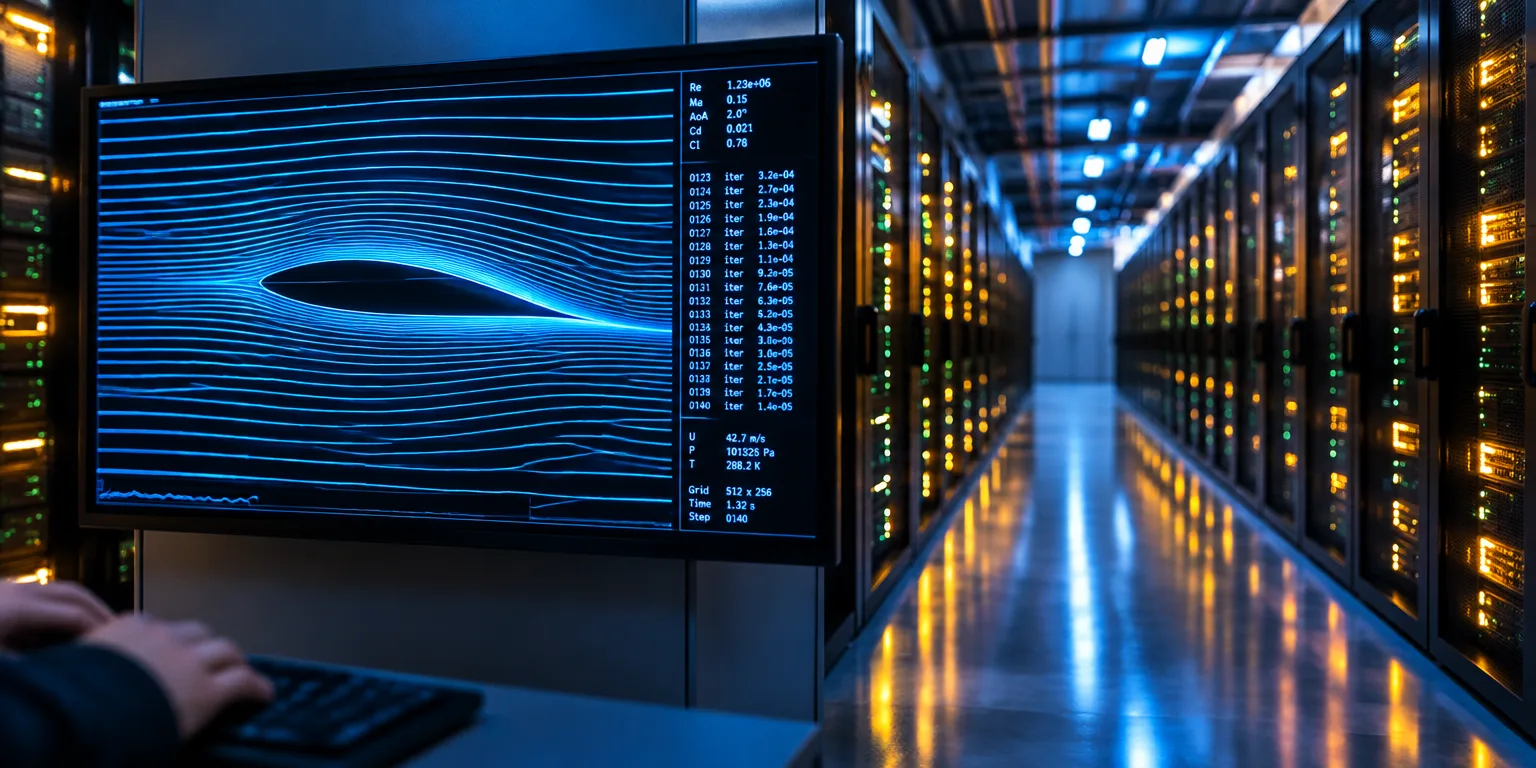
The problem is the Navier-Stokes equations, written to describe how fluids move. They are the math behind airplanes, pipes, and models that forecast weather, and they are hard because they try to capture smooth and continuous motion with calculations that must be worked through in small steps.
OpenAI said the work produced about 130 billion tokens of output from 10,000 agents working together. An agent here means one copy of an AI program running on a computer, and the copies passed messages, shared analysis, and split up the calculating.
There was no stroke of machine genius, argues David Friedberg, an investor discussing the result. Friedberg calculates the effort as "somewhere between 50 and 500,000 years of human work," measured against people working with calculators at a typing speed of 40 words each minute. Friedberg said that even after cutting that estimate sharply to be conservative, the remainder was still "tens of thousands of years" of human labor.
That labor can be inspected because every message the agents exchanged was recorded and can be read by people.
For Friedberg, that is the larger point about what AI is. He calls it "an engine that gives humans extraordinary leverage." Instead of spending years working out a design, he said, a fresh wing shape, a different engine, or a different energy setup can now be designed by brute force on a computer in seconds or minutes.
Questions people ask
What do the Navier-Stokes equations actually describe?
They describe how liquids and gases flow, from air moving over a wing to water moving through a pipe to winds shaping a forecast. They look simple when written down but are extremely hard to solve exactly, so engineers usually work with approximations and computer simulations.
How much work is 130 billion tokens?
A token is a small chunk of text, roughly part of a word. One hundred thirty billion tokens is an enormous amount of machine written analysis, far more than any person could read in a lifetime.
If the work equals thousands of years of human labor, can people verify it?
In principle, yes, because the recorded messages show the steps the agents took. In practice no one person could read all of it, but other scientists can test the methods, rerun parts of the calculation, and see whether the result holds up.