Originality Comes From Staying With Ordinary Work Until It Diverges
A photographer's bus station lesson holds that copycat-feeling years are normal, and distinct work appears if you stay long enough.
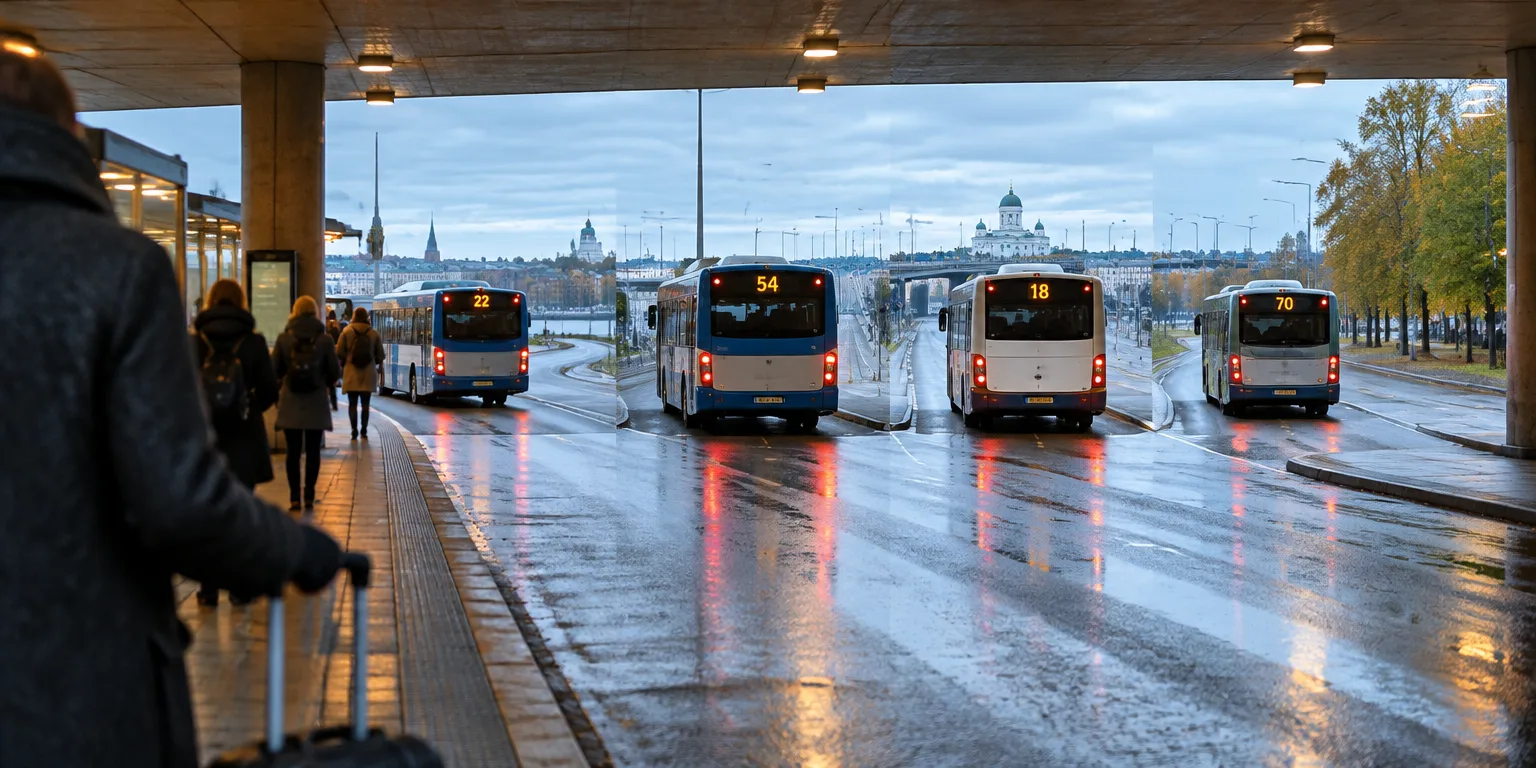
 Curiosity Chronicle · The Helsinki Bus Station Theory
Imagine the big bus station in central Helsinki, with two dozen platforms sending buses out of the city. Every bus leaving from the same platform shares the same road for the first few miles out, before the routes separate for different destinations. Early creative work looks like that, too, with beginners on similar roads that look identical at first.
The comparison comes from Finnish-American photographer Arno Minkkinen, known for black-and-white self-portraits made outdoors, who offered it in a 2004 graduation address at the New England School of Photography. He described a photographer who works for three years, takes the work to a curator, and is asked whether he knows another artist who makes very similar work. Startled to look derivative, the young photographer hops off, grabs a cab back to the station, and boards a different bus, only to feel copied again a few years later.
What the restless rider misses is the split ahead. As Minkkinen put it, “They begin to separate, each number heading off to its own unique destination. Bus 33 suddenly goes north, bus 19 southwest. For a time, maybe 21 and 71 dovetail one another, but soon they split off as well.” His advice was blunt: “Stay on the bus.”
The same pattern shows in two matching pots holding water at room temperature, with one left on the counter and one set on a hot stove. For several minutes they look exactly the same, with no visible change, until one suddenly boils while the other stays the same. Heat had been building in the second pot all along, with no outward sign until the boiling point.
Viktor Frankl, the Austrian psychiatrist and Holocaust survivor, once wrote, “happiness cannot be pursued. It must ensue.”
Originality may work the same way. It seems to come as a side effect of remaining in ordinary, lookalike work long enough for differences to show. Maybe learning to sit calmly with feeling unoriginal is what allows distinct work to appear later.
That is not a call to force yourself to endure a path that was wrong from the start. The question is whether the broad direction is one you want, rather than how copycat the ride feels at year three. Pick a platform that heads toward the life you want, do not fuss too much over picking the perfect bus, and give the work time to become yours by staying aboard long enough to reach the split.
Questions people ask
Who was Viktor Frankl?
Viktor Frankl was an Austrian psychiatrist and Holocaust survivor, best known for his 1946 book Man's Search for Meaning. He argued that meaning, and the happiness that comes with it, arrives indirectly through commitment to a cause or another person.
What kind of photography did Arno Minkkinen make?
Minkkinen is known for black-and-white self-portraits in which his nude body merges with forests, lakes, rock, and snow. He often worked with long exposures and difficult outdoor poses, without heavy manipulation. That decades-long focus made him a natural person to preach staying on the bus.
Does this mean I should never quit a project?
No. The test in the story is direction, not speed: stay if the general platform heads toward a life you want, even when the ride feels boring or derivative. If the platform itself points the wrong way, changing direction is sensible, because persistence alone will not make a wrong destination right.