Oswald Faced Reporters With No Lawyer and Said He Was a Patsy
He answered questions alone in Dallas police custody, and cameras caught his shock when he learned the charge.
 Who Killed JFK? · 48 Hours After
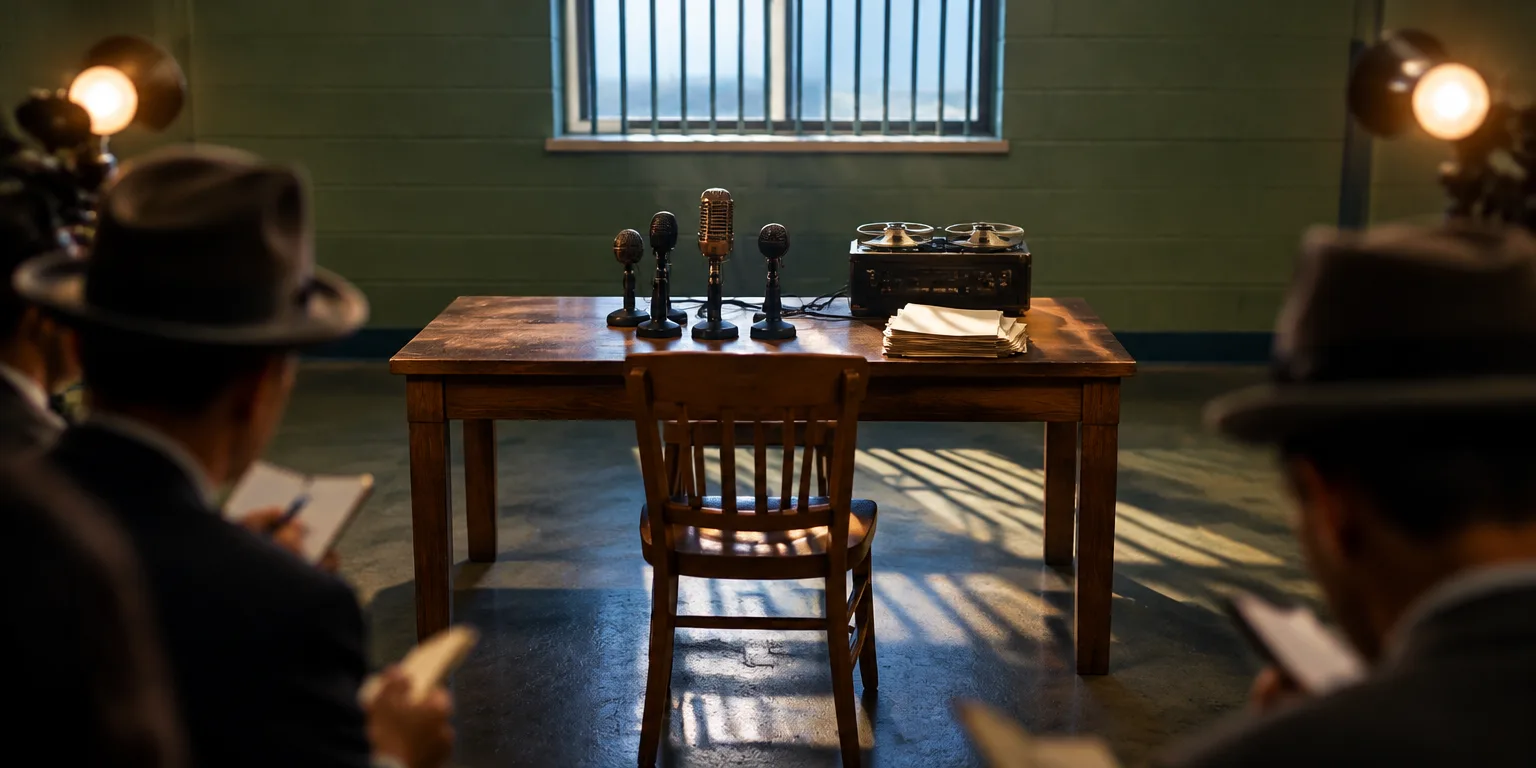
The questions came one after another in Dallas. A reporter asked Oswald, "Did you kill the President, Oswald?" He answered, "No, sir, I didn't. People keep asking me that."
At that first briefing he also said, "They are taking me in because of the fact that I lived in the Soviet Union. I'm just a patsy." By patsy he meant a person set up to take the blame.
He answered alone. No lawyer spoke for him. That would be unusual for any suspected criminal. In this case, the man facing the cameras was accused of killing the president, and he had no lawyer with him.
That short window is why the footage matters. From the time President John F. Kennedy was shot until Oswald himself was shot, Oswald was in custody for just under 48 hours, and the cameras recorded what he said before he could consult counsel or prepare a defense.
In another briefing with reporters inside the station, one asked whether he had killed the president. Oswald said, "no, I have not been charged with that. In fact, nobody has said that to me yet."
The reporter told him, "you have been charged." On the television footage, his shock is visible. He had denied shooting the president, said he was in the building because he worked there, and now he was learning, in front of cameras, that the murder of the president would be pinned on him.
Questions people ask
Why did Oswald keep saying he was in that building?
He worked at the Texas School Book Depository in Dallas, the building overlooking the street where Kennedy's motorcade was passing when the shots were fired. Oswald had started the job about a month earlier and said he was inside because it was his workplace.
What happened after these press conferences?
He never stood trial. About 48 hours after Kennedy was killed, nightclub owner Jack Ruby shot Oswald in the basement of the Dallas police station during a transfer, in front of reporters and cameras. Oswald died shortly afterward.
Would police still let reporters question a murder suspect that way?
No. Today police generally avoid presenting a charged suspect for open questioning, and suspects have a recognized right to have a lawyer present and to remain silent. After his 1966 ruling, the Supreme Court required the familiar Miranda warning, partly to prevent exactly this kind of unsupervised questioning.