Out of Uniform With Enemy Plans Meant Death as a Spy
His American captors liked him, but civilian clothes, a false name, and hidden plans left them no choice.
 American Scandal · Benedict Arnold | The Execution | 4
British Major John Andre was courteous, candid, and widely liked by the American officers who judged him, and they sentenced him to die anyway.
Under the accepted rules of war, the question was not whether Andre was honorable, but whether he had acted as a spy, and on that point the facts were plain.
Andre admitted a long secret correspondence with Benedict Arnold, the American general who had promised to hand over West Point, a key American post. He described arriving by the British warship HMS Vulture, getting trapped where he could not sail back, and then trying to get back through American lines.
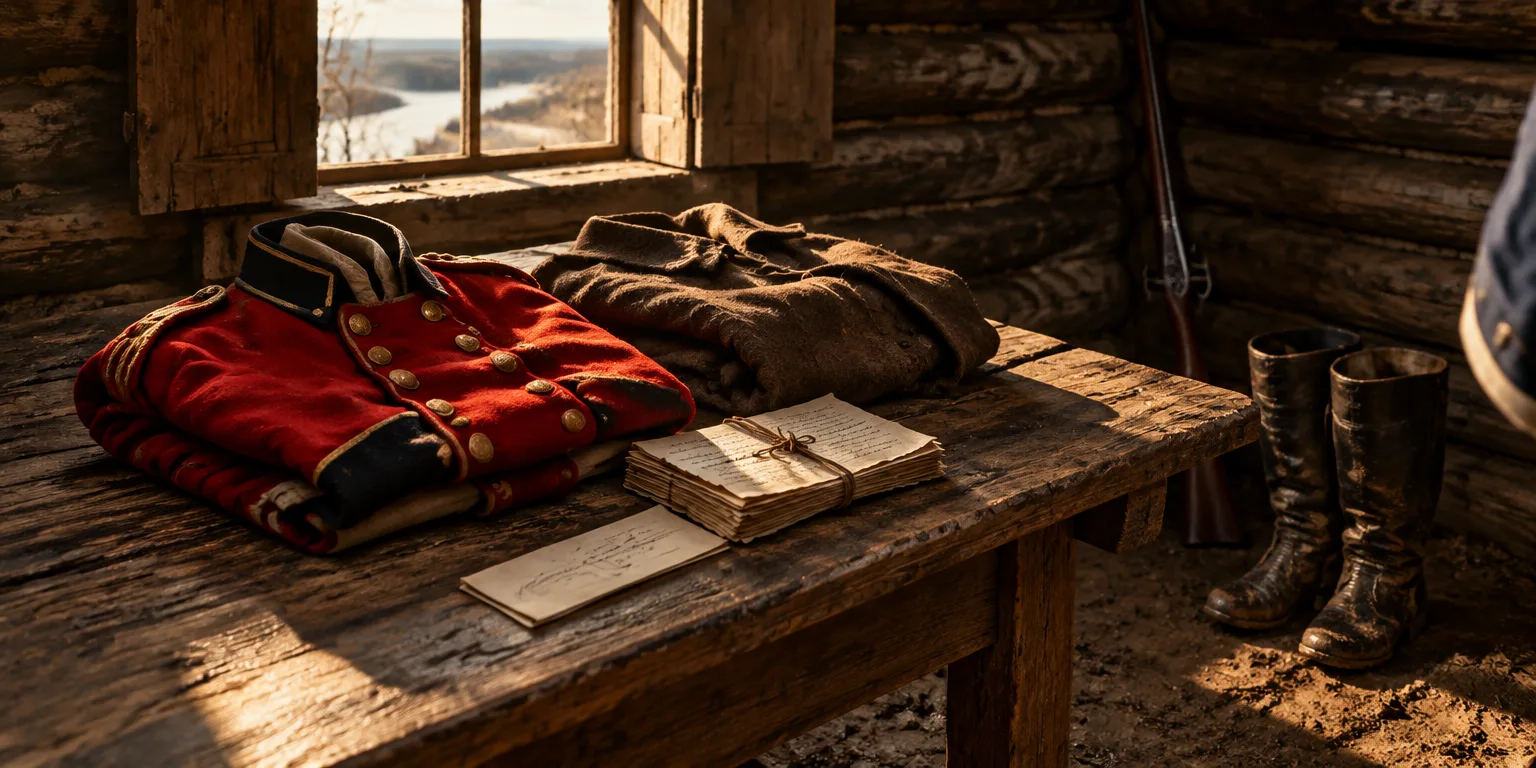
For that journey, Arnold had him change out of his British uniform, travel using the alias John Anderson and carry papers describing West Point's defenses with a pass signed by Arnold. American soldiers stopped the disguised courier and found the papers.
That combination decided his fate. A soldier caught in uniform was an enemy combatant, even behind hostile lines. A man caught in civilian clothes, under a false name, and carrying his enemy's secrets was a spy.
Andre, and later Arnold and a British emissary, argued that Arnold had ordered Andre ashore under a flag of truce, the white flag that temporarily protects messengers. The Americans rejected it, since a truce did not cover sneaking through lines in disguise with stolen plans.
The distinction controlled how he died. Andre asked to be shot by a firing squad, the death of a soldier. George Washington insisted he be hanged, the required punishment for a spy.
Questions people ask
Why did a firing squad seem more honorable than hanging?
A firing squad was considered a soldier's death, carried out by fellow soldiers with muskets. Hanging was associated with common criminals and spies, and was meant to signal dishonor as well as punishment.
Who was Benedict Arnold and what did he do?
He was the American commander at West Point who secretly agreed to surrender the post to Britain in exchange for money and a British commission. His plot was exposed when Andre was captured, and Arnold escaped to British lines.
Does the uniform rule still matter today?
No. Modern American military law still distinguishes between lawful combatants, who wear uniforms and carry arms openly, and spies or unlawful combatants, who hide their status. Spying is still punishable by death under the Uniform Code of Military Justice in wartime.