Ovitz Says Picasso's Masklike Faces Came From Four- or Five-Franc Figures at Paris Fairs
Catholic missionaries brought sacred Nigerian carvings to France, sold them cheap when money ran short, and a young artist bought 50.
 David Senra · Founder of CAA Michael Ovitz: "I Just Knew I Was Going to Outwork Every One of Them"
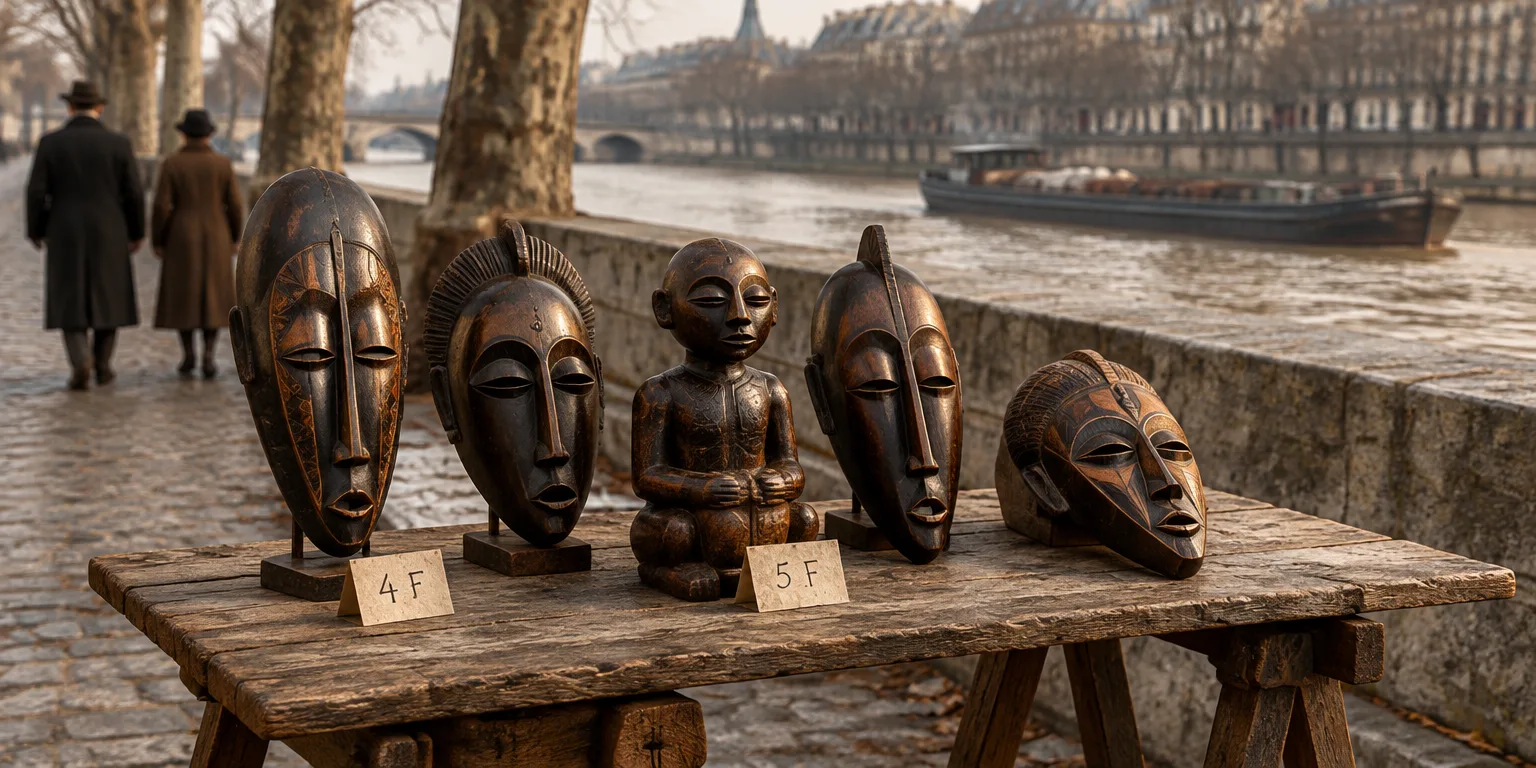
At little weekend fairs beside the Seine in Paris in the early 1900s, sellers laid out carved wooden masks and figures for four or five francs apiece. They had once stood in shrines in Nigeria, in western Africa, where they were honored as religious figures, objects used in worship and ritual.
To Michael Ovitz, the Hollywood agent who founded the talent agency CAA and now collects art, that bargain table explains one of the most famous turns in modern painting. Picasso bought 50 of them. "If you look at his early art, all the faces are African masks," Ovitz said.
The carvings had arrived in France after Catholic missionaries were thrown out of Nigeria around 1900, a region with many distinct local styles of tribal art. They carried the reliquary figures they had collected with them to Paris and Brussels. That history helps explain why Paris still holds one of the world's great collections of African art.
When the missionaries ran short of money, they put the masks out at the riverside fairs. Pictures of Picasso's studio in Mougins show the masks everywhere.
Ovitz knows the look up close. He keeps a room in his house with about 25 African antiquities and three Picassos that grew out of those antiquities. Some of his African pieces, he says, are as good as European art from the same period.
He and Phil Knight, the Nike businessman, once tried to build a portable traveling show for inner cities to trace that line from Africa to Picasso. The idea, Ovitz said, was a point of pride, to show what your culture did.
Questions people ask
What exactly were these African figures?
Many were reliquary figures and masks made to honor ancestors or spirits, often carved in wood and kept in shrines. Some reliquaries held bones or other sacred material, and masks were worn or displayed in ceremonies. They were religious tools, not decorations, which is why their sale in Paris was so strange.
Which Picasso paintings show the African influence most clearly?
The clearest example is Les Demoiselles d'Avignon, painted in 1907, where two of the five women have faces that look like carved masks. Portraits from his African and early Cubist period, around 1907 to 1909, also use simplified eyes, broad noses, and masklike shapes. Art historians point to that short stretch as the bridge to Cubism.
Where can I see these African masks today?
Paris is still a center for them, especially at the Musee du Quai Branly, which holds a large African collection. Major holdings are also in Brussels, London, and New York, along with many American university museums. Private collections like Ovitz's show how often they are still displayed alongside modern European art.