Palantir's Engineers Moved In With Customers and Rewrote Software Each Night
For two weeks the engineers barely slept, rewriting code as analysts watched, then repeated the method on night missions in Iraq and Afghanistan.
 Colossus · The Patriot
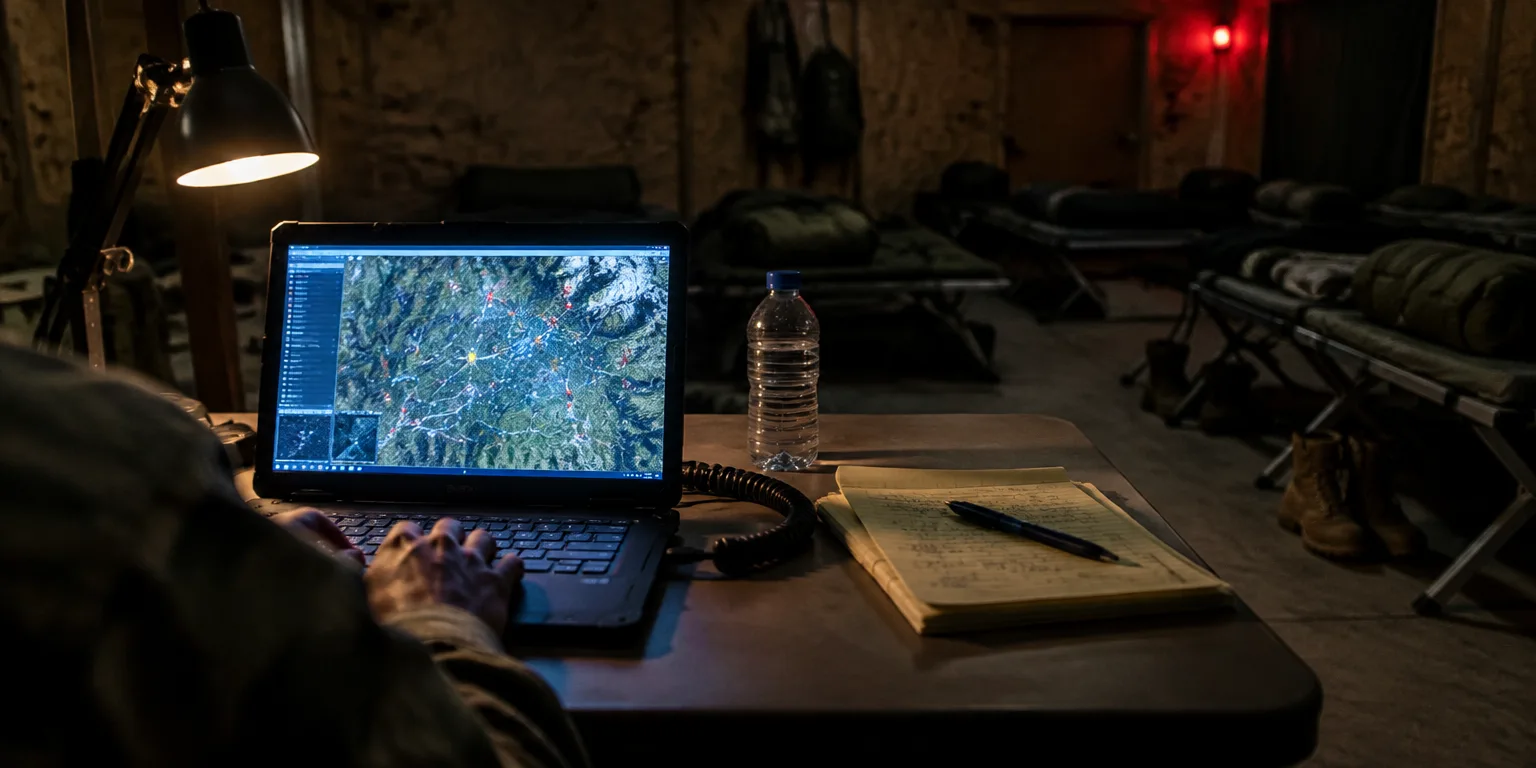
Inside a windowless classified room, Palantir technology chief Shyam Sankar had a cellphone taped to his head with an elastic band. Speakerphones were not allowed, so he coded with both hands while a counterterrorism analyst spoke into one ear and a Palantir engineer called in from California in the other.
Sankar and his small team had embedded for two weeks with the Counter-IED Operational Integration Center, a multiagency unit trying to break the networks behind roadside bombs, known as improvised explosive devices or IEDs. For 14 days they worked 19 hours a day, showing analysts their rough software, loading in data, taking complaints, rewriting the code, and sending notes home to Palo Alto each night.
This was the live test of an idea now copied across Silicon Valley, the Forward Deployed Engineer. Instead of building software in California and mailing it to customers, Palantir would station its own engineers with users and rebuild the product on site. It mattered because the bombs they were chasing caused about 70 percent of American troop fatalities in Iraq and 40 percent of those in Afghanistan by 2007.
Sankar had stumbled on the method years earlier at Xoom, a money transfer startup, when he was not yet 22. The company's system did not fit how banks in the Philippines actually worked, so he moved in with the banks' engineers, fixed the file formats and workflows, relayed the problems to San Francisco, and calmed the bank managers. Only later did he have a name for it.
At Palantir, Alex Karp, the chief executive, supplied the metaphor. Good French restaurants work, he argued, because waiters are part of the kitchen, as intimate with technique and combinations as the cooks. Sankar turned that into a plan to deploy engineers to clients to adjust the specifications on site, then feed what they learned back to headquarters to build software that could be reshaped for every customer.
A CIA analyst, Sarah Adams, gave them the opening. She lined up three meetings for the company and invited only analysts and targeters, leaving out the technology staff she suspected would defend the agency's existing software. Sankar gave the demo to more than 100 agency analysts. He fell into a weekly loop, flying to Virginia on Sunday, demonstrating Monday through Thursday, flying home Friday to brief engineers Bob McGrew and Aki Jain so they could rewrite the code over the weekend, and returning Sunday with a better version.
When the two-week stay in the classified facility was over, the analysts called the crude product useful. Sankar, sleep deprived and humorless, called Karp to say it could never work. Karp laughed for what felt like 10 minutes and answered, "How else is it gonna work?"
The answer played out in war. In 2010 the engineers deployed alongside the 10th Special Forces Group at Balad Air Base in Iraq, and in 2011 to Camp Leatherneck in Helmand Province in Afghanistan. Each morning they met soldiers returning with field laptops, took notes on what had failed, and coded all day while the soldiers slept so the software worked better that night. The warrant officers who had asked who these kids were and why they needed beds were calling them gold within two weeks.
Questions people ask
What does Palantir's software actually do for soldiers or analysts?
It pulls together data from many separate databases, like reports, videos, flight records, and sensor logs, and organizes it around people, places, and events. Analysts can then search, map connections, and see patterns on one screen instead of emailing spreadsheets. In the field, that meant troops could bring up relevant intelligence quickly before a night mission.
Is the Forward Deployed Engineer still a real job?
Yes, and it has spread well beyond Palantir. Many defense and enterprise software companies now send engineers to live and work inside customer offices for weeks or months. The job blends coding, customer support, and product design, with the engineer customizing the software and sending lessons back to headquarters. The title is also sometimes used loosely for sales support roles.
Why were roadside bombs such a central problem in Iraq and Afghanistan?
Improvised explosive devices were cheap, easy to hide, and devastating against patrols and convoys. Insurgent networks built them from artillery shells, fertilizer, and commercial electronics, and adapted designs as U.S. defenses improved. U.S. forces created special organizations to attack the whole network of bomb makers, financiers, and suppliers, not just the device itself.