Palantir Turns Scattered Spreadsheets Into One Live Picture
Instead of spreadsheets and emailed files, it models people, places, and events and keeps that picture current.
 Colossus · The Patriot
After the attacks of Sept. 11, 2001, America's intelligence agencies had clues they could not connect. The country had 13 agencies, later 16, storing information on more than a dozen separate systems. Analysts worked with chart-making software that produced simple diagrams, faces joined by labeled lines showing associations. The underlying data lived in spreadsheets and desktop programs, and was often shared by emailing attachments.
Palantir, then a startup with no product, set out to solve three problems at once. The first was a central place to store knowledge. The second was a way to pull in information already sitting in different databases. The third was a way to display it so an analyst could actually use it.
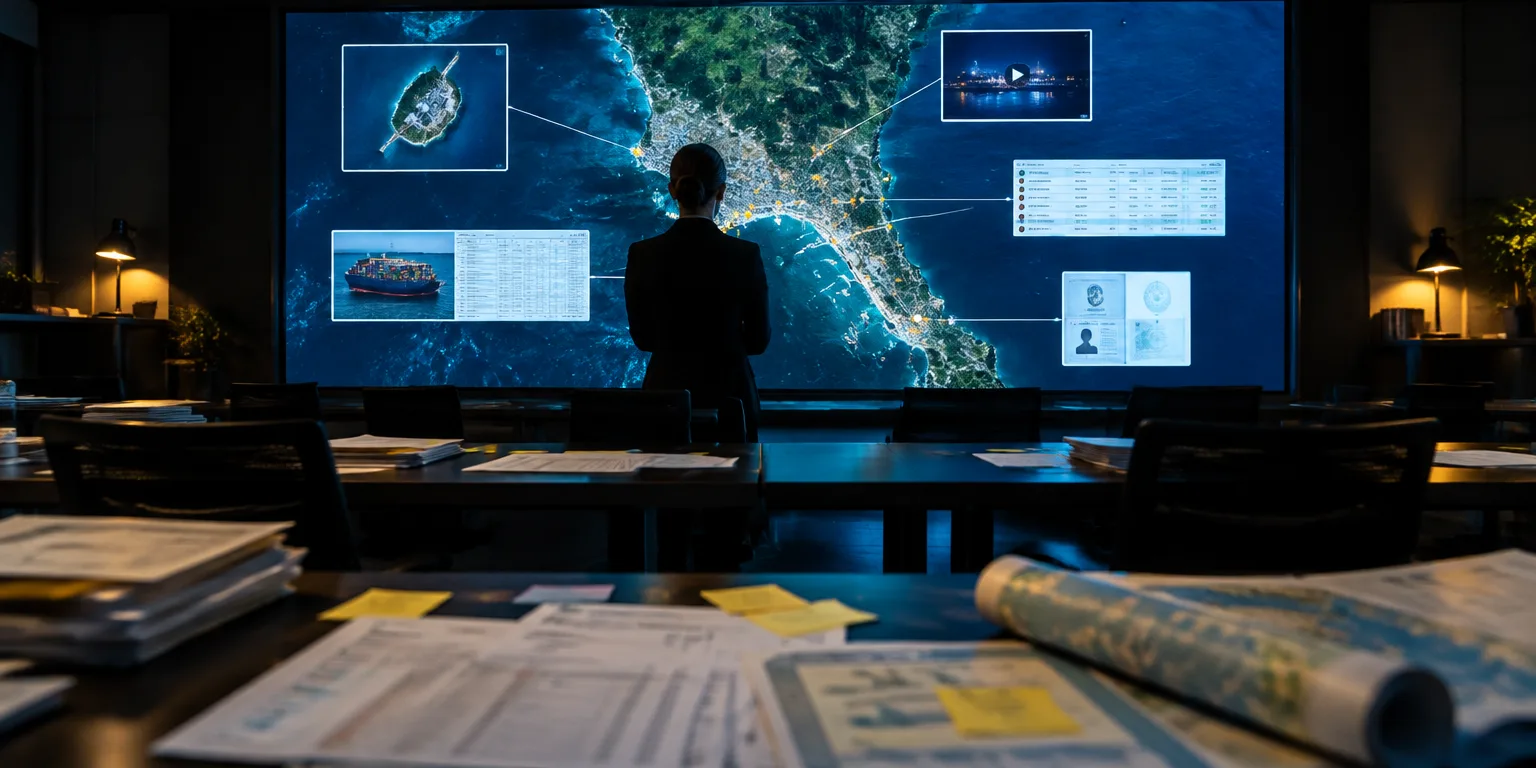
That third solution was called an ontology, a generic data model that sorts the world into objects. A person, a place like Yemen, an entry visa, a social media post, and an event like a tip to an embassy each become an object, defined by its traits and its links to other objects. Many kinds of material can fill in the picture, from phone video and satellite pictures to intercepted calls, bank records, travel manifests, and emails.
In technical terms, the system addressed what engineers call an impedance mismatch. Computers keep information as grids of numbers and fields, while people think in terms of things and how they relate. Shyam Sankar is Palantir's chief technology officer and one of its earliest employees. He says modeling data as objects builds what he calls a "pointillist painting," a single picture made from scattered information.
In practice, that means hydrating the ontology by connecting hundreds of separate databases, whether they belong to a military service, an energy business, or a commercial carrier, and then letting users question the whole. New data constantly drifts toward corruption. Foundry catches that decay before it spreads. Apollo automates deployment of the software, so an engineer working from a laptop in a rental car can ship new code to a secure government network in 15 minutes.
Questions people ask
What does ontology mean outside Palantir?
An ontology in philosophy is a theory of what exists. In software, borrowed for Palantir and other data systems, it is a defined list of the types of things that matter, like customers, planes, or visas, plus the rules for how they relate. It tells the computer what counts as a thing before any analysis starts.
How is this different from a data warehouse?
A data warehouse copies tables into one place for analysis, but the tables stay tables. Palantir's ontology adds a second layer that turns those rows into modeled objects with relationships, so a flight log, a visa record, and a video can all attach to the same person. The goal is less storage than a working model users can question.
Is the ontology only for spies?
No. Banks, hospitals, airlines, and manufacturers use the same approach to link maintenance logs, sensor readings, schedules, and supply orders. The underlying problem is the same: many systems that were never designed to talk to each other, and people who need one current view to act.