Pea-size pellets on a semi-truck can trap up to 90% of its carbon dioxide
The captured exhaust is purified into liquid carbon dioxide clean enough for soda and beer, and sold to buyers that already face shortages.
 Y Combinator · This Startup Is Trying To Delete 29% Of All CO2 Emissions
For a diesel truck, Remora says the tailpipe is "a more efficient place to start" for catching carbon dioxide than the air afterward, while the exhaust is still concentrated.
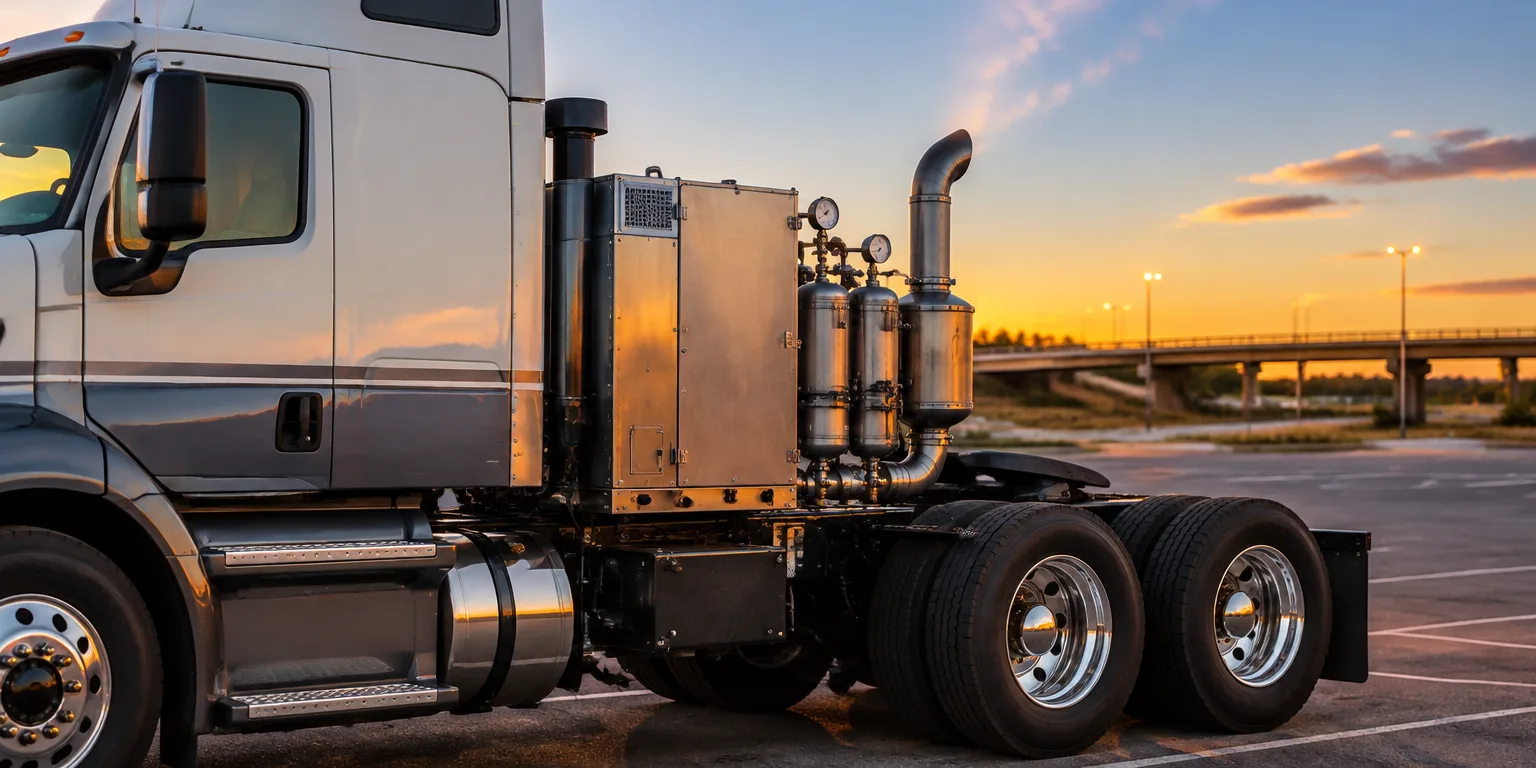
That is the approach of Remora, a startup building carbon capture equipment for semi-trucks and locomotives. Paul Gross, the founder, says the company retrofits vehicles with a box mounted behind the cab that extracts and purifies carbon dioxide from exhaust, and can produce gas pure enough to carbonate drinks.
The workhorse is a cylinder filled with pellets about the size of peas. The company routes hot exhaust from the tailpipe through that cylinder. The pellets are full of microscopic pores, tiny holes sized to grab carbon dioxide molecules. The carbon dioxide gets stuck inside, while the other, cleaner gases keep moving and are released.
Once the pellets on one side of the cylinder fill up, a vacuum pulls the trapped carbon dioxide out for storage, while the other side keeps capturing. On the truck, the gas is held in pressure vessels and later offloaded as a liquid into a larger tank.
The pellets matter because older carbon capture systems relied on liquid solvents, chemicals that absorb carbon dioxide. Gross says those liquids are corrosive and volatile, can break down, and can even add cancer causing compounds to exhaust, a major reason the technology did not spread. Gross says the device "can reduce a vehicle's emissions by at least 80%," and the company says it can remove up to 90% of carbon dioxide from semi-truck exhaust.
The captured gas is then picked up by distributor trucks and sold to buyers that already need carbon dioxide, including food and beverage companies, greenhouses that feed it to plants, and water treatment plants. Exhaust becomes both less pollution and a product that pays the truck operator.
Questions people ask
Is CO2 captured from dirty diesel exhaust really safe to put in drinks?
Remora says it purifies the gas to beverage grade and sells it to buyers including food and beverage companies. Beverage grade means a purity level accepted for use in food and drinks. How the gas is checked is not described.
How does a vacuum get the CO2 back out of the pellets?
Carbon dioxide clings inside the tiny pores, and lowering the pressure with a vacuum releases it in concentrated form. The pellets are then empty and ready to trap more gas, and the cycle repeats.
What happens to the CO2 after it is sold? Does it stay trapped?
As general background, these uses do not store the gas permanently. In soda and beer, the carbon dioxide escapes when the drink is opened and drunk. In greenhouses, the gas is taken up by plants as they grow.