Peasants Sold Young Horses to Lords at Three, Then Bought Worn-Out Horses Back
The lords worked the animals until they were old and arthritic, while peasant breeders took the risk and kept the trade going.
 Institute of Economic Affairs · How The Black Death Increased Worker's Wages: Medieval England's Economic Revolution | IEA Interview
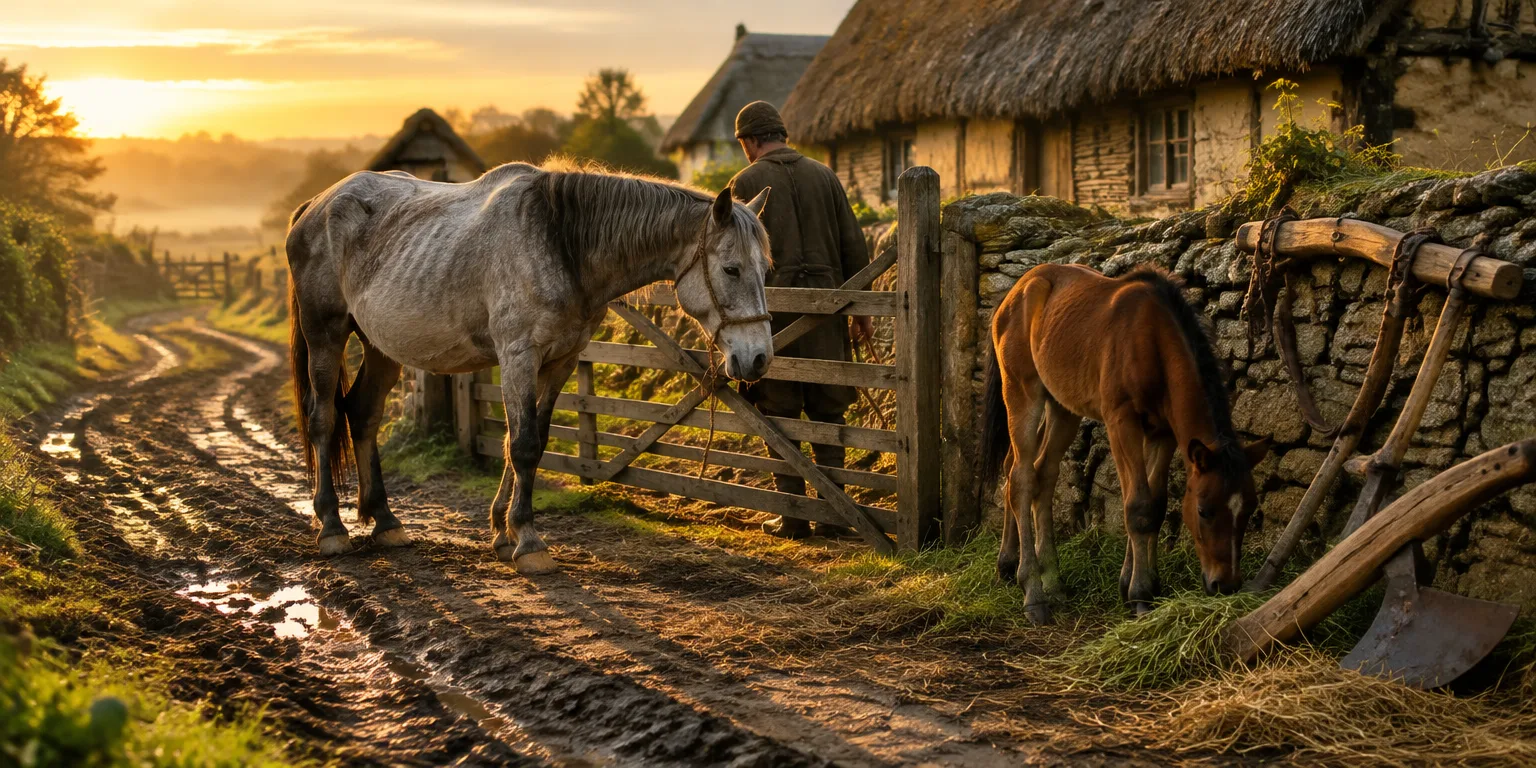
The horse was three years old, strong, and just entering its best working years, with seven to 10 years of pulling ahead of it. A peasant breeder led it off the small farm where it was born and sold it up the social ladder, to the lord of the manor.
It would not stay strong for long. The great estates worked their horses hard, year after year, until the animals were old and arthritic. Estate accounts even had special Latin terms to describe how broken down they had become. Then the lord sold the ruined horse back down the ladder, to peasants, for light duty work around the small farm. Sometimes, it could even be the same animal that had left a decade earlier.
That round trip helped drive medieval England's switch from oxen to horses, in the view of Dr Jordan Clarage, a pre-industrial economic historian at the London School of Economics. It was not a plan drawn up by rich landowners or clever scholars. It was a peasant business.
The big lordly estates, for all their land and money, did not raise enough young horses to keep their own farms stocked, much less to supply anyone else. Peasants filled the gap. They took the risk, raised the colts, and sold the three-year-olds to lords who needed heavy pulling power and could pay.
It was a gamble, because an ox held its value and a horse did not. An old ox could be fattened and slaughtered, and sold for meat for about as much as it had cost. An old horse was worth almost nothing, since people did not eat horses. A peasant who bred a horse was betting that the extra speed and versatility over its lifetime would pay off before it wore out.
The educated elite never much liked horses. More than a century later, Thomas More would still write in Utopia that sensible people used oxen, because everyone knew oxen were better and did not get sick in the same way. The peasants, many of whom could not read Aristotle or More, bought in anyway.
So the same horse could have two careers. It grew up on peasant grass, did its hard middle years pulling for the lord until its joints stiffened, and came home old to do lighter chores for the family that had bred it. Lords supplied the heavy work that wore horses out, peasants supplied the young animals, and the tired animals circled back to where they started in a trade driven from below.
Questions people ask
Why were horses worth adopting if an old ox could be sold for meat and an old horse was worth almost nothing?
Horses are roughly twice as fast as oxen, and they are more versatile for hauling, plowing, and traveling to market. A farmer was betting that years of faster work would earn more than he would lose by having no meat value at the end.
What allowed horses to replace oxen as draft animals?
The key was the horse collar, which rests on the shoulders instead of the neck. A strap around a horse's neck chokes it by pressing on its windpipe, while an ox can pull against its horns and strong neck, so the collar finally let horses pull heavy loads without injury.
How complete was England's shift to horses?
By the 17th century, Clarage says, England was using 100% horsepower for draft work, and no other European economy came close until the 20th century. That early lead is linked to England's unusually high farm productivity in the 1400s and 1500s.