People Baked Bread 14,500 Years Ago, Before Farms Existed
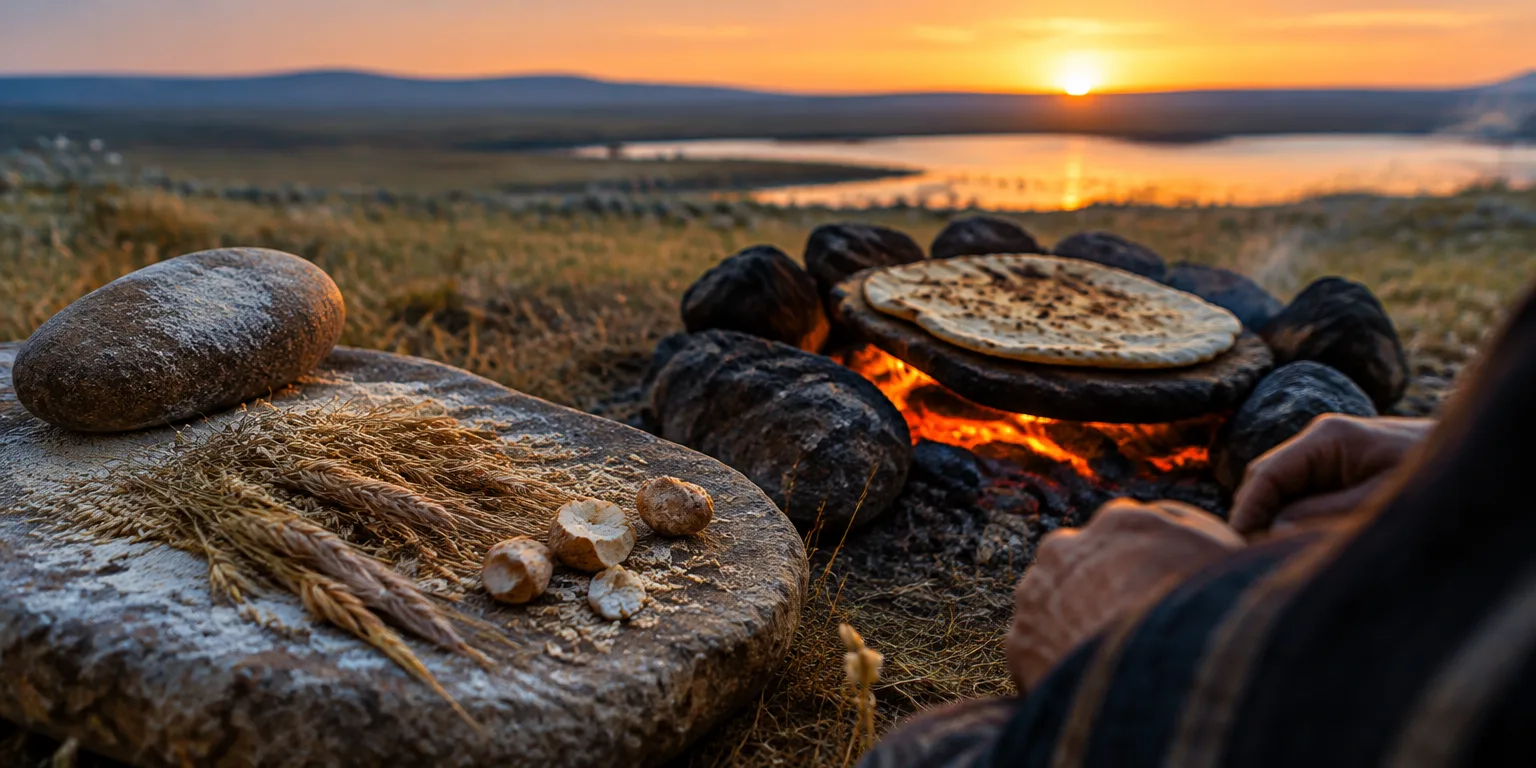
With no fields or mills, making a loaf meant gathering wild grains by hand and grinding them between stones.
 Eating History · Season 2 (Episode 1): Who Really Invented the Sandwich?
Long before anyone farmed, people were already baking bread. Archaeologists working in northeastern Jordan found tiny blackened crumbs, so burned they were hard to recognize, that proved under the microscope to be flatbread nearly 14,500 years old.
That predates farming by thousands of years. There were no planted grain fields yet, no mills, and no bakeries. Making bread meant picking wild grain, grinding it by hand, and baking the dough over an open fire.
As Adrienne Cheatham puts it, bread was "one of the most labor-intensive foods" to make. That people made it anyway before farming suggests they believed, in her words, that it was "truly sustenance enough" and "worth the effort."
Questions people ask
What grains did they use without farms?
They used wild ancestors of wheat and barley, plus oats and tubers, all gathered by hand around lakes and grasslands. At the Jordanian site of Shubayqa 1, researchers identified remains of wild einkorn, barley, and club-rush tubers ground into flour.
How do scientists know the crumbs were really bread?
Under a microscope, the charred crumbs showed the porous structure of baked dough and particles of ground starch. Researchers also found stone grinding tools at the same Natufian camp, supporting the case that flour was being made and cooked there.
When did agriculture actually begin?
Farming emerged in the Fertile Crescent roughly 11,500 to 10,000 years ago, at least 3,000 years after this bread. That gap means hunter-gatherers invented bread first, and agriculture later made its ingredients easier to produce.