Phone reminders help you remember today but weaken memory tomorrow
People who had used reminders did worse once the aids were gone than people who had never used them at all.
 PsyPost - Psychology News · Relying on reminders could be weakening your memory skills
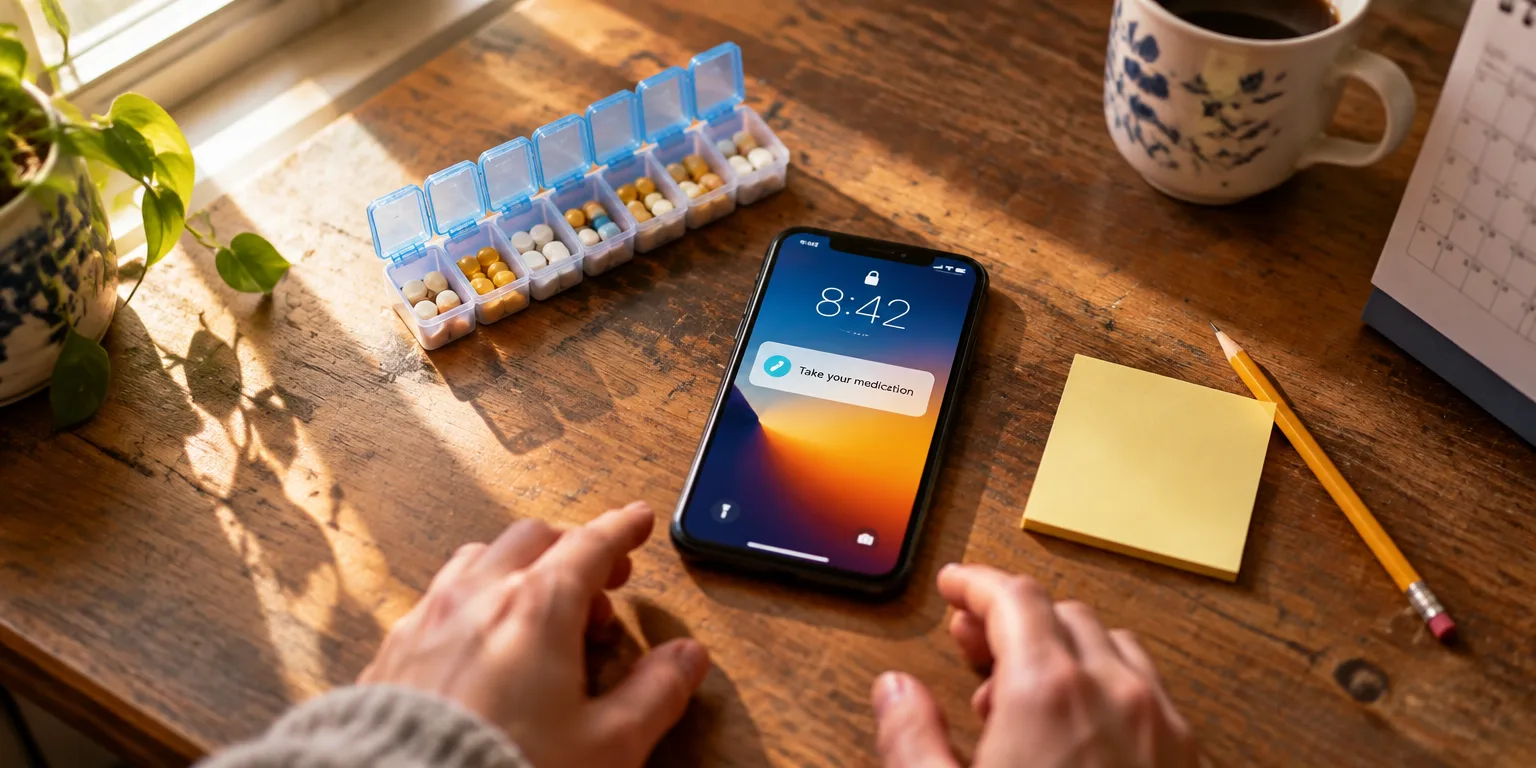
Your phone is very good at remembering for you. Smartphones, smartwatches, and calendar alerts take over the work of holding on to appointments and deadlines, so you do not have to. Psychologists call that shift cognitive offloading, handing part of the mental load over to an outside aid.
That aid works in the moment. The catch is what happens inside your head while the aid is doing the work.
Remembering to do something later, like taking medication or sending an email, is a skill psychologists call prospective memory, the ability to carry out an intended action in the future. The researchers suggest that the extra effort of doing this without help may strengthen memory over time. When you hold the intention in mind, notice the right moment, and act, your brain gets practice at the whole sequence.
A reminder removes much of that effort. You no longer need to keep the intention alive, watch for the cue, or pull up the action yourself, because the bold text or ping does it for you. The task still gets done, but the reminder does much of the remembering work, so you do less of it.
In two online experiments led by Craig Fellers, a researcher at the University of California, Santa Cruz, with Benjamin C. Storm, that shift came with a cost. After the reminders were taken away, people who had relied on them recalled far fewer of the later tasks than people who had relied only on their own memory all along. They did not just return to normal. They fell below that self-reliant baseline, a sign they had learned less while the aid was present.
The authors concluded: "While reminders can be a powerful tool for ensuring immediate task completion, they are not cognitively neutral."
The researchers link this to a wider psychology idea that some added mental work can help learning last. Remembering unaided takes more effort, yet that effort can support recall later. When an aid carries the load, people may get less of the practice that builds steady remembering habits. The result points to a basic trade-off: what makes remembering easier now may mean less learning for later.
Questions people ask
Should I stop using reminders altogether?
No. The researchers still describe reminders as a powerful tool for getting things done on time. The practical lesson is to be selective: keep reminders for critical appointments and deadlines, and practice unaided memory on lower stakes tasks where forgetting is safe.
Does this effect apply to older adults who depend on reminders?
We do not know yet. The experiments used university students in a short online task, and the authors note that older adults may use outside aids differently. Longer, real world studies with more diverse ages would be needed to see how broadly the effect applies.
Why would testing myself help memory while a reminder hurts it?
A reminder is different from studying because it replaces the remembering step rather than reinforcing it. Flashcards, reciting from memory, and spacing out practice all require you to retrieve information yourself, and that effort is what strengthens later recall.