Physics-based quantum money could make counterfeiting impossible, in theory
Google researchers describe a bank-issued token secured by physics that could, in theory, replace the ledger check.
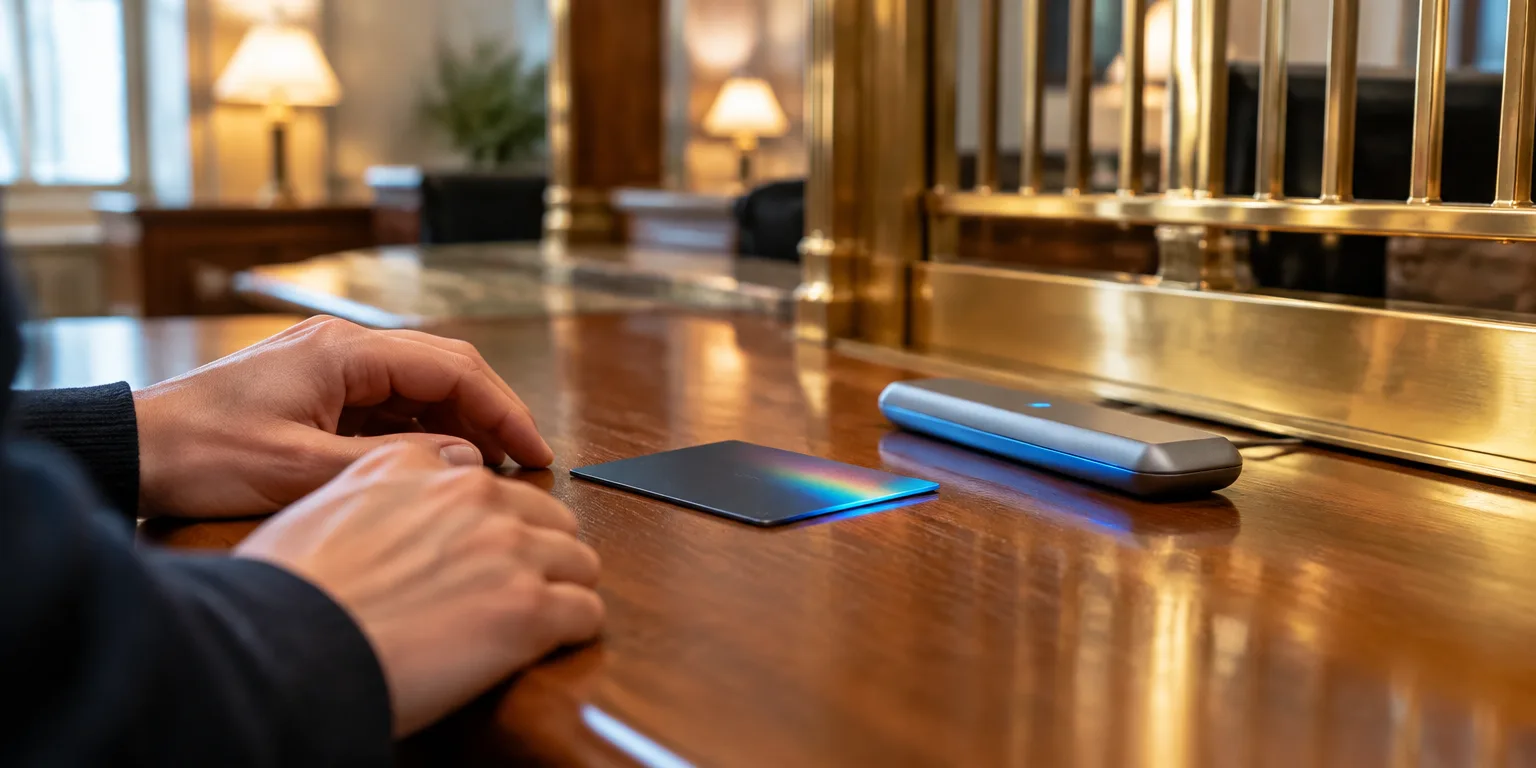
 Decrypt · Physics vs. Code: Why Google’s ‘Quantum Money’ Could Make Blockchain Obsolete
A dollar bill made as a quantum state cannot be copied under the laws of physics.
Ordinary computer data can be duplicated endlessly. A quantum state cannot. A quantum state is the fragile physical condition of a particle, such as its orientation, and the no-cloning theorem, a basic rule of physics, says an unknown quantum state can never be perfectly copied.
“If you had a $1 bill that was actually a quantum state, you could prove, based on the properties of quantum mechanics, that copying such a state is impossible,” said Dar Gilboa, a researcher at Google Quantum AI and a co-author of the study. “You could only succeed with very small probability.”
In Bitcoin, counterfeiting the same coin twice is computationally difficult. If built, a quantum money system would make counterfeiting physically forbidden.
Because a physically uncopyable token needs no ledger to stop double-spending, such a system could, in theory, replace the job now done by a blockchain. A blockchain is a massive, public accounting book shared across many computers, and its main job is to make sure no one spends the same coin twice. If each token were physically uncopyable and spendable only once, there would be no ownership history to track. There would be no need for the energy-hungry competition, called proof of work, in which Bitcoin computers race to approve transactions. In the Google design, a trusted bank would create the tokens, and verification would be a direct physical check of the token, not agreement across a network.
That design is not decentralized, and it is not built. Gilboa says the work “isn’t decentralized, so it’s not really an analog of cryptocurrencies in any strong sense.” The proposed system remains on paper. Gilboa said of the system: “It assumes not only that you have a large, fault-tolerant quantum computer, but also the ability to do quantum communication...”
Questions people ask
Why does Bitcoin need a giant shared ledger in the first place?
Digital files are easy to copy, so Bitcoin needs a way to prove the same coin was not spent twice. The ledger solves that by having many computers keep the same public record of every transaction and agree before a new one counts.
What is proof of work, and why does it use so much energy?
Proof of work is the contest Bitcoin computers run to approve transactions. Machines make huge numbers of random guesses to win the right to add the next page of transactions. It is secure because cheating would require controlling a majority of all that computing power, which is expensive to assemble and run.
If a bank issues the money, what would stop the bank from tracking it?
The proposal includes a privacy check called a swap test. Two users compare their tokens, and if the tokens are not identical, that suggests the bank secretly marked them to track spending. Any such tagging would be revealed by the test itself.