Psychology Is Many Different Trades, Not One Study
The field includes vision testers, drug researchers, rat maze runners, courtroom evaluators, and therapists, plus scientists who scan meditating monks.
 Astral Codex Ten · Psychology Research Is Mostly Fine
When you mock psychologists, you are mocking dozens of unrelated trades, not the team behind one famous study. That is the point writer Scott Alexander makes in his review of OpenStax Psychology, 2nd edition, an introductory textbook.
Some study how the mind works. There are the psychophysicists who study how the brain handles visual signals, and the psychopharmacologists who trace which brain receptors LSD acts upon. Psychometricians measure how much genes contribute to IQ, and personality psychologists build and improve a widely used system for describing personality in five broad traits.
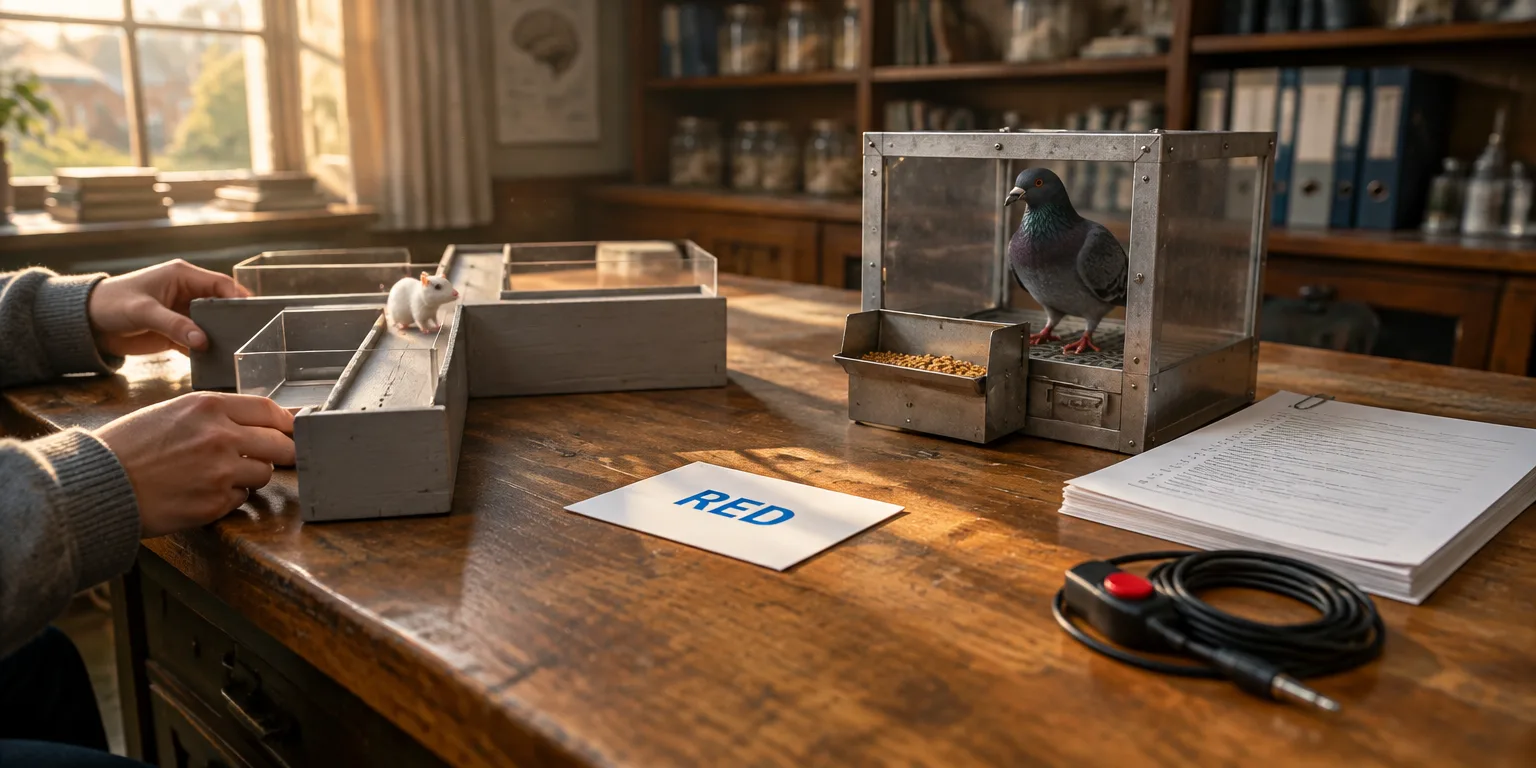
Others run experiments on people and animals. Experimental psychologists guide rats through mazes to understand recall. Cognitive psychologists use the Stroop test, where you must name the ink color of a word and ignore what the word says, so RED printed in blue ink trips you up. Psychophysiologists study how hormones affect emotion, and behaviorist psychologists give pigeons harder and harder patterns of food rewards and shocks to study how consequences shape behavior.
Still others work directly with people. Forensic psychologists assess whether a criminal defendant meets the legal test for insanity. Abnormal psychologists seek the nature and origins of schizophrenia, clinical psychologists treat drug abuse, and industrial psychologists advise companies on productivity and job satisfaction. Child psychologists explore how infants pick up language, moral ideas, and abstract concepts, while neuropsychologists test people with unusual head injuries to map what different brain regions do.
Alexander notes the textbook is recent enough that it might have been hastily cleaned up after the replication crisis, but he says equally the incriminating material was simply never central enough to psychology to belong in an introductory survey of the subject.
Questions people ask
What is the Five Factor Model of personality?
It describes personality along five broad traits: openness, conscientiousness, extraversion, agreeableness, and neuroticism. Psychologists measure them with questionnaires, and the scores predict things like job performance and relationship stability. It is one of the most replicated findings in personality psychology.
What is the Stroop test and why is it hard?
You see a word like RED printed in blue ink and must name the ink color, not read the word. Reading is so automatic that it interferes, so you slow down and make mistakes. The gap in speed reveals how attention and self control work.
What does a brain scanner actually see in a meditating monk?
A functional MRI tracks blood flow as a rough signal of brain activity, showing which areas are more active during meditation. Long term meditators have been studied for changes in attention, emotion, and body awareness circuits. Researchers debate how much the brain physically changes and what those changes mean.