Quantum Money Could Reveal If a Bank Is Secretly Tracking It
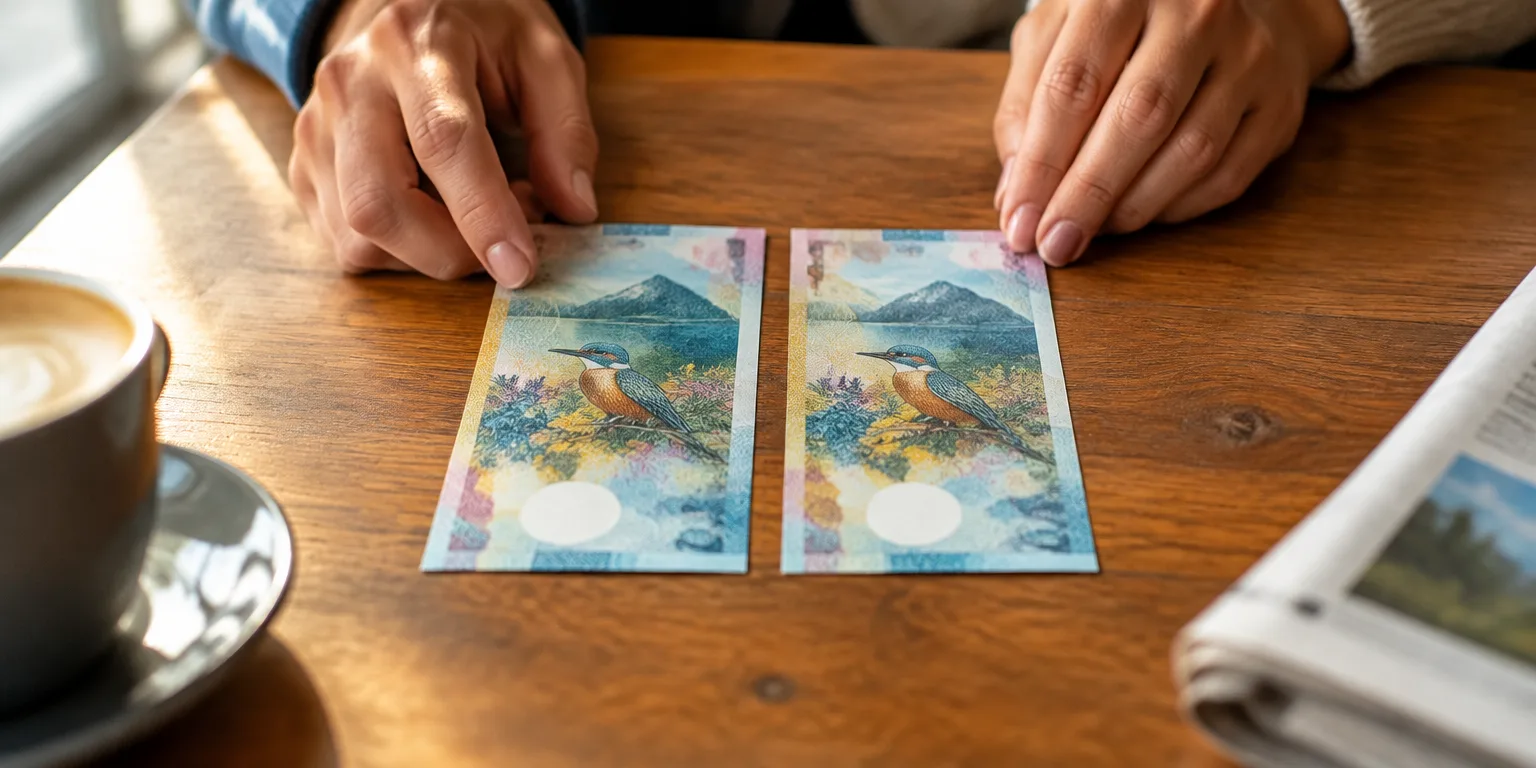
Every bill is supposed to be identical, so two strangers can test theirs and catch hidden marks.
 Decrypt · Physics vs. Code: Why Google’s ‘Quantum Money’ Could Make Blockchain Obsolete
Imagine a dollar bill that could reveal whether the bank that printed it had secretly marked it.
That is the idea behind a proposed form of quantum money. The idea exists only on paper and would need technology far more advanced than what exists now. It would require, in the words of Dar Gilboa, who studies quantum computing at Google and helped write the paper, "a large, fault-tolerant quantum computer" and "the ability to do quantum communication," which he described as very difficult engineering challenges.
Unlike Bitcoin, the system is not decentralized. Gilboa said "What we're doing isn't decentralized, so it's not really an analog of cryptocurrencies in any strong sense." The design relies on one trusted maker, like a bank, to create the money.
The proposed check depends on every token starting out identical. To tag bills, the bank would have to make some tokens slightly different from the others.
Holders could team up to compare their tokens with what researchers call a swap test, a quantum procedure that checks whether two quantum objects match.
If the two tokens match, that shows no sign of tagging. If they fail, "the bank could be tracking you," Gilboa said. A secret mark would be exposed as soon as holders ran that check.
In this design, a bank's tagging would leave a trace that holders can check themselves by comparing tokens.
Questions people ask
What exactly is a swap test?
A swap test is a standard quantum procedure that asks one question: are these two quantum states the same. It does not read out all their details, it just returns a pass or fail on whether they match. In this proposal, two holders would bring their tokens together to run that comparison.
Why would identical bills mean privacy?
If every bill starts out physically identical, no bill stands out. Tracking requires telling bills apart, which means the issuer must make them slightly different. So a failed comparison is evidence that uniformity was broken, which is what secret tagging would do.
Could a bank use this kind of money today?
No. The proposal assumes large, reliable quantum computers and networks that can send and store fragile quantum states without destroying them. Those capabilities do not exist yet at the needed scale, so this is a design for the future, not something you can use.