Replica news apps survive because loyal print readers still want print on a screen
Those readers settle in for long sessions, often on tablets, while feed readers check in briefly and often on phones.
 The Publisher Podcast by Media Voices · Why apps are engagement and retention powerhouses: in conversation with Pugpig's Jonny Kaldor
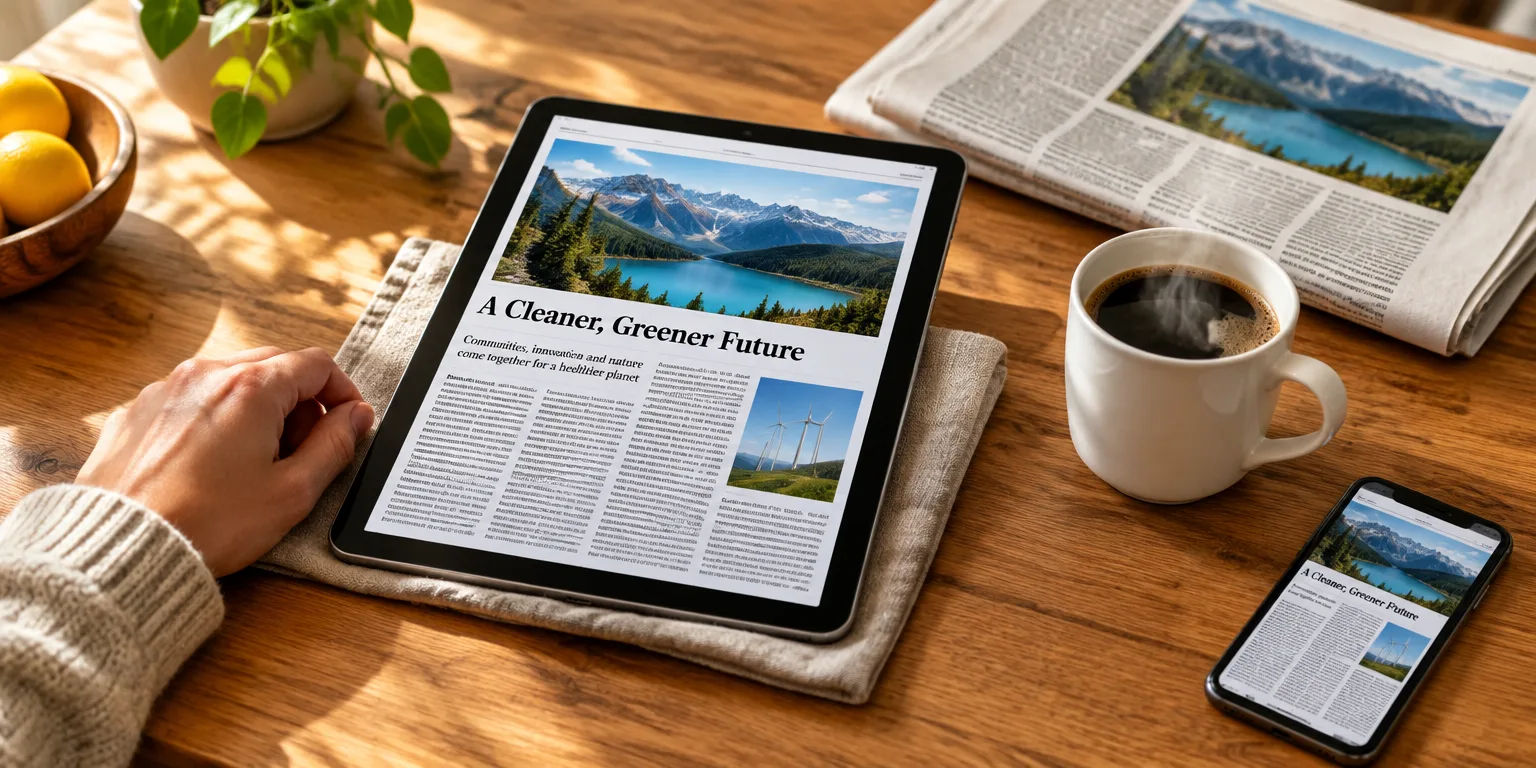
On a phone, a replica edition can look odd. Jonny Kaldor, chief executive of Pugpig, a company that builds apps for publishers, noted the criticism that it can feel wrong to read “an enormous page of print shrunk down into this tiny little thing.” Yet that old-fashioned replica, the digital copy that preserves the look of print, remains popular with many news apps.
The reason is that publishers are serving two different readers, Kaldor said. One group wants a feed of stories, audio, and video, and checks in often for short sessions. The other wants the edition, and settles in for a very long read.
Part of the difference is the product, and part is who uses it, Kaldor said. Feed-focused readers like audio, video, and news feeds, and tend to have more frequent, shorter sessions. Replica readers tend to be attached to a familiar newspaper or magazine, and they want that same product on a screen.
The device data hints at that split. A typical news app is about 70% or 80% phone and 20% or 30% tablet, Kaldor said. Replica-heavy apps draw much more tablet use, closer to 50-50, which makes a full page easier to read. Most replicas also let a reader tap a shrunken page to open a cleaner mobile view of the text.
It helps to separate a plain replica from a modern digital edition. Publications such as the Economist, the New Yorker, the Spectator, and New Scientist offer editions designed to be mobile-first and feel native, rather than just PDFs of print. What an edition offers, Kaldor said, is finishability, the satisfaction of starting at the beginning and reaching a clear end, a promise that has long helped sell weekly news magazines.
Kaldor described the replica audience as loyal readers who recognize their paper and prefer to keep reading it in that form. Regional newspapers overindex on replicas, Kaldor said, and so do publishers in Europe, where many operate two distinct apps. One is the replica for the loyal print-like audience, and the other is the so-called mobile app for a younger, feed-native audience.
Questions people ask
What does finishability mean in practice?
Finishability means the issue has a clear beginning and end, so a reader can feel done. A feed never ends and invites constant checking, while an edition promises a complete package you can work through in one sitting.
Do you need a tablet to use a replica app?
No. Use is still about half phone and half tablet, even though tablets are more common for replicas than for other apps. Most replicas let readers tap the page image to get a readable text view, which makes phone reading workable.
Why would a publisher pay to maintain two separate apps?
Kaldor describes the two audiences as very distinct. One wants the familiar edition experience, and the other wants a native feed. Running both lets a publisher keep loyal print-style subscribers without forcing feed readers through a page-turning experience.