Rice Helps Explain Why China Got So Big
Its fields grow nearly triple the calories of wheat per acre, plus a second harvest that lifts output by about 25%.
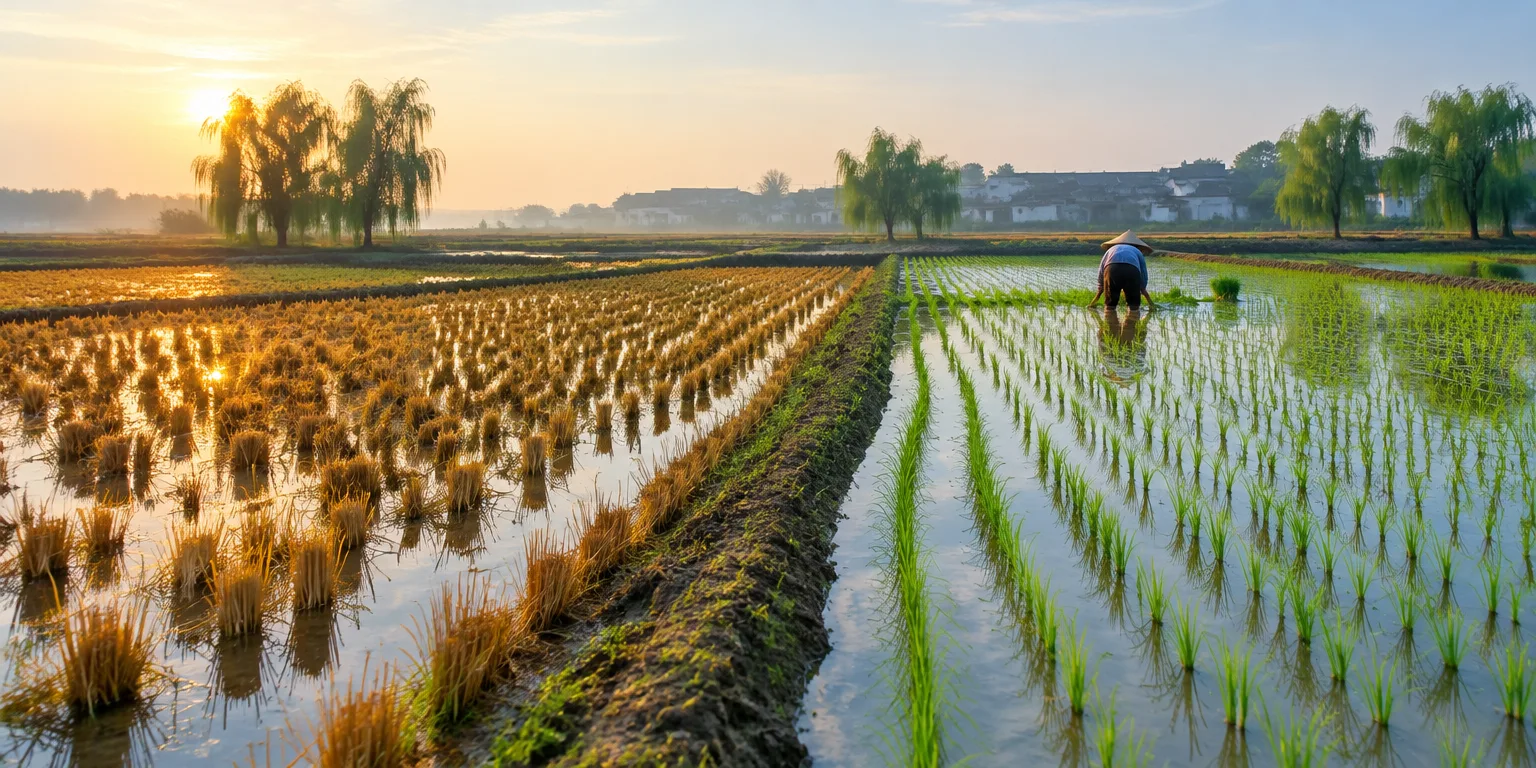
 Wendover Productions · China's Geography Problem
It starts with dirt.
The civilization that became China first took root around the Yellow River for a simple reason. The river's floodplain ranks among the best farmland in the world, and much of the east is highly suited to crops. That fertility helped support a population of almost 1.4 billion.
The climate adds a bonus. The region stays warm and rainy enough for what is known as double cropping. After the main rice harvest in June and July, farmers plant again in the same fields for an October harvest. That second harvest yields slightly less, but it lifts total rice output by about 25% from the same land.
The choice of crop adds another advantage. Wheat produces about 4 million calories per acre of farmland. Rice produces about 11 million calories per acre, almost triple as much.
A more productive grain, plus an extra harvest from the same fields, helps explain why so many people came to live there.
Questions people ask
Why does rice produce so many more calories than wheat?
Rice grows in standing water, which holds down weeds and lets farmers reuse the same paddies year after year. It also responds well to intensive hand work, such as transplanting seedlings, so small plots can be farmed very intensively.
Is double cropping unique to China?
No. Farmers double crop wherever the growing season stays long, warm, and wet enough, including parts of India, Southeast Asia, and the American South. Eastern China is unusual because those conditions hold across such a vast and fertile plain.