Rich Cities and Poor Villages Let China Call Itself Developing
By income China looks nearly developed, but a broader United Nations measure of income, health, and schooling ranks it 78th.
 Marketplace · GDP growth comes at expense of consumer savings
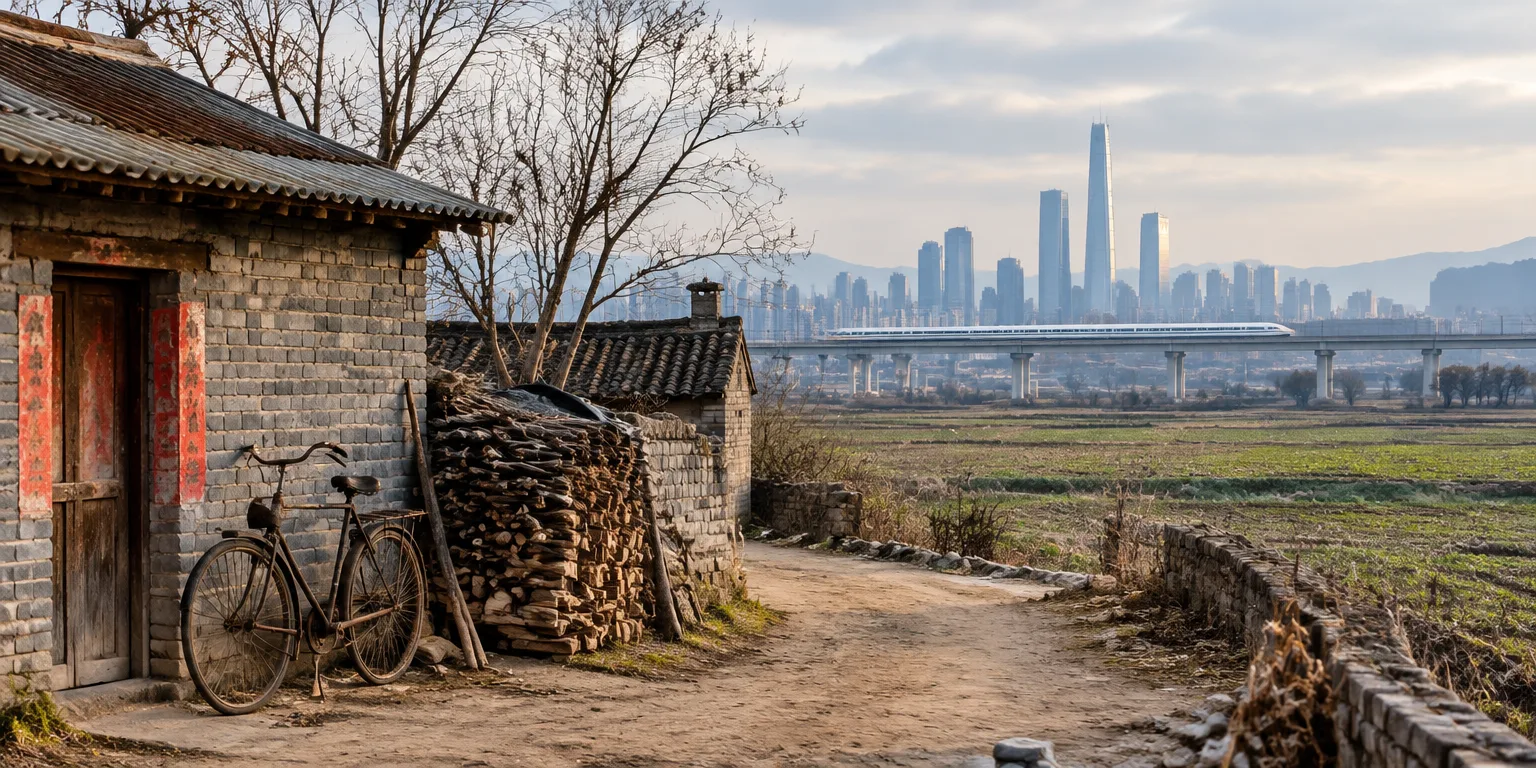
You can stand in Shanghai amid supertall towers and fast trains and feel like you are in the future. Drive 200 miles inland and you are in a completely different economy, with villages still struggling with basic poverty. Both places are China, and that split is part of the reason Beijing can still plausibly call itself a developing country.
There is no rulebook for the terms. Yiling Tan, who teaches public policy at Oxford and studies the Chinese political economy, put it this way: "There isn't a universally accepted definition of what makes a country developed."
If the measure is income alone, China looks very close to the threshold of developed under World Bank numbers. If the measure is broader, China looks less advanced. The United Nations index that combines income with life expectancy and schooling ranked China 78th last year, in the high category but one rung below the top group of very high human development.
History helps explain why Beijing clings to the label. China's president, Xi Jinping, says China "will always be part of" the developing world and the Global South. Tan traces that posture to 1974, when leader Mao Zedong divided the world into three groups and placed Asia apart from Japan, along with Africa and Latin America, in the third. Today that claim is under strain, with other developing countries saying China is not really in their club.
The domestic numbers give Beijing its counterargument. About 17 percent of its own people still live below the poverty line used for upper middle income countries, or a couple hundred million people.
Questions people ask
Does calling itself developing give China any concrete advantages?
Yes, in some international negotiations. At the World Trade Organization, developing members can claim longer time to adopt rules and special assistance. In climate talks, poorer nations have argued that richer nations should cut emissions first and help pay for the transition, a principle China has invoked.
What do people mean by the Global South?
It is not strictly geography. The term generally refers to lower and middle income countries in Asia, Africa, and Latin America that share an interest in more aid, trade access, and influence in global institutions. China uses it to signal political solidarity with those countries.
How can China be the world's second largest economy and still have so much poverty?
Because averages hide size and spread. High total output divided among more than 1.4 billion people produces a middle income per person, and growth has concentrated on the coasts. The result is modern megacities alongside inland regions where incomes, schools, and health care lag far behind.