Roman Concrete Fixes Its Own Cracks
Super-hot mixing left reactive lime pockets that dissolve in rainwater and reseal damage in two weeks.
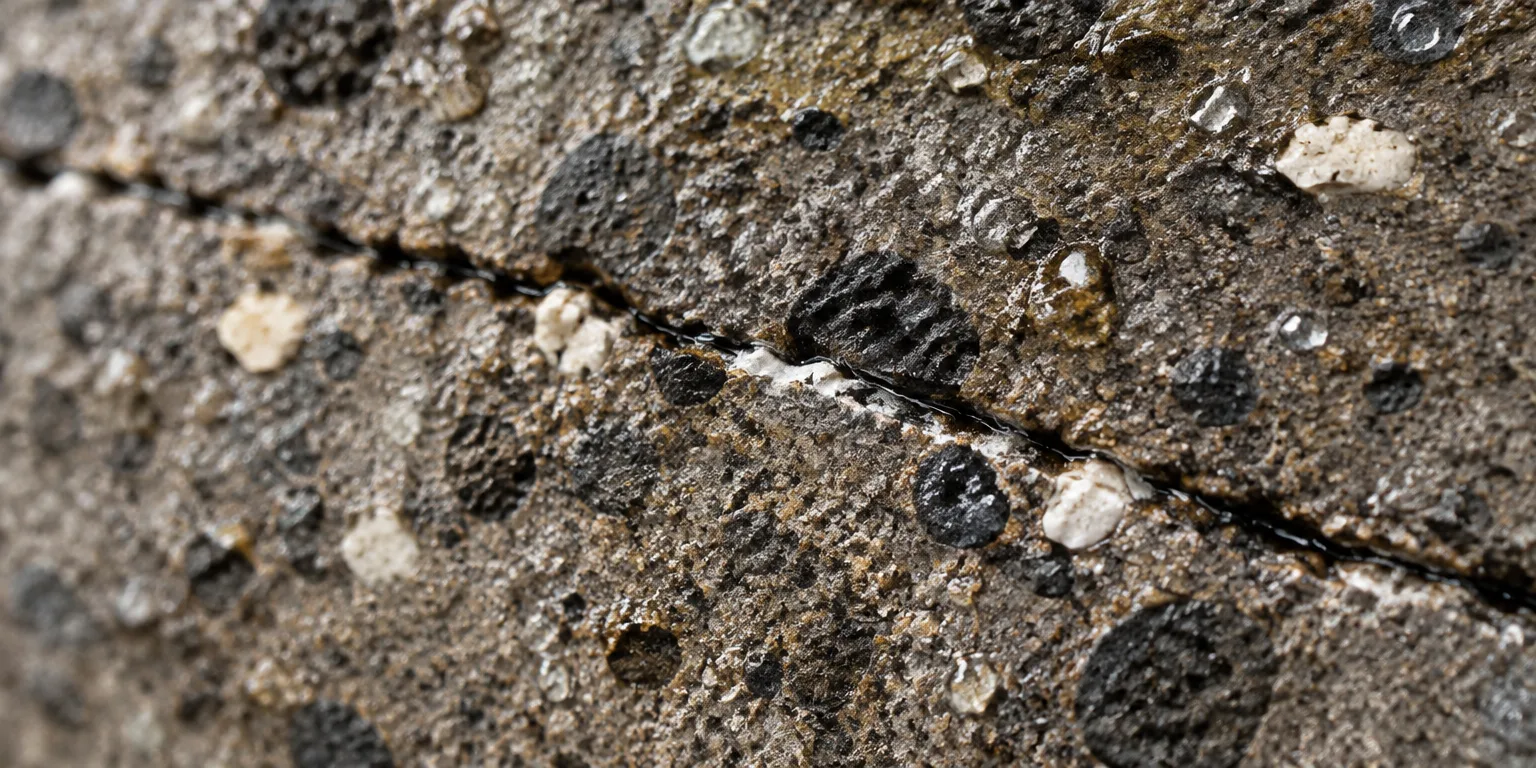
 Medieval Wisdom · Why Roman CONCRETE Lasts 2000 Years While Ours Dies in 50
Crack Roman concrete and rain will help fix it.
That is the surprise found by Admir Masic, a materials scientist at the Massachusetts Institute of Technology, and his team when they zoomed in on concrete Romans poured in Italy about 2,000 years ago. Scattered through every sample were millions of bright white chunks, called lime clasts. They looked like mistakes, signs of sloppy mixing. Masic suspected they were useful, and treated the apparent flaw as a clue.
The evidence pointed to a different recipe from the standard theory, in which Romans started with slaked lime, lime that has already been combined with water to make a paste. Instead, the researchers concluded the Romans likely added quicklime directly to the dry mix. Quicklime is unslaked lime, the form of calcium oxide that has not yet been mixed with water. They mixed it with volcanic ash and rock, then added water, a process researchers now call hot mixing.
The chemical reaction happened inside the mix and generated intense heat, reaching 200 to 250 degrees Celsius. That heat made compounds that modern concrete lacks, and left small pockets of unreacted lime in the wall.
Those pockets remain in place until damage arrives. At a microscopic level, the repair runs in three steps. First, a tiny crack opens and rainwater seeps in. Second, the water finds a lime clast and dissolves it, creating a calcium rich liquid that fills the fissure. Third, that solution recrystallizes into calcium carbonate, a hard white mineral, which seals the crack shut. It also combines with nearby volcanic ash to form new stable minerals, so the repaired zone can be as strong as the original wall.
The team tested the idea by pouring a present-day mix and a Roman-style mix. The team then fractured each sample and let water flow across them. The modern cracks stayed open. The Roman style cracks had fully healed within two weeks, with no human help.
Modern builders try to make concrete fend off damage. The Romans assumed damage was inevitable, and built in a way to cure it.
Questions people ask
Why doesn't modern concrete heal the same way?
Modern concrete is usually made with slaked lime that has already reacted with water, so there is no leftover reactive pocket to dissolve later. It also uses Portland cement and steel reinforcement rather than volcanic ash and lime clasts. Once a crack lets water reach the steel, rust expands and widens the crack instead of sealing it.
Can builders buy Roman-style self-healing concrete today?
Not widely yet, but Masic's team has started a company to commercialize it. Other labs are testing related ideas, including concrete with dormant bacteria that produce limestone when cracks let water in. The hurdles are higher upfront cost, limited supply of the right volcanic ash, and an industry focused on speed and initial price.
Did seawater also help Roman concrete last?
Yes, especially in harbors and piers. Seawater can dissolve lime and react with volcanic ash to grow interlocking minerals called aluminum tobermorite crystals. Researchers have found those crystals keep growing for years, so salt water that destroys modern reinforced concrete could actually strengthen Roman concrete over time.