Romans Cleaned Clothes by Stomping Them in Urine
After the urine bath came whitening clay, a press, and a fumigation with sulfur.
 Ancient Rome Live · Daily Life in Ancient Rome
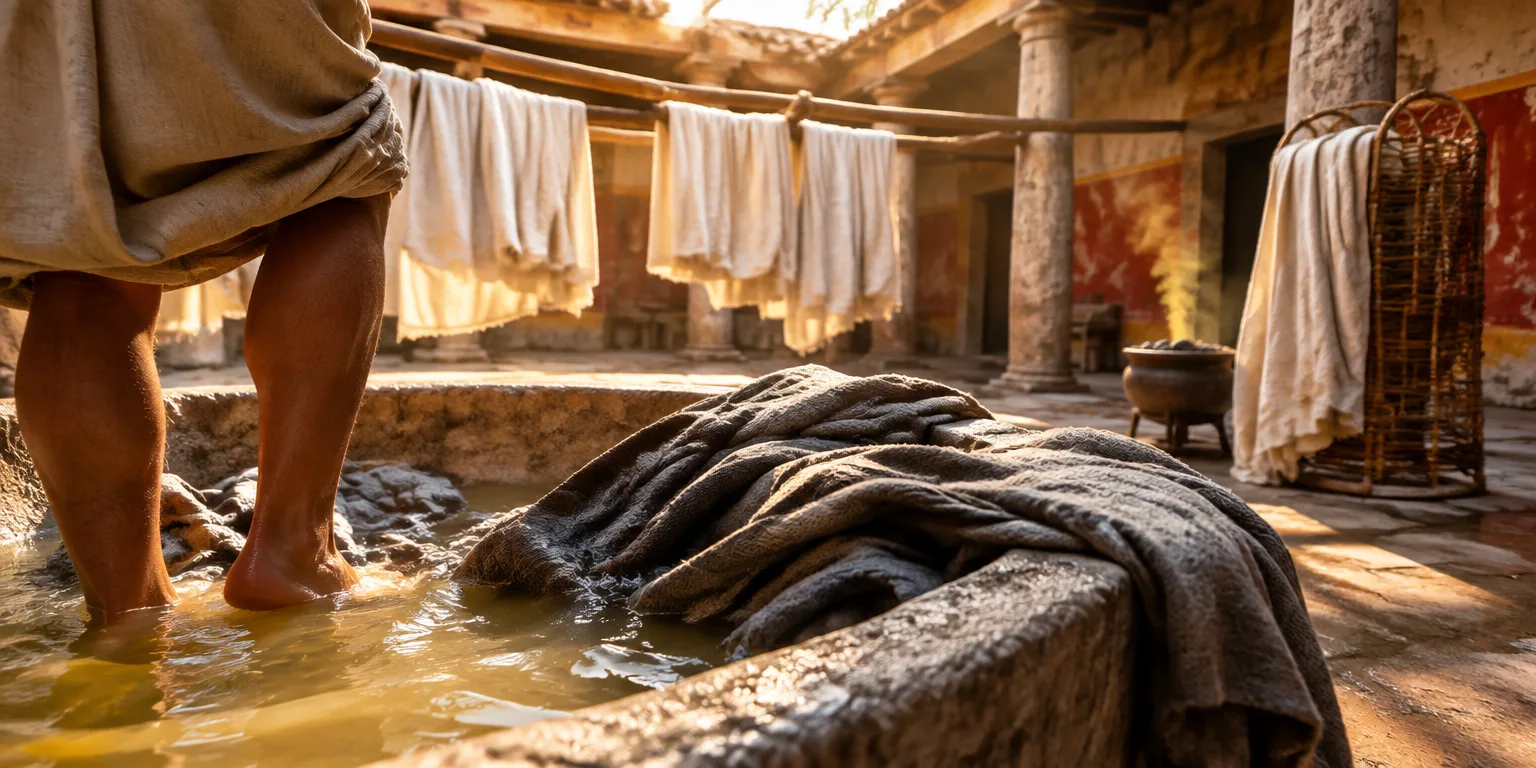
In ancient Rome, dirty clothes went to the fuller, a cloth cleaner whose workshop, called a fullonica, both finished newly woven fabric and washed garments that were already dirty. A pillar from the fullonica of Lucius Varanus Abseus in Pompeii lays out the whole routine, and it starts in a tub of urine.
Workers mixed water with urine, potash, and natron to clean the cloth and strip out grease. Potash is a cleaning salt made from wood ash, and natron is a natural mineral salt. Aged urine contains ammonia, which cuts grease and loosens dirt. Slaves, including children, trod the cloth in the mixture to work it clean.
The next step was whitening. Fullers rubbed a fine absorbent clay known as fuller's earth into the damp fabric, then washed the cloth again to rinse it out. They squeezed the water from it in a press, hung it over long wooden beams to dry, and combed the surface smooth.
The finish was a smoke bath. Workers draped the cloth over a woven wicker rack, the viminea cavia, and fumigated it with burning sulfur. The fumes brightened and freshened the fabric.
Through these steps, one workshop both finished new cloth and made dirty clothing wearable again.
Questions people ask
What is fuller's earth?
It is a fine, absorbent clay that soaks up oil and dirt. Fullers rubbed it into damp cloth to pull out remaining grease and make white wool look brighter. The same kind of clay is still used today to absorb oil and to clarify certain liquids.
What did the sulfur smoke do?
Burning sulfur releases sulfur dioxide, a gas that bleaches fabric and kills moths and bacteria. Draping cloth over a wicker frame let the fumes pass through evenly. It left the garment brighter and fresher, though with a sharp smell that had to air out.