Rosalind Franklin Had Already Measured DNA's Spiral Before Photo 51
From a crooked, cut-off image, she calculated that each turn was 34 angstroms long.
 science.org · How did Rosalind Franklin miss the helix in her iconic DNA image? She didn’t | Science | AAAS
Rosalind Franklin did not miss the helix in her famous Photo 51. A new reading of her notes says she had already spotted it days earlier in a flawed image called Photo 49, and measured it.
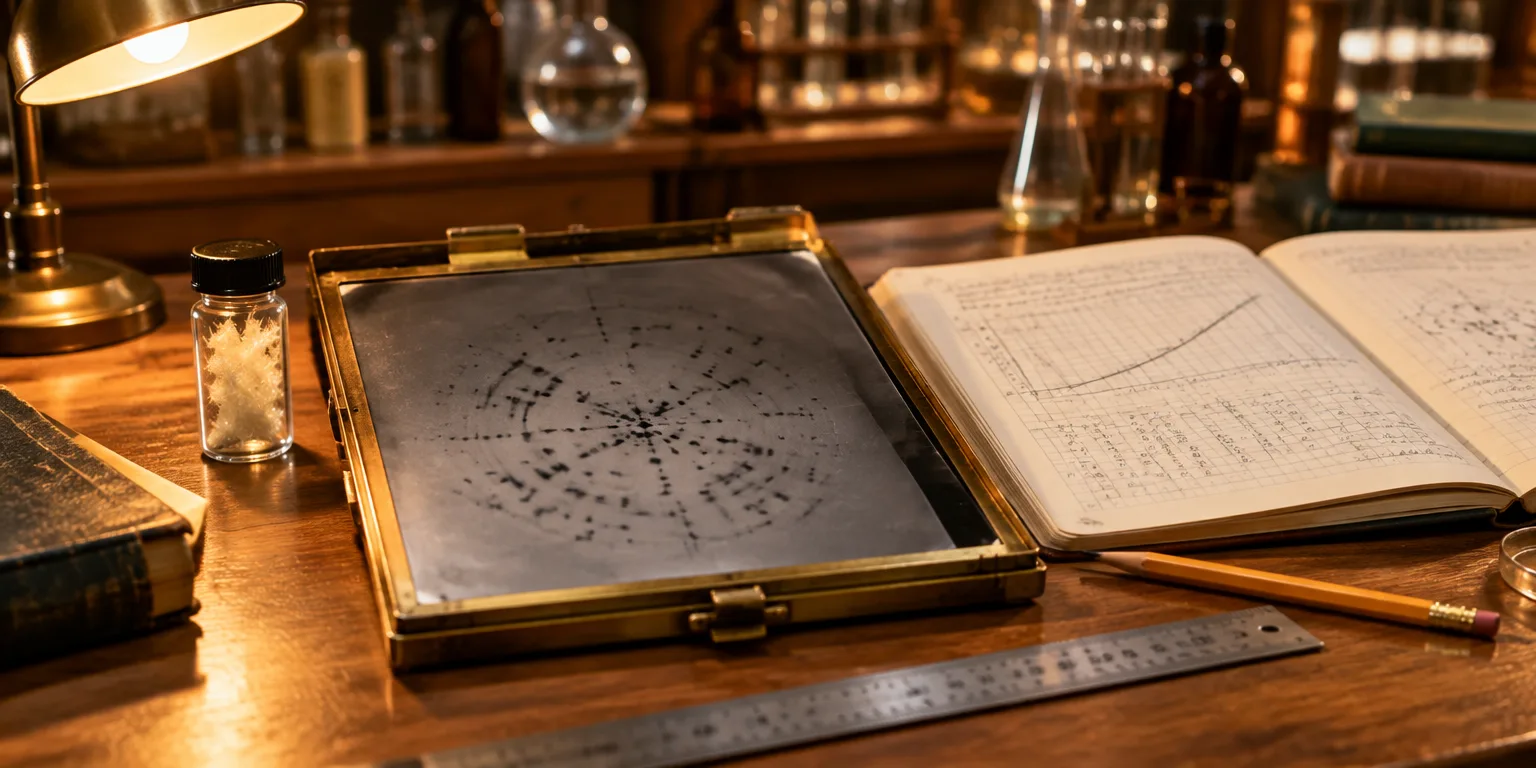
Photo 49 gave the sharpest X-ray pattern she had made by aiming X-rays at DNA fibers, but the film holder had slipped, leaving the pattern off center and cut off at one edge. Franklin, a London researcher who specialized in reading X-ray images of molecules, still used it to calculate that each full turn of the spiral was 34 angstroms long, a tiny unit used for molecules, and to count the genetic building blocks per turn of helix, adding in her notes, if there is a helix.
That is the historians' explanation for her silence about Photo 51. According to science historian Alistair Sponsel and crystallographer Brian Sutton, she made the cleaner, symmetrical image within hours from the same DNA sample because the first was not good enough to publish, not because she needed new proof. They argue Franklin already knew what James Watson later described on seeing Photo 51 as a sudden revelation.
Questions people ask
What exactly was Photo 51?
Photo 51 was an X-ray diffraction image made in spring 1952 by shining X-rays through DNA fibers and recording how the rays scattered on film. Its symmetrical pattern of spots is characteristic of a helix. It became famous after James Watson described seeing it as a moment of revelation.
How small is 34 angstroms?
An angstrom is one ten-billionth of a meter, a unit often used for atoms and molecules. Thirty-four angstroms is about 3.4 billionths of a meter. That is thousands of times smaller than the width of a human hair.
Did Franklin ever answer Watson's version?
No. Franklin died of cancer in 1958, a decade before Watson's 1968 memoir about deciphering DNA became a bestseller. The rebuttal comes from a later study of her surviving lab notes by Sponsel and Sutton.