Running Did Not Cause Her Cardiac Arrest. It Revealed a Heart Condition.
Two months after her heart stopped at a community race, Olympic medalist Jenny Simpson says the lesson is learning CPR, not fearing exercise.
 The Rich Roll Podcast · Olympic Medalist Jenny Simpson On Her Sudden Cardiac Arrest After A Race & The Journey Back To Health
Two months after her heart stopped at a community mile race in June, Jenny Simpson, the Olympic medalist and retired professional runner whom Rich Roll described as the most accomplished women's 1,500 meter runner in history, was still trying to comfort the sport she had to leave. She had joined Fleet Feet as its chief running officer, temporarily moved to North Carolina, and gone to pace amateurs. Instead, she collapsed with no pulse and had to be revived with CPR.
She said she worried, even from her hospital bed, that people would take the wrong lesson from that scene. In her words: "I really want to encourage people to resist the temptation to adopt fear."
What she means, she argues, starts with what happened inside her chest. She was later found to have an inherited condition in which healthy muscle is gradually replaced by faulty tissue. The heart, she explains, works both as a pump and as an electrical system. In her case, she says, the rebuilding problem is in the right ventricle, where the muscle rebuilds with tissue she describes as essentially lines of scar tissue that do not properly conduct electricity. One day the electrical pulse hit a spot that could not conduct it, so her heart stopped. As she puts it: "Running didn't cause it, but it revealed it."
She believes fear misreads how rare that kind of public collapse is. The cases that frighten people, she argues, are a few emergencies highlighted out of fields of hundreds of healthy athletes pushing hard at the same time. Rich Roll compared that highlighting to shark attacks, rare events that draw outsized attention, and she agreed that is why people should resist the fear that this will happen to them.
She says that for 39 years, "the ignorance was bliss." She had pushed herself with no fear that her body couldn't handle it: "It did handle it, until it didn't."
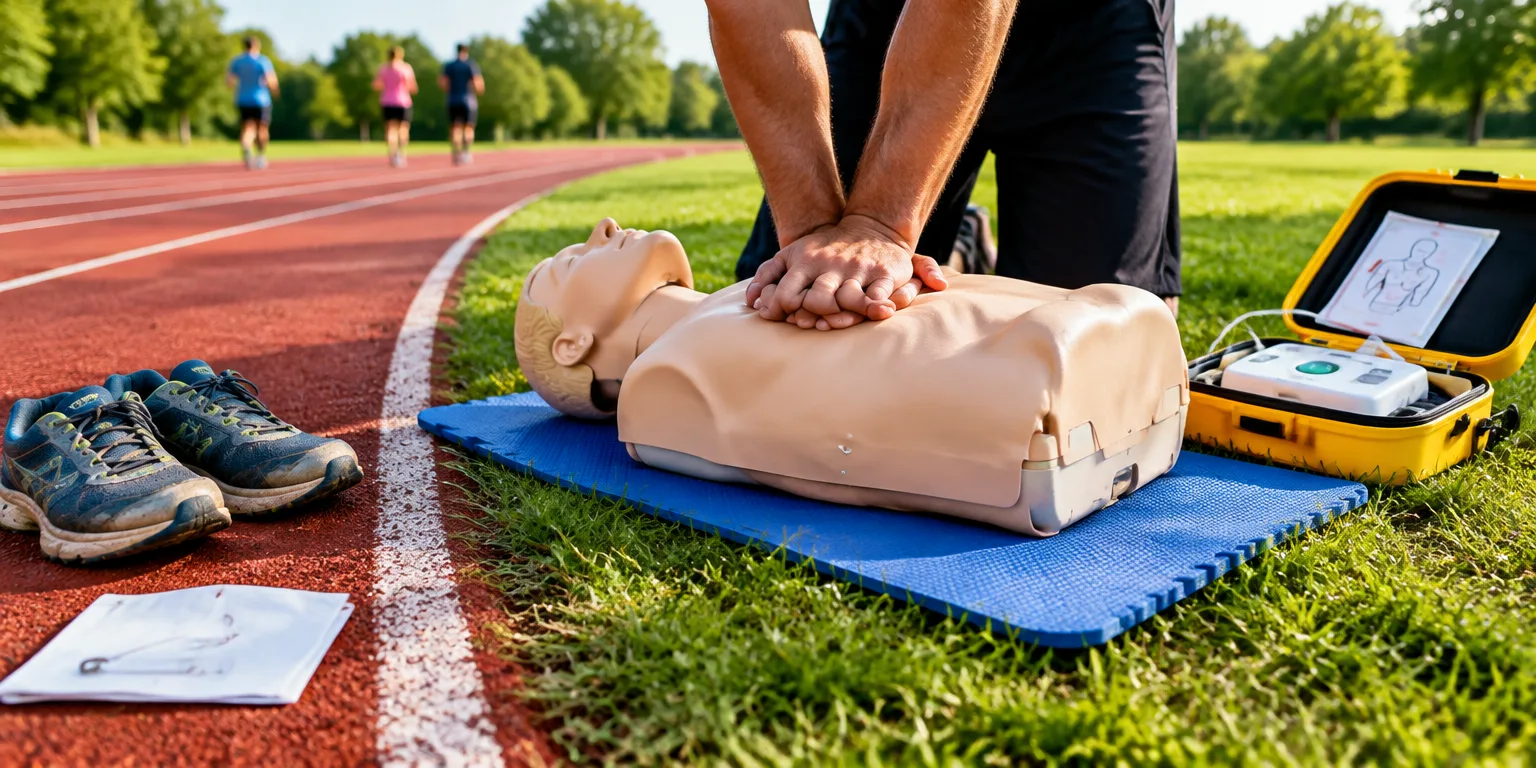
The lesson she wants instead is about response, not restraint. She says the people who started chest compressions in the minutes before paramedics arrived did more than save her life, they kept oxygen going to her brain, liver, kidneys, and lungs, which start to suffer within minutes after the heart stops. Rich Roll says most people probably don't have her condition, and she agrees. The lesson she draws is to learn to step in, even with hands only compressions, rather than worrying about a hidden condition.
Questions people ask
What is sudden cardiac arrest, and how is it different from a heart attack?
It means the heart suddenly develops a chaotic electrical rhythm and stops pumping blood. The person collapses, has no pulse, and will die within minutes unless someone starts chest compressions and uses a defibrillator to shock the heart back into rhythm.
What should a bystander actually do if someone collapses?
Call emergency services, start hard and fast compressions in the center of the chest, and send someone to find an AED, the portable device that can deliver a shock. Dispatchers can talk you through it, and you do not need to do mouth to mouth for an adult who has just collapsed.
Will Jenny Simpson ever run again?
Almost certainly not at her old level. Because a faster heart rate stretches her heart and can expose more of the faulty tissue, doctors have told her that running, a sport built on raising the heart rate, is likely off the table, and she is being followed with heart scans every six months.