Russia Has 23,000 Miles of Coastline and No Open Door to the Sea
Every usable exit to the ocean runs through a narrow passage controlled by NATO members or their allies, a bind that helps explain the fight over Crimea.
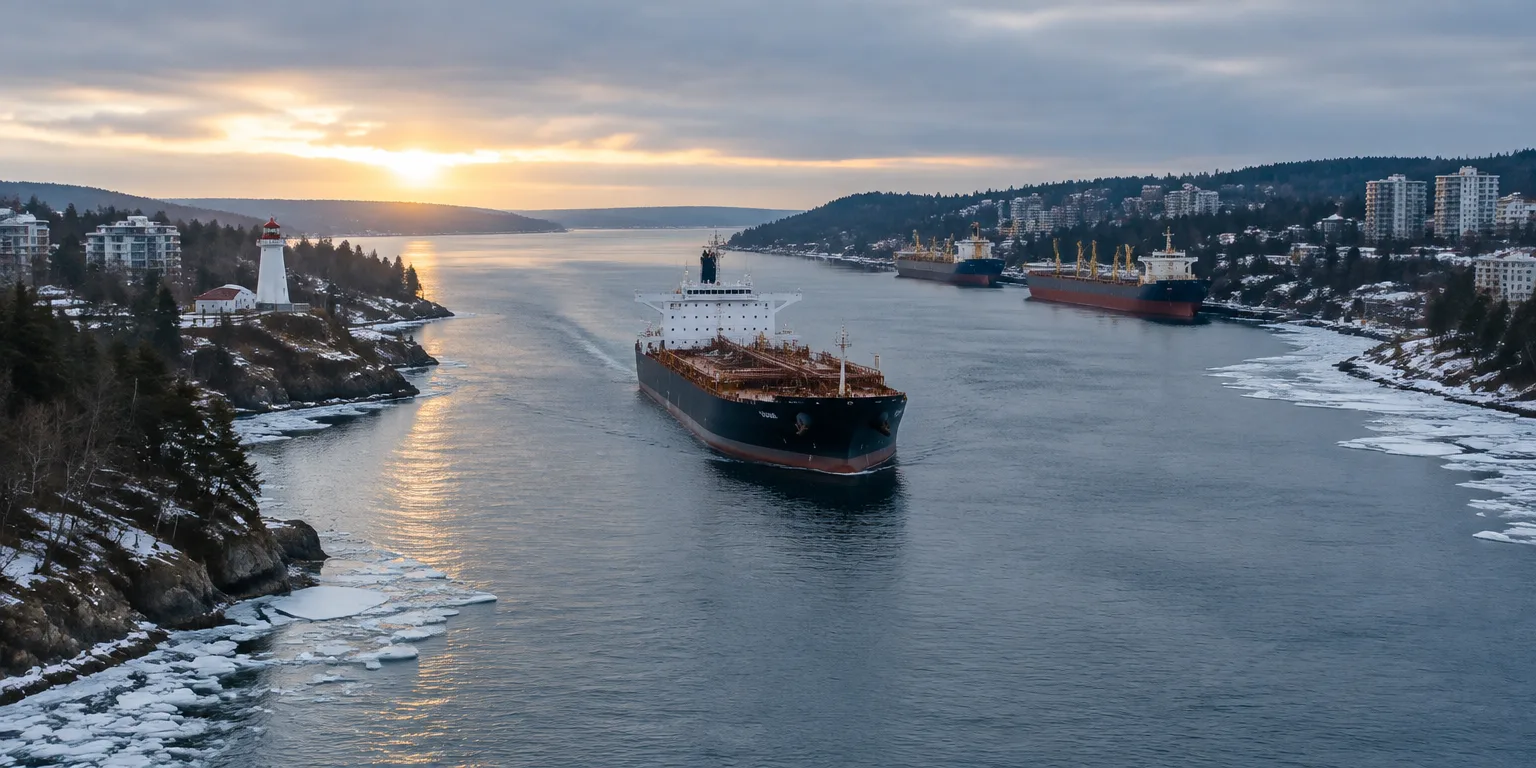
 Wendover Productions · Russia's Geography Problem
Russia touches two oceans and stretches across 23,000 miles of coastline, yet it has no major port that stays open all winter and leads directly to the open sea.
The problem starts with ice and geography. The port at St. Petersburg, near the Baltic Sea, sits icebound for much of each year. Vladivostok, on the Pacific coast, also freezes at times in winter. Novorossiysk, on the southern coast, stays ice free, but it is limited by its depth and size and cannot handle the volume of a great trading nation.
Even where ships can sail, every route to the open ocean must go through narrow waters under the control of another country. That is because each exit runs through a narrow waterway, the kind of passage sailors call a chokepoint, controlled by a member of NATO, the Western military alliance, or a close ally of the alliance.
From Novorossiysk, ships must go through the Bosphorus Strait, which is under Turkish control, and Turkey belongs to NATO. From St. Petersburg, they must go through the Danish straits, which are under Danish control, and Denmark is also in NATO. From Vladivostok and other Pacific ports, they must sail out via the Sea of Japan, where Japan, a close partner of NATO, holds sway.
That locked in feeling helps explain Crimea. Russia leased the warm water port of Sevastopol, in Crimea, from Ukraine. As Ukraine grew friendlier with Europe, Moscow feared it would lose the lease, which would have been a crippling blow to its ocean access. One reading is that Russia then invaded and annexed Crimea in large part to keep that port.
Questions people ask
Why is a warm-water port so important?
Warm water means the harbor does not freeze in winter, so ships, including warships and oil tankers, can come and go all year. For a large country, year-round access lowers shipping costs and keeps naval power credible. Losing it can mean months when trade and naval movement slow or stop.
What exactly is a chokepoint?
It is a narrow stretch of water, such as a strait or canal, that ships must pass through to get from one larger body of water to another. Because traffic is squeezed into a small area, the country that controls the shores can monitor, tax, or in wartime block that traffic. Other famous examples are the Panama Canal and the Strait of Hormuz.
Why couldn't Russia just build a bigger port at Novorossiysk?
A port is limited by the natural depth, shelter, and space of its bay, as well as by rail and road links to the rest of the country. Dredging and piers can help, but they cannot change the fact that ships leaving there still must pass through the Bosphorus Strait to reach the open sea. So a bigger dock would not solve the deeper access problem.