Russia Has No Wall to the West, So It Built One From Other Countries
Every other approach to Moscow forces an invader over mountains, water, or thousands of miles of inhospitable land, but the western plain offers a straight path.
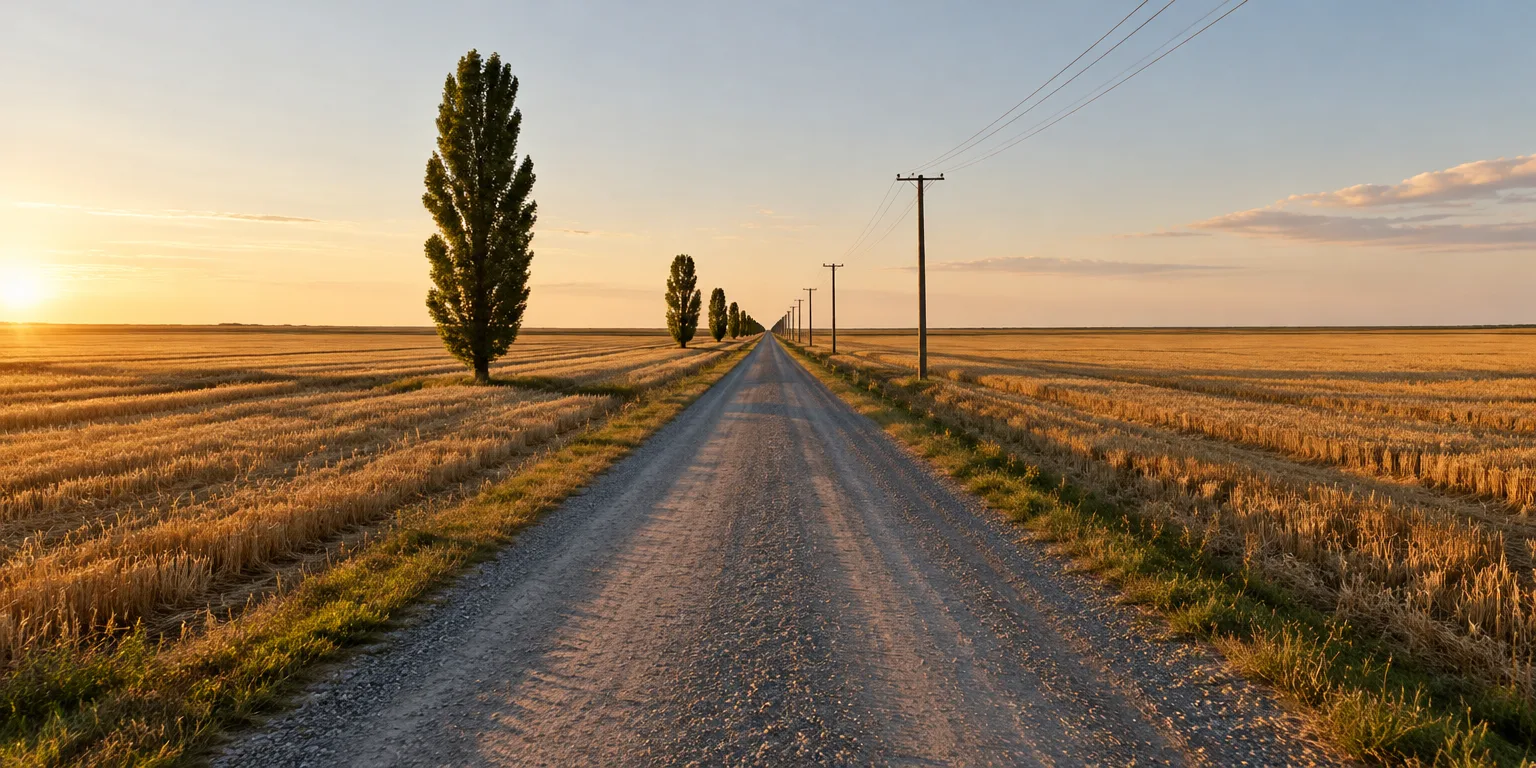
 Wendover Productions · Russia's Geography Problem
Moscow is well protected in three directions, and almost completely exposed in the fourth.
Early Russia had little geographic protection to keep outsiders from moving in, and manpower was its only means of turning back an invader. Over the next few centuries, the state centered on Moscow pushed outward, reaching the Urals in the east, the Caucasus region in the south, and the Carpathian region in the west, and eventually taking Siberia.
That expansion gave Moscow cover. Siberia is so large that no army could cross it to reach the capital, since supply lines would stretch for thousands of miles through inhospitable conditions, and an army that survived that trek would then still have to cross the Urals to reach Moscow. An attack from those directions would still force an army across water or through mountains.
The exception is the Northern European Plain, which runs from northern France through Germany and Poland into Russia. Where every other approach has a natural defense, this stretch is completely flat, and it acts like a funnel carrying an army from Western Europe straight to Moscow.
That is why Russia has tried to put distance between Moscow and that funnel. Soviet leader Joseph Stalin, who ruled the Soviet Union from the 1920s to 1953, created a zone of buffer states across Eastern Europe. Spreading socialism was part of the motive, but Stalin also believed he needed those states to guard against the United States and its allies in Western Europe, keeping a potential western army far from Moscow.
Questions people ask
Has anyone actually invaded Russia that way?
Yes, twice in famous campaigns. French emperor Napoleon Bonaparte marched across it to Moscow in 1812, and Nazi Germany did the same after invading the Soviet Union in 1941. In both cases, the invaders reached deep into Russia but were eventually defeated by distance, winter, and manpower.
How does controlling another country protect Moscow?
A buffer state is a smaller country that sits between two larger powers. It does not stop an invasion by itself, but it forces an attacker to cross more territory, extends supply lines, and gives the power behind it more time and space to respond.
What happened to that buffer after the Soviet Union fell?
After the Soviet collapse, Belarus, Ukraine and the Russian exclave of Kaliningrad still covered most of the plain, while Lithuania, Latvia and Estonia joined NATO and the European Union. Ukraine mattered at sea as well: Russia held a long-term lease on the warm-water port of Sevastopol in Crimea, and its later move on Crimea was linked to fears that a pro-Western Ukraine might end that lease.