Schools Were Modeled on Factory Lines
Bells, separate subjects, and grouping children by age were efficient for industry, not for how children learn.
 Royal Society of Arts · RSA ANIMATE: Changing Education Paradigms
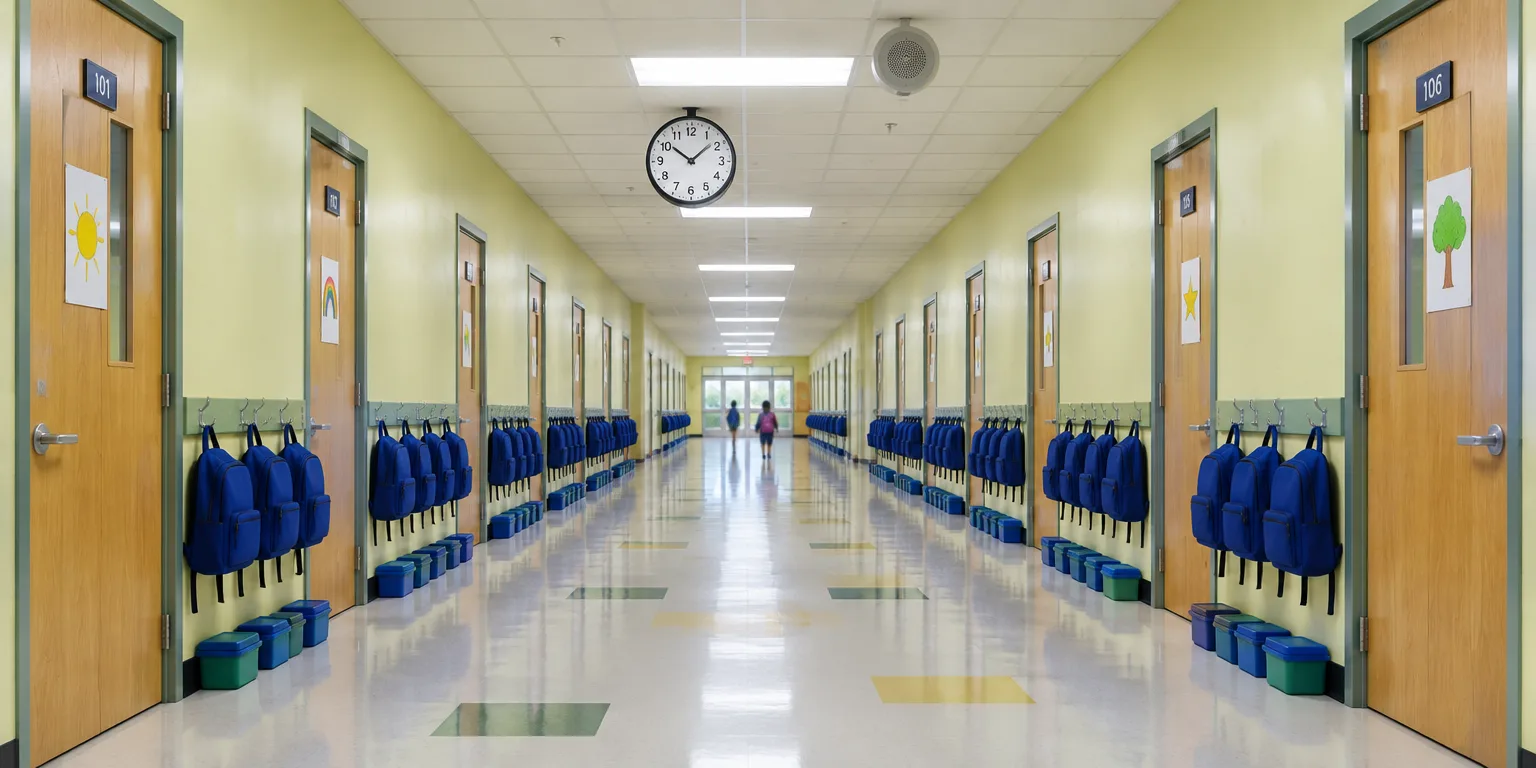
Step inside almost any public school and you can hear it. A bell rings, doors open, children move down a hall to a different room for a different subject, alongside other children born in the same year.
That is not an accident, argues Ken Robinson, an educator who gave a talk on schooling. Public schools were modeled on industrialism.
The factory logic shows up in three familiar habits. First, bells mark time and move hundreds of pupils. Second, schools use "separate facilities specialized into separate subjects," like stations along a line. Third, they educate children by batches, putting "them through the system by age group."
Robinson asks why we assume "the most important thing kids have in common is how old they are." It is, he says, as if the key fact about them were their date of manufacture. Children of the same age can be far ahead or behind one another in different subjects, do better at different times of day, or learn better in small groups, large groups, or alone.
In his account, the deeper aim of this design is conformity, and increasingly standardization. He points to "the growth of standardized testing and standardized curricula" as a sign.
Robinson says starting from how learning works would mean not starting from "this production line mentality." He says schools have to go in "the exact opposite direction," changing the paradigm away from standardization.
Questions people ask
Have schools always grouped children by age?
No. Age grouping became common in the mid-1800s as cities built large graded schools to handle many pupils cheaply. One teacher could then teach the same lesson to 30 children of roughly the same level, which was administratively simple.
Did schools copy factory bells directly?
Factory bells and school bells developed around the same time to coordinate large groups of people. Factories used bells and whistles to mark shifts, and schools adopted bells to move hundreds of pupils between rooms on time.
Why are subjects still kept so separate?
Partly tradition and partly practicality. Separate subjects make it easier to train teachers, write textbooks, assign classrooms, and test results. Critics say the cost is that real problems, which usually cross subjects, get chopped into pieces.